

Helicopters are not typically associated with speed. Their ability to hover, land vertically, and operate from confined spaces trades raw velocity for unmatched versatility. Yet certain rotorcraft push engineering limits, achieving speeds that challenge the fundamental physics of helicopter flight.
The fastest helicopters in the world leverage advanced technologies including coaxial rotors, pusher propellers, and aerodynamic fuselage designs to overcome the retreating blade stall that normally caps helicopter speeds around 150-180 mph. Experimental and military helicopters have achieved speeds exceeding 250 mph, with some reaching nearly 300 mph.
This ranking reveals which helicopters fly fastest, the technologies enabling their speed, why military rotorcraft dominate speed records, and whether helicopters might one day match fixed-wing aircraft performance.
Why Helicopters Have Speed Limits
Understanding helicopter speed limitations requires grasping the unique aerodynamics of rotating wings. Unlike fixed-wing aircraft where air flows uniformly over both wings, helicopter rotor blades experience dramatically different airspeeds on advancing and retreating sides.
Retreating Blade Stall: As a helicopter moves forward, the rotor blade advancing into the airflow experiences much higher relative airspeed than the retreating blade moving away from the airflow. At approximately 180-200 mph forward speed, the retreating blade’s airspeed drops so low it can no longer generate sufficient lift, causing aerodynamic stall.
When the retreating blade stalls, the helicopter experiences severe vibration, loss of control authority, and potential structural damage. This phenomenon creates a hard speed ceiling for conventional helicopters regardless of available engine power.
Tip Speed Limitations: The advancing blade tip approaches transonic speeds even at modest forward velocities. As rotor tip speeds approach the speed of sound, shock waves form creating drag, noise, vibration, and efficiency losses. This compressibility barrier further constrains maximum helicopter speed.
Vibration and Structural Stress: High-speed flight generates intense vibrations from aerodynamic imbalances between advancing and retreating blades. These vibrations fatigue airframe structures, damage components, create passenger discomfort, and limit sustained high-speed operations even when aerodynamic limits aren’t reached.
Overcoming these fundamental limitations requires revolutionary designs rather than incremental improvements to conventional helicopter configurations.
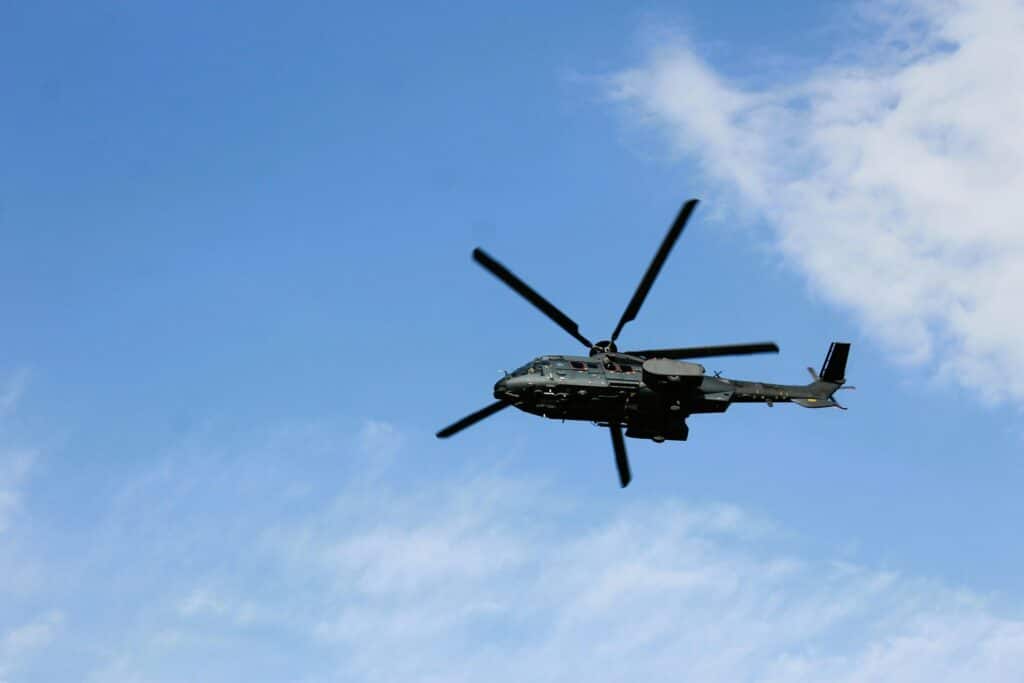
The Fastest Helicopters in the World (Ranked)
These rotorcraft represent the absolute speed champions, combining advanced technology, powerful engines, and aerodynamic refinement to achieve record-breaking velocities.
1. Sikorsky X2 — 299 mph (481 km/h)
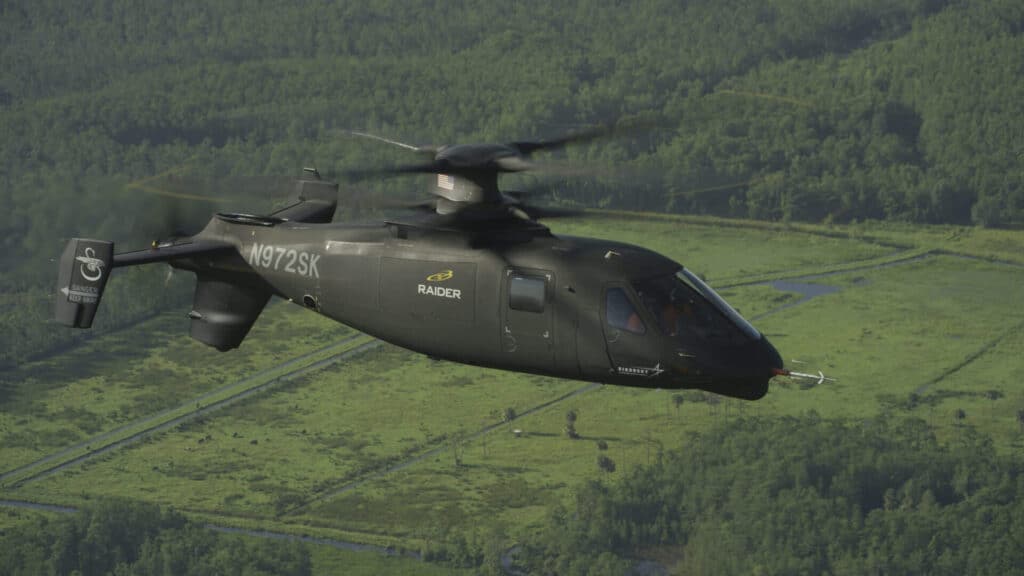
Country: United States Type: Experimental compound helicopter Status: Technology demonstrator (retired)
The Sikorsky X2 holds the unofficial speed record for helicopters, achieving 299 mph in 2010 during test flights. This experimental aircraft utilized coaxial counter-rotating main rotors eliminating the need for a tail rotor, combined with a pusher propeller providing forward thrust.
The coaxial rotor system solves retreating blade stall by having two rotors spinning in opposite directions, balancing lift across both advancing sides. The pusher propeller offloads forward thrust from the rotors, allowing them to focus on lift generation. This compound configuration enables speeds impossible for conventional helicopters.
While the X2 itself never entered production, its technologies directly influenced the Sikorsky S-97 Raider and SB>1 Defiant programs, demonstrating that 300 mph helicopters are technically achievable with current engineering.
2. Eurocopter X3 — 293 mph (472 km/h)
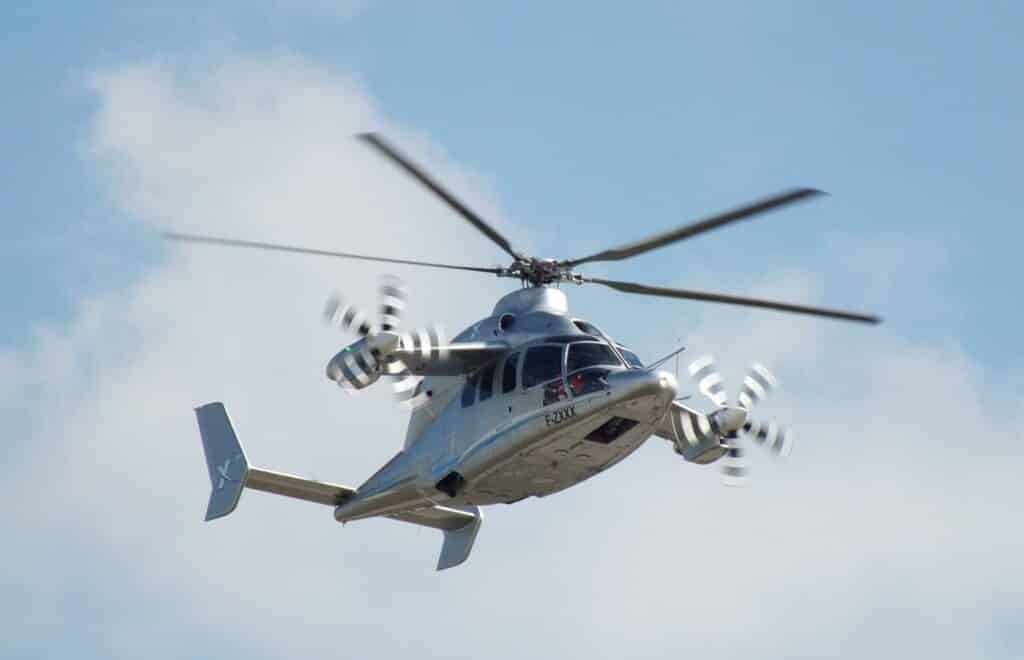
Country: France/European Union Type: Experimental compound helicopter Status: Technology demonstrator
The Airbus Helicopters X3 (formerly Eurocopter) achieved 293 mph in 2013, making it the second-fastest helicopter ever flown. Unlike the X2’s coaxial rotors, the X3 uses a conventional main rotor but adds two wing-mounted turboprop engines providing forward thrust.
This hybrid approach combines helicopter vertical flight capability with nearly fixed-wing cruise efficiency. The main rotor handles takeoff, landing, and low-speed maneuvering, while the wing-mounted propellers drive high-speed cruise with the rotor essentially autorotating at reduced RPM.
The X3 demonstrated that compound helicopter technology offers practical solutions for high-speed military and civilian applications without requiring completely revolutionary rotor systems like coaxial designs.
3. Sikorsky CH-53E Super Stallion — 196 mph (315 km/h)
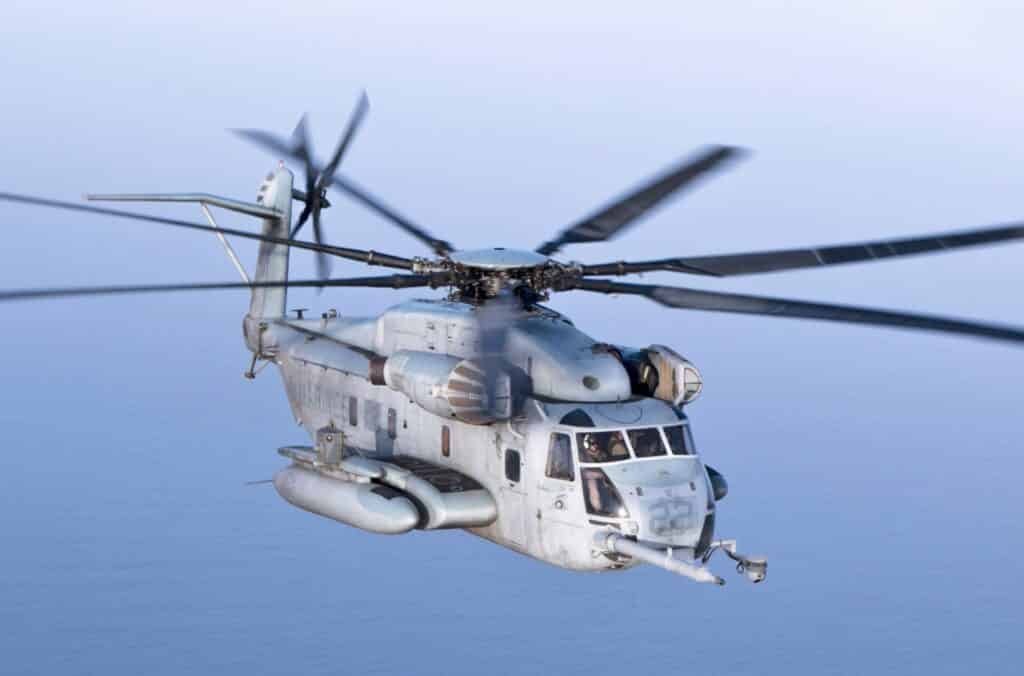
Country: United States Type: Heavy-lift military helicopter Status: Active service
The Super Stallion represents the fastest conventional production helicopter, achieving 196 mph maximum speed. This massive three-engine heavy lifter serves primarily with the U.S. Marine Corps for amphibious assault and heavy cargo transport.
Three General Electric T64 turboshaft engines generating over 13,000 shaft horsepower enable the Super Stallion to carry 30,000+ pounds of cargo while maintaining respectable speed. Its large rotor diameter and powerful engines overcome retreating blade stall at higher speeds than smaller helicopters.
The CH-53E demonstrates that brute power combined with optimized aerodynamics can push conventional helicopter designs to impressive speeds even without exotic compound configurations.
4. AH-64 Apache — 182 mph (293 km/h)
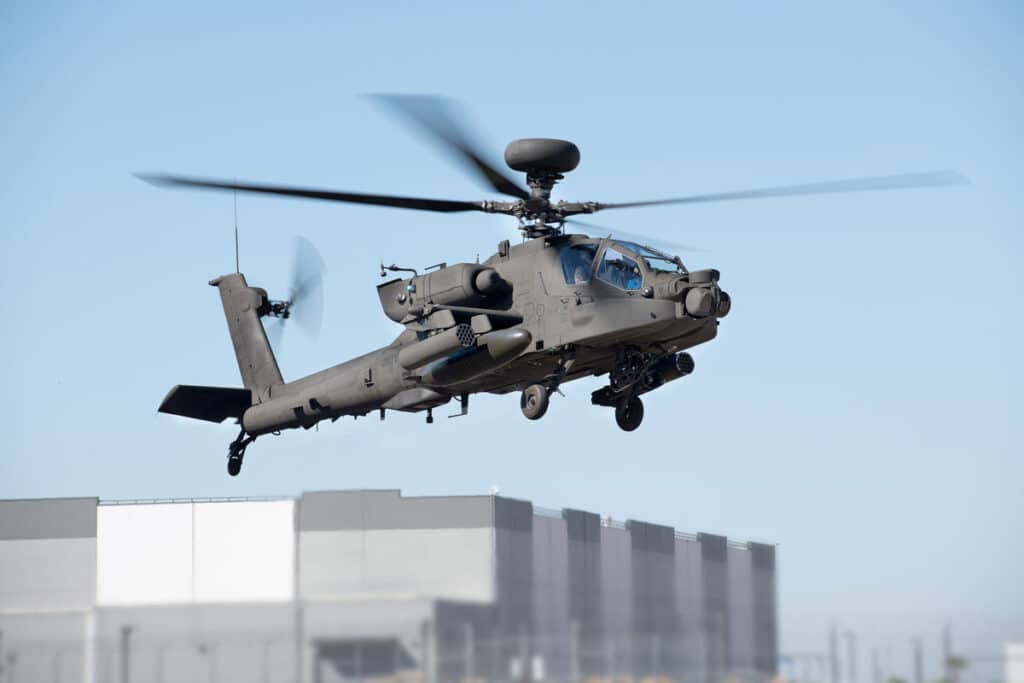
Country: United States Type: Attack helicopter Status: Active service worldwide
The iconic Apache attack helicopter achieves 182 mph maximum speed, making it among the fastest combat rotorcraft in active service. Twin General Electric T700 turboshaft engines provide 3,000+ shaft horsepower driving the four-blade main rotor.
The Apache’s speed enables rapid repositioning between engagement areas, quick strikes, and evasive maneuvers against ground threats. Its streamlined tandem cockpit and weapons configuration minimize drag while sophisticated rotor blade design delays retreating blade stall.
Tens of thousands of combat hours across multiple conflicts demonstrate the Apache’s speed advantages in attack helicopter missions where velocity enables survival and mission effectiveness.
5. Mil Mi-35 Hind — 208 mph (335 km/h)
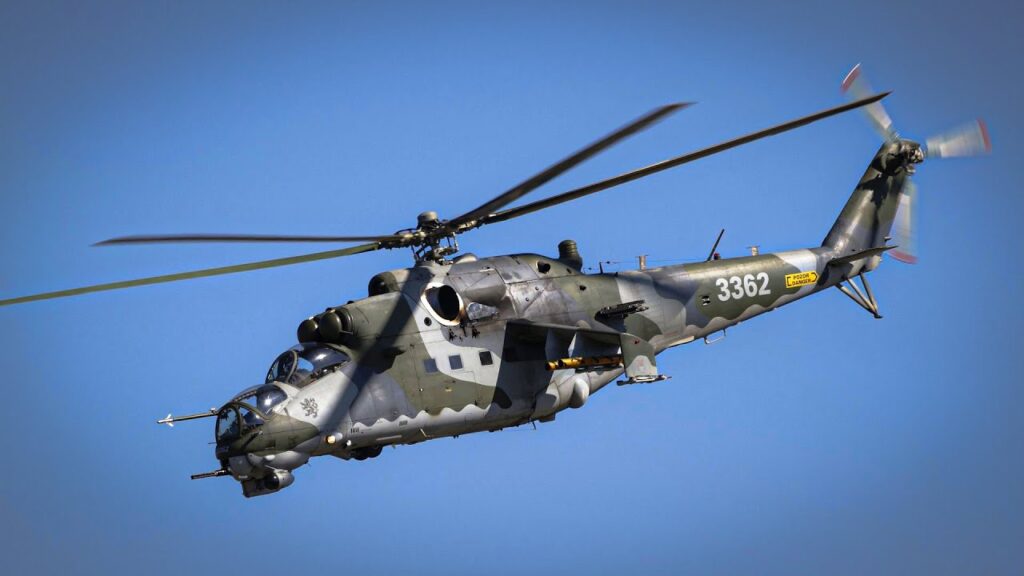
Country: Russia Type: Attack/transport helicopter Status: Active service
The Russian Mi-35 Hind achieves an impressive 208 mph, faster than most Western attack helicopters. This dual-role gunship combines attack helicopter firepower with troop transport capability, carrying eight soldiers plus weapons.
Twin Klimov TV3-117 turboshaft engines generating 4,500+ shaft horsepower drive the Hind’s five-blade main rotor. Stub wings provide additional lift at high speeds, offloading the rotor and delaying retreating blade stall while also serving as weapons hardpoints.
The Hind’s speed advantage reflects Soviet design philosophy prioritizing raw performance and survivability, enabling rapid deployment and extraction missions under fire.
6. Boeing CH-47F Chinook — 196 mph (315 km/h)
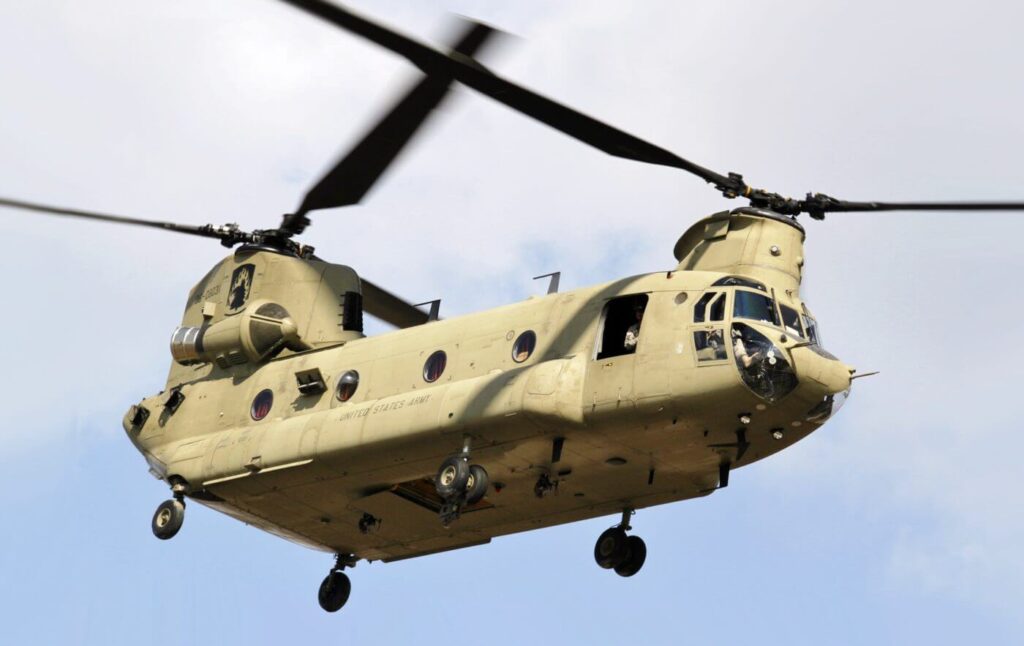
Country: United States Type: Heavy-lift transport helicopter Status: Active service worldwide
The Chinook’s distinctive tandem rotor configuration enables 196 mph maximum speed while lifting massive payloads. Two three-blade rotors counter-rotate, eliminating the need for a tail rotor and providing exceptional lift capacity and stability.
Twin Honeywell T55 turboshaft engines generating 9,000+ shaft horsepower drive both rotors through a complex transmission system. The tandem rotor design provides natural nose-down attitude at speed, reducing drag and enabling higher velocities than single-rotor helicopters of comparable size.
Decades of military service demonstrate the Chinook’s unique combination of speed, payload capacity, and reliability in diverse operating environments from Arctic to desert conditions.
7. Kamov Ka-52 Alligator — 196 mph (315 km/h)
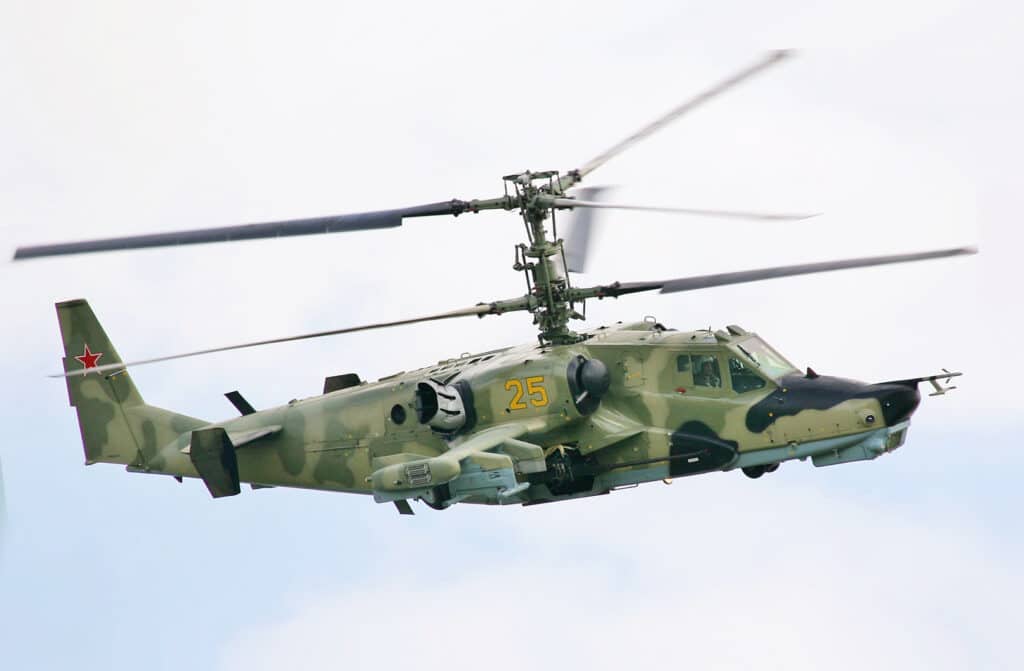
Country: Russia Type: Attack helicopter Status: Active service
The Ka-52 utilizes coaxial counter-rotating rotors like the X2, enabling 196 mph top speed while maintaining exceptional maneuverability. This twin-seat reconnaissance and attack helicopter serves as Russia’s premier gunship alongside the Mi-28.
The coaxial rotor design eliminates tail rotor power losses, dedicating full engine output to lift and forward thrust. Two Klimov VK-2500 turboshaft engines provide 4,800+ shaft horsepower. The compact rotor system enables operations from confined spaces including ship decks.
Kamov’s coaxial expertise dating back to the 1940s demonstrates that counter-rotating rotors offer viable alternatives to conventional configurations for high-speed military helicopters.
8. Bell 525 Relentless — 184 mph (296 km/h)
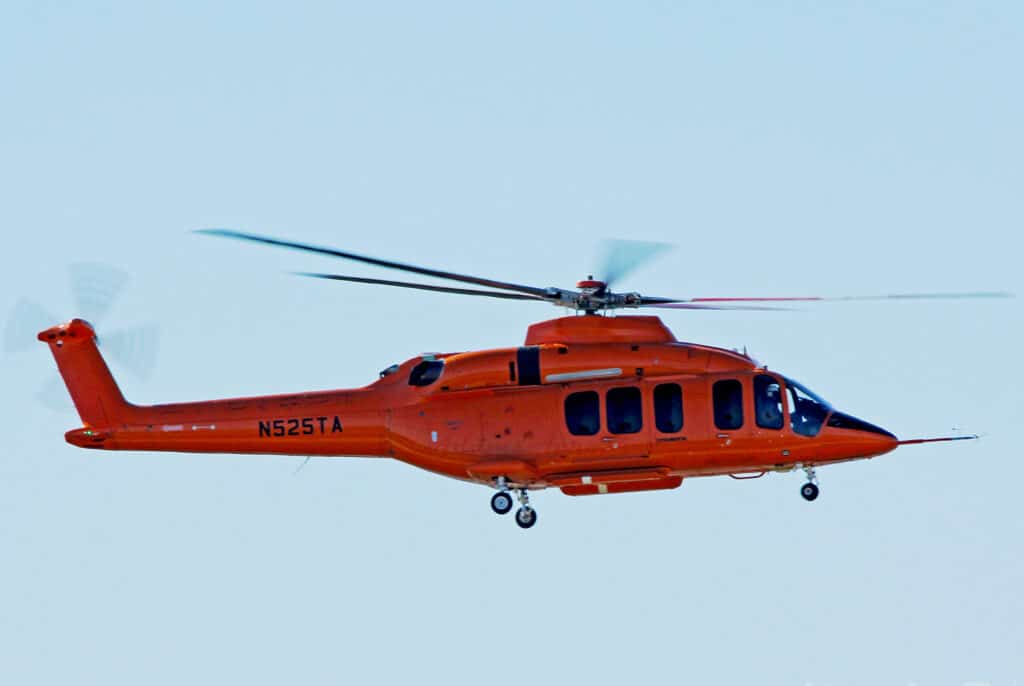
Country: United States Type: Super-medium civilian helicopter Status: Development/certification
The Bell 525 represents the fastest civilian helicopter under development, targeting 184 mph cruise speed. This fly-by-wire super-medium rotorcraft aims at corporate, VIP, and offshore transport markets demanding speed and range.
Twin GE CT7-2F1 turboshaft engines provide 4,000+ shaft horsepower driving a five-blade composite main rotor. Advanced aerodynamics, fly-by-wire flight controls, and composite construction enable speeds approaching military attack helicopters while maintaining civilian comfort and safety standards.
The 525’s development demonstrates growing civilian demand for high-speed rotorcraft as business aviation embraces helicopters for point-to-point transportation.
9. NHIndustries NH90 — 186 mph (300 km/h)
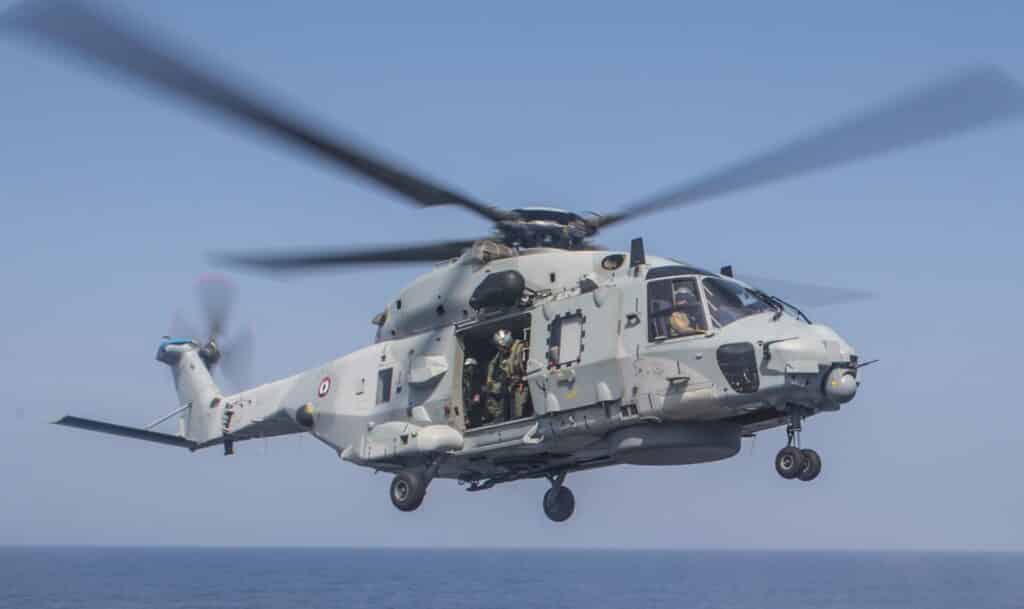
Country: European consortium Type: Medium military/naval helicopter Status: Active service
The NH90 achieves 186 mph serving European militaries in transport and naval roles. This multi-role helicopter features advanced composite construction, fly-by-wire controls, and a four-blade bearingless main rotor optimized for high-speed flight.
Twin Rolls-Royce Turbomeca RTM322 or General Electric T700 engines provide flexibility for different operators. The NH90’s speed enables rapid troop deployment, medical evacuation, and ship-to-shore operations for European NATO forces.
Extensive composite use reduces weight while maintaining strength, enabling higher speeds and improved fuel efficiency compared to older metal-construction helicopters.
10. Leonardo AW139 — 193 mph (310 km/h)
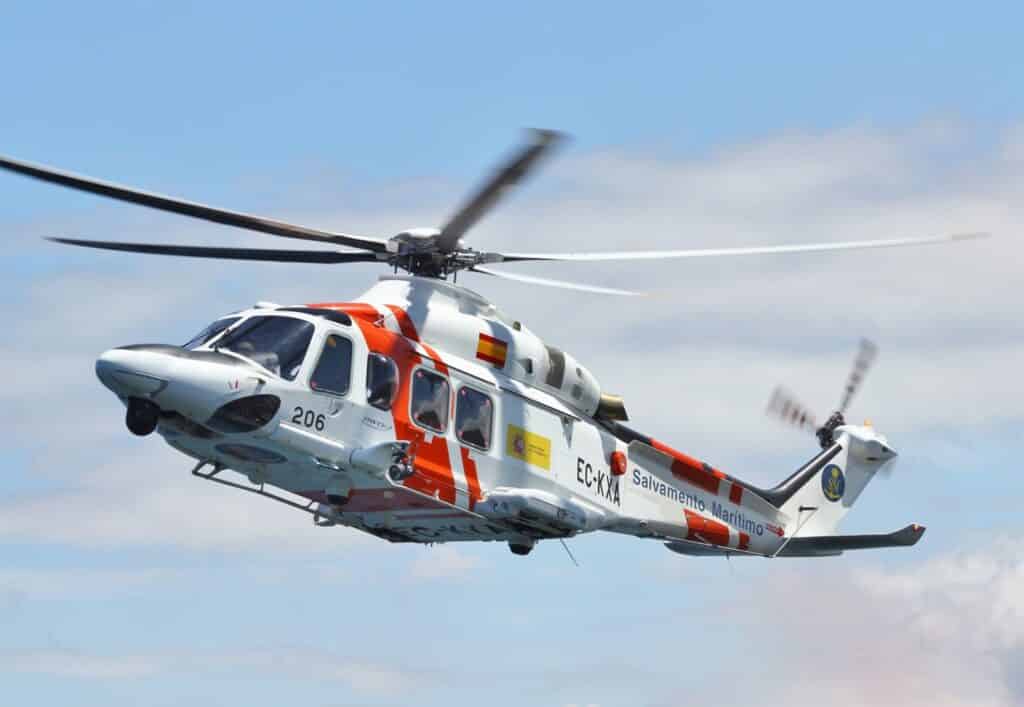
Country: Italy Type: Medium civilian/military helicopter Status: Active production
The AW139 represents one of the fastest production civilian helicopters at 193 mph, serving commercial, government, and military operators worldwide. This twin-engine medium helicopter dominates offshore oil, VIP transport, and emergency services markets.
Twin Pratt & Whitney PT6C-67C turboshaft engines provide 3,400+ shaft horsepower. The five-blade main rotor with advanced airfoils delays retreating blade stall, enabling higher cruise speeds than competing medium helicopters.
Over 1,200 AW139s delivered demonstrate strong market demand for fast, reliable civilian helicopters capable of medium-range transport missions.
Military vs Civilian Helicopter Speed
Military helicopters consistently achieve higher speeds than civilian counterparts, reflecting different design priorities and mission requirements.
Mission Requirements: Military helicopters must rapidly reposition between combat areas, evade threats, and complete time-critical missions. Speed often determines survival in contested environments. Civilian helicopters prioritize comfort, efficiency, and operating economics over maximum velocity.
Power and Weight: Military rotorcraft sacrifice payload and fuel efficiency for higher power-to-weight ratios. Attack helicopters in particular dedicate enormous engine power to speed and maneuverability. Civilian helicopters optimize for passenger capacity and operating costs rather than maximum performance.
Aerodynamic Optimization: Military helicopters feature streamlined fuselages, retractable landing gear, and minimal external protrusions. Civilian helicopters accommodate larger cabins, fixed landing gear, and external equipment reducing maximum speed but improving utility and economics.
Regulatory Constraints: Civilian helicopters face stricter certification requirements for stability, controllability, and passenger comfort limiting aggressive high-speed designs. Military specifications permit handling characteristics and performance envelopes unacceptable for civilian operations.
How Engineers Make Helicopters Faster
Overcoming fundamental helicopter speed barriers requires innovative engineering solutions addressing retreating blade stall and other aerodynamic limitations.
Coaxial Counter-Rotating Rotors: Two rotors spinning in opposite directions solve retreating blade stall by ensuring both sides always have an advancing blade generating full lift. The Sikorsky X2 and Kamov helicopters demonstrate this approach, though mechanical complexity and weight penalties remain challenges.
Compound Configurations with Pusher Propellers: Adding a propeller or jet engine for forward thrust offloads the rotor, allowing it to focus on lift rather than propulsion. The X2 and X3 both use this approach, enabling speeds impossible for rotors providing both lift and thrust simultaneously.
Wing-Mounted Propulsion: The X3’s wing-mounted turboprops provide lift at high speeds while propelling the aircraft. At cruise speeds above 150 mph, the wings generate significant lift, unloading the rotor and enabling higher velocities with reduced rotor disk loading.
Advanced Rotor Blade Design: Modern composite blades with optimized airfoils, twist distribution, and planform shapes delay retreating blade stall. Swept blade tips reduce compressibility effects as blade tips approach transonic speeds.
Aerodynamic Fuselage Design: Streamlined fuselages, retractable landing gear, flush riveting, and minimal external protrusions reduce drag enabling higher speeds with available power. Modern helicopter manufacturers invest heavily in computational fluid dynamics optimizing airframe aerodynamics.
Why Helicopters Can’t Match Jets
Despite impressive speeds achieved by advanced helicopters, rotorcraft fundamentally cannot match fixed-wing jet aircraft performance due to inherent aerodynamic constraints.
Rotor Efficiency Limitations: Helicopter rotors generate both lift and thrust through the same rotating blades, creating inherent inefficiencies. Fixed-wing aircraft separate these functions, with wings generating lift and engines providing thrust, enabling much higher efficiency at high speeds.
Drag: Helicopter rotors create enormous drag at high forward speeds as large rotor disks push through the air. Even with pusher propellers offloading forward thrust, the spinning rotor generates far more drag than a fixed wing of comparable lift capability.
Power Requirements: Achieving 300 mph in a helicopter requires exponentially more power than reaching the same speed in a fixed-wing aircraft. The power curve for helicopters becomes prohibitively steep above 200 mph, making higher speeds technically possible but economically impractical.
Structural Weight: Helicopter rotor systems, transmissions, and gearboxes represent significant structural weight compared to fixed-wing designs. This weight penalty reduces performance while the complexity limits reliability compared to jet aircraft simplicity.
These fundamental constraints mean helicopters will likely never achieve the 400-600 mph cruise speeds common for jets, though 250-300 mph appears achievable with compound technologies.
Future of High-Speed Rotorcraft
Next-generation military programs aim for 250+ mph cruise speeds in production rotorcraft, not just experimental demonstrators.
Future Vertical Lift (FVL): The U.S. Army’s FVL program develops replacements for Black Hawk and Apache helicopters targeting 230+ mph cruise speeds. Sikorsky-Boeing’s SB>1 Defiant uses X2-derived coaxial rotors with pusher propeller, while Bell’s V-280 Valor employs tiltrotor technology.
These programs represent the first production high-speed rotorcraft incorporating compound helicopter or tiltrotor designs rather than conventional configurations. Both demonstrators exceeded 250 mph during testing, validating the technologies for operational deployment.
European Programs: Airbus Helicopters’ Racer (Rapid and Cost-Effective Rotorcraft) targets 250 mph using X3-derived technology for civilian and military applications. This compound helicopter could enter service in the late 2020s if development continues.
Civilian Applications: High-speed helicopters enable new urban air mobility and regional transportation missions. Flying 250 mph instead of 150 mph transforms helicopter range and utility, potentially enabling 300-400 mile trips competitive with regional airlines.
Tiltrotor Evolution: The V-22 Osprey proved tiltrotor viability achieving 275+ mph by converting to fixed-wing flight. Future civilian tiltrotors could revolutionize business aviation offering jet speeds with helicopter versatility.
Could Helicopters Become as Fast as Airplanes?
The question of whether helicopters might eventually match airplane speeds requires understanding the distinction between cruise speed and maximum speed.
Pure helicopters with conventional rotors will likely remain constrained below 250 mph due to fundamental aerodynamic limitations. However, compound helicopters and tiltrotors blur the line between helicopter and airplane, potentially achieving 300-400 mph.
At some point, extremely high-speed “helicopters” become more airplane than rotorcraft, sacrificing hover efficiency for cruise performance. The V-22 Osprey demonstrates this tradeoff, achieving impressive speed by essentially transforming into a turboprop airplane for cruise flight.
For practical purposes, helicopters optimized for vertical flight will remain slower than airplanes optimized for forward flight. But compound rotorcraft occupying the middle ground may achieve speeds approaching smaller private jets while retaining helicopter takeoff and landing capabilities.
The future likely includes multiple rotorcraft categories: conventional helicopters for hover-intensive missions, compound helicopters for balanced performance, and tiltrotors for speed-priority applications. Each serves distinct mission profiles rather than one design replacing all others.
Frequently Asked Questions
What Is the Fastest Helicopter in the World?
The Sikorsky X2 experimental helicopter holds the speed record at 299 mph (481 km/h) achieved in 2010. This demonstrator used coaxial counter-rotating main rotors combined with a pusher propeller to overcome retreating blade stall limiting conventional helicopters. The Eurocopter X3 ranks second at 293 mph using wing-mounted turboprops with a conventional main rotor. Among production military helicopters, the Mi-35 Hind achieves 208 mph while the CH-53E Super Stallion reaches 196 mph. For civilian helicopters, the AW139 leads at 193 mph with the Bell 525 targeting 184 mph when certified.
What Is the Fastest Military Helicopter?
Among operational military helicopters, the Russian Mil Mi-35 Hind ranks fastest at 208 mph maximum speed. The CH-53E Super Stallion, AH-64 Apache (182 mph), CH-47F Chinook (196 mph), and Ka-52 Alligator (196 mph) follow closely. Experimental military demonstrators like the Sikorsky X2 and Boeing SB>1 Defiant exceed 250 mph but haven’t entered production service. The U.S. Army’s Future Vertical Lift program aims to field production helicopters capable of 230+ mph cruise speeds by the early 2030s, potentially making them the fastest operational military rotorcraft when deployed.
Why Are Helicopters Slower Than Jets?
Helicopters face fundamental aerodynamic limitations jets don’t encounter. Retreating blade stall occurs when the rotor blade moving opposite the flight direction loses lift, typically around 180-200 mph, creating severe vibration and control problems. Helicopter rotors also generate both lift and thrust through the same blades, creating inherent inefficiency compared to jets using wings for lift and engines for thrust separately. Rotor drag increases dramatically at high speeds, requiring exponentially more power. The large spinning rotor disk creates far more drag than fixed wings. Additionally, helicopter transmissions, gearboxes, and rotor systems weigh significantly more than comparable fixed-wing structures, reducing performance. These constraints mean conventional helicopters rarely exceed 200 mph while jets routinely cruise above 400 mph.
How Fast Can Helicopters Fly?
Conventional helicopter maximum speed typically ranges 150-180 mph due to retreating blade stall and rotor tip speed limitations. Modern military attack helicopters like the Apache reach 180-195 mph using powerful engines and optimized rotor designs. Heavy-lift helicopters including the CH-53E and CH-47F achieve 195-200 mph through brute power and large rotor systems. Compound helicopters with pusher propellers or wing-mounted engines exceed 250 mph, with experimental demonstrators reaching nearly 300 mph. Tiltrotors like the V-22 Osprey achieve 275+ mph by converting to fixed-wing flight. The practical speed limit for pure helicopters appears around 250 mph, while compound configurations could potentially reach 300-350 mph before aerodynamic penalties become prohibitive.
Top 10 Fastest Helicopters Comparison
| Rank | Helicopter | Country | Top Speed | Type |
|---|---|---|---|---|
| 1 | Sikorsky X2 | USA | 299 mph (481 km/h) | Experimental Compound |
| 2 | Eurocopter X3 | France/EU | 293 mph (472 km/h) | Experimental Compound |
| 3 | Mi-35 Hind | Russia | 208 mph (335 km/h) | Attack/Transport |
| 4 | CH-53E Super Stallion | USA | 196 mph (315 km/h) | Heavy-Lift Transport |
| 5 | CH-47F Chinook | USA | 196 mph (315 km/h) | Heavy-Lift Transport |
| 6 | Ka-52 Alligator | Russia | 196 mph (315 km/h) | Attack |
| 7 | AW139 | Italy | 193 mph (310 km/h) | Medium Civilian/Military |
| 8 | NH90 | European Consortium | 186 mph (300 km/h) | Medium Military/Naval |
| 9 | Bell 525 Relentless | USA | 184 mph (296 km/h) | Super-Medium Civilian |
| 10 | AH-64 Apache | USA | 182 mph (293 km/h) | Attack |
Note: Speeds represent maximum velocities achieved during testing or specified in technical documentation. Operational cruise speeds typically run 20-30% lower for fuel efficiency and component longevity.
Conclusion: Speed Pushing Engineering Boundaries
The fastest helicopters in the world represent remarkable engineering achievements, overcoming fundamental aerodynamic constraints that limit conventional rotorcraft to 150-180 mph. Experimental demonstrators like the Sikorsky X2 (299 mph) and Eurocopter X3 (293 mph) proved that 300 mph helicopters are technically feasible using coaxial rotors, pusher propellers, and compound configurations.
Among operational military helicopters, the Russian Mi-35 Hind leads at 208 mph, followed by American heavy-lifters like the CH-53E Super Stallion and CH-47F Chinook at 196 mph. Attack helicopters including the legendary Apache achieve 182 mph, balancing speed with firepower and maneuverability. For civilian applications, the Leonardo AW139 dominates at 193 mph with the Bell 525 targeting similar performance.
Military rotorcraft consistently outpace civilian counterparts due to mission requirements prioritizing rapid deployment, threat evasion, and time-critical operations. Power-to-weight ratios, aerodynamic optimization, and performance-focused design enable military speeds civilian economics don’t justify.
The future promises even faster helicopters as compound technologies and tiltrotor designs transition from experimental demonstrators to production aircraft. The U.S. Army’s Future Vertical Lift program targets 230+ mph cruise speeds for next-generation assault and attack helicopters entering service in the 2030s. European Racer development aims for 250 mph civilian applications.
While pure helicopters will likely remain constrained below 250 mph by retreating blade stall and rotor aerodynamics, compound configurations blur the line between helicopter and airplane. These advanced rotorcraft could achieve 300-350 mph while retaining vertical takeoff and landing capabilities, revolutionizing military operations and potentially enabling new civilian transportation missions.
The engineering challenge isn’t simply making helicopters faster but balancing speed against hover efficiency, payload capacity, operating economics, and mission versatility. Different rotorcraft categories will serve distinct roles: conventional helicopters for hover-intensive missions, compound helicopters for balanced performance, and tiltrotors for speed-priority applications where jet-like cruise performance justifies complexity and cost.
Speed records will continue falling as technology advances, but the fundamental tradeoffs between helicopter versatility and airplane efficiency ensure rotorcraft and fixed-wing aircraft remain complementary rather than competitive for the foreseeable future.