Industry
UN Aviation Body Holds Russia Responsible for MH17 Downing
On 12 May 2025 the ICAO Council found Russia responsible for shooting down Malaysia Airlines flight MH17 in 2014, breaching the Chicago Convention.
Updated 4 min read
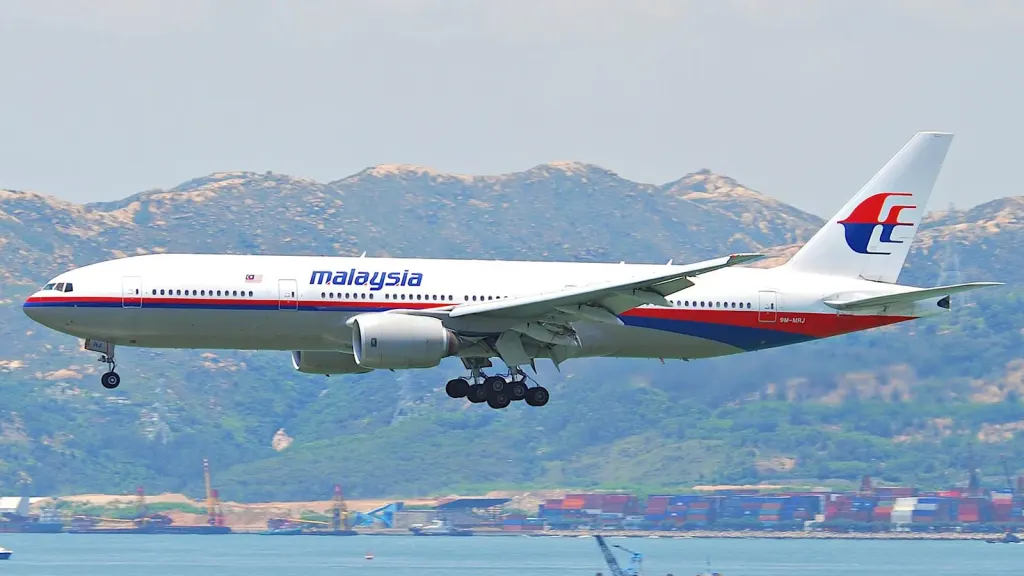
The Council of the International Civil Aviation Organization (ICAO), the United Nations agency for civil aviation, decided on 12 May 2025 that Russia was responsible for the downing of Malaysia Airlines flight MH17 over eastern Ukraine in July 2014. The Council found that Russia had violated the Convention on International Civil Aviation, known as the Chicago Convention, which prohibits states from using weapons against civil aircraft in flight.
The ruling came in a case brought by the Netherlands and Australia in 2022. It was the first time the ICAO Council had issued a decision on the substance of a dispute between member states.
The shootdown
MH17, a Boeing 777-200ER flying from Amsterdam to Kuala Lumpur, was destroyed at cruising altitude on 17 July 2014 over territory in the Donetsk region then held by Russian-backed separatists. All 298 people on board were killed: 283 passengers and 15 crew. They included 196 Dutch nationals, 43 Malaysians (among them all of the crew) and 38 Australian citizens and residents, as well as victims from Indonesia, the United Kingdom, Germany, Belgium and other countries.
The Dutch Safety Board concluded in October 2015 that the aircraft was brought down by a warhead from a Buk surface-to-air missile. The Dutch-led Joint Investigation Team later found that the launcher belonged to Russia's 53rd Anti-Aircraft Missile Brigade, had been brought into Ukraine from Russia and was returned there after the attack.
The legal basis
The case rested on Article 3 bis of the Chicago Convention, added in 1984 after the Soviet Union shot down Korean Air Lines flight 007. It requires states to refrain from resorting to the use of weapons against civil aircraft in flight. The Netherlands and Australia used the Convention's dispute settlement procedure under Article 84, which allows a state to ask the ICAO Council to rule on a disagreement over how the treaty is interpreted or applied.
The two countries had held talks with Russia from 2018, but Russia withdrew from them in 2020. They filed their application with ICAO in March 2022. Russia has consistently denied any involvement in the downing.
Reactions
Australian Foreign Minister Penny Wong welcomed the decision and called on Russia to face up to its responsibility for the attack and make reparations, as international law requires. Dutch Foreign Minister Caspar Veldkamp said the decision sent a clear message that "states cannot violate international law with impunity".
Both governments asked the Council to order Russia to enter negotiations on reparations and to help facilitate that process.
The criminal case
The ICAO ruling dealt with state responsibility, not individual guilt. That question was addressed by the District Court of The Hague, which on 17 November 2022 convicted three men in absentia of murder and of causing the aircraft to crash: Russians Igor Girkin and Sergei Dubinsky, and Ukrainian separatist Leonid Kharchenko. They were sentenced to life imprisonment. A fourth defendant, Russian Oleg Pulatov, was acquitted. Russia called the verdict scandalous and said it would not extradite its citizens, and none of the three has served any part of the sentence.
Why it matters for aviation
MH17 changed how airlines and regulators deal with conflict zones. At the time, the airspace over eastern Ukraine was restricted only below 32,000 feet, and many carriers were still routing flights over it. The Dutch Safety Board found that neither Ukraine nor the airlines had adequately assessed the risk to aircraft at cruising altitude.
The disaster led to several changes that remain in place:
- ICAO developed guidance for states on risk assessment for civil aircraft operations over or near conflict zones.
- The European Union Aviation Safety Agency began issuing Conflict Zone Information Bulletins, giving European operators a common source of risk information.
- National authorities, including the UK and US, expanded their own airspace warnings and restrictions for operators.
For operators, the ICAO decision adds a legal finding to those operational lessons. It establishes, through the organisation that sets global aviation standards, that a state can be held responsible under the Chicago Convention for destroying a civil airliner, even where the weapon was fired in a conflict involving non-state forces.
What has happened since
- 30 June 2025: the ICAO Council issued a decision on reparations, ordering Russia, the Netherlands and Australia to enter into good faith negotiations immediately.
- 9 July 2025: the European Court of Human Rights ruled that Russia was responsible for the downing of MH17 and the deaths of those on board, in a case brought by Ukraine and the Netherlands.
- August 2025: Australia and the Netherlands formally asked Russia to begin negotiations. According to the two governments, Russia did not respond.
- 18 September 2025: Russia filed proceedings at the International Court of Justice, using its right to appeal against decisions of the ICAO Council.
- July 2026: on the twelfth anniversary of the downing, the EU and a group of states including the UK renewed calls for Russia to accept responsibility and engage on reparations.
The Dutch government's account of the case is available on government.nl.

About the author
Radu Balas
Founder, Flying Engineer
View author profile Editorial policy and corrections