

The McDonnell Douglas MD-11 represents the final chapter in commercial trijet history. Built as an advanced version of the DC-10, this widebody aircraft promised better range and efficiency.
Production numbers tell a story of ambitious goals meeting harsh market realities. The answer to “how many were built” reveals why this distinctive aircraft never matched its predecessor’s success.
How Many MD-11s Were Built in Total?
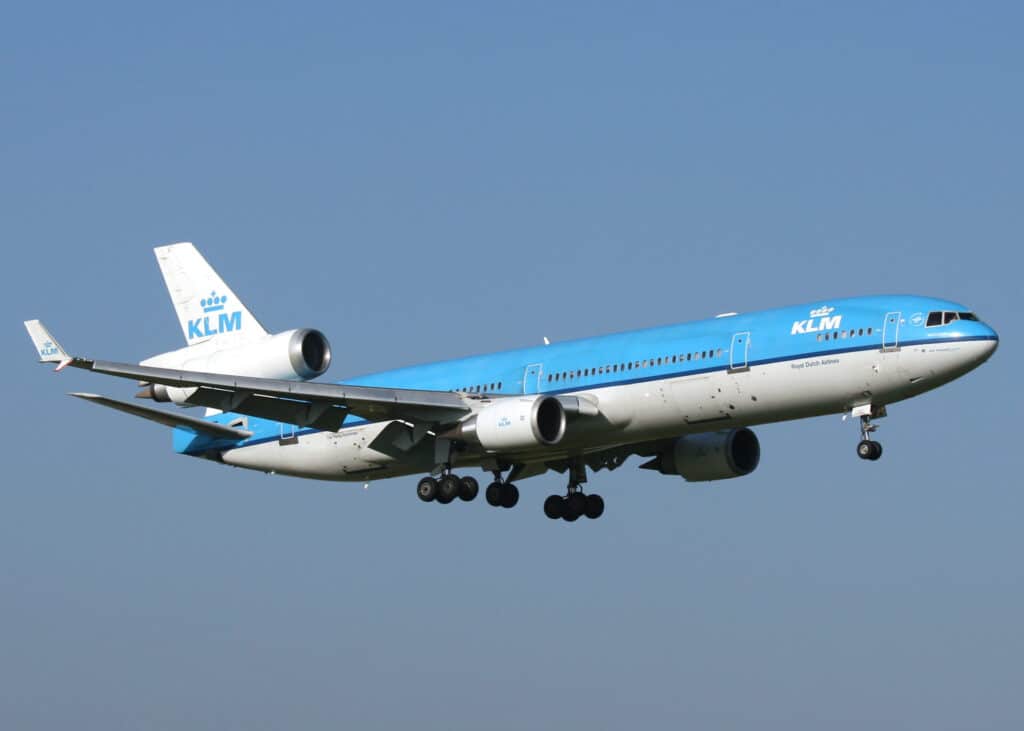
McDonnell Douglas built exactly 200 MD-11 aircraft between 1988 and 2000. This includes all variants: passenger, freighter, and combi configurations.
Breaking down the production:
- MD-11 passenger variants: Approximately 131 aircraft
- MD-11F factory freighters: Approximately 58 aircraft
- MD-11C combi versions: Approximately 11 aircraft
Compare this to the DC-10’s 446 aircraft built, and the MD-11’s commercial challenge becomes clear. The aircraft never achieved the market penetration McDonnell Douglas hoped for.
That total of 200 makes the MD-11 relatively rare compared to competing widebodies. Boeing built over 1,000 777s during overlapping production periods.
When Was the MD-11 Produced?
The MD-11 had a 12-year production run from program launch to final delivery.
Key Timeline Milestones
- Program launch: December 1986
- First flight: January 10, 1990
- Entry into service: December 1990 (Finnair)
- Production period: 1988-2000
- Final delivery: February 2001 (Lufthansa Cargo)
- Total production time: Approximately 12 years
Production peaked in the early 1990s before declining sharply. By the late 1990s, orders had dried up as airlines chose the Boeing 777 instead.
The Boeing-McDonnell Douglas merger in 1997 effectively sealed the MD-11’s fate. Boeing had no interest in competing against its own 777 program.
MD-11 Variants Explained
McDonnell Douglas offered several MD-11 variants trying to meet different market needs.
MD-11 (Passenger Version)
The baseline passenger MD-11 seated approximately 285-410 passengers depending on configuration. Airlines configured these for long-haul routes competing with 747s and DC-10s.
Key specifications:
- Range: Up to 7,240 nautical miles
- Engines: Three General Electric CF6 or Pratt & Whitney PW4000 engines
- Wingspan: 169 feet 6 inches
- Length: 202 feet 3 inches
Airlines including American Airlines, Delta, and KLM operated passenger MD-11s. Most retired these aircraft by the early 2010s.
MD-11F (Factory Freighter)
The MD-11F factory freighter became the variant’s most successful version. Built without passenger windows or cabin systems, these dedicated cargo aircraft offered excellent payload capacity.
Approximately 58 MD-11F aircraft were built from the factory. This excludes passenger-to-freighter conversions done later.
Cargo carriers like FedEx, UPS, and Lufthansa Cargo ordered factory freighters. These aircraft proved more economically viable than passenger versions. Understanding air freight economics explains why cargo operations sustained the MD-11 longer.
MD-11C (Combi)
The MD-11C combi combined passenger seating with main deck cargo space. Only about 11 aircraft were built in this configuration.
Airlines like KLM and Alitalia used combis on routes with both passenger and freight demand. The complexity never justified widespread adoption.
MD-11ER (Extended Range)
The MD-11ER offered increased range through additional fuel capacity. Few airlines ordered this variant as the baseline MD-11 already provided substantial range.
The ER designation appeared in marketing materials more than actual deliveries. Most operators chose standard MD-11s with optional fuel tanks instead.
Why Did MD-11 Production End?
Several factors combined to kill MD-11 production after just 200 aircraft.
Boeing 777 Competition
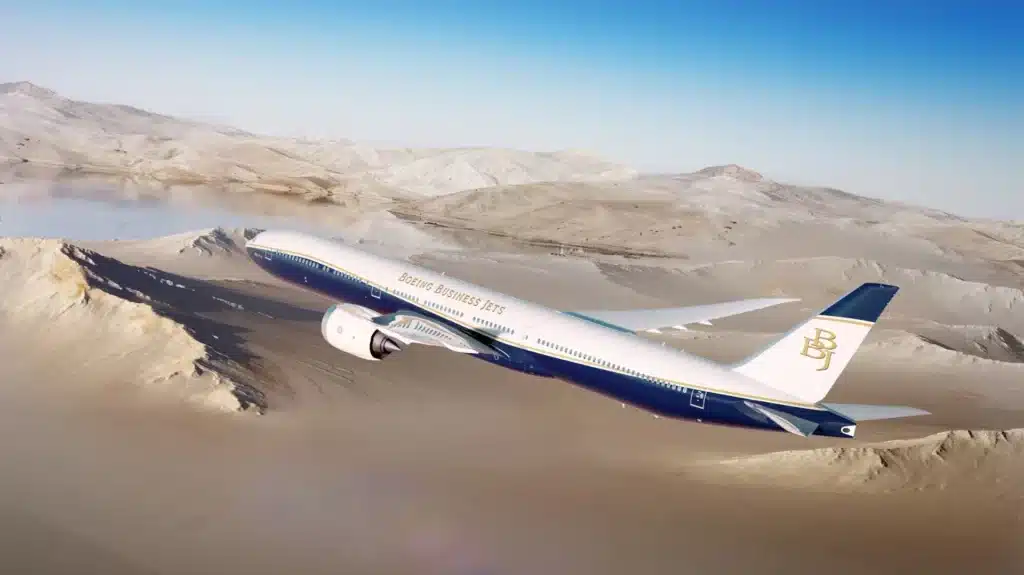
The Boeing 777 entered service in 1995 with superior economics. Twin-engine efficiency beat the MD-11’s three-engine configuration decisively.
Airlines could fly similar routes with the 777 while burning less fuel. The MD-11’s performance never matched McDonnell Douglas’s promises.
Fuel Efficiency Gap
Fuel burn determined long-haul economics. The MD-11 consumed approximately 15-20% more fuel per seat-mile than competing 777s.
That efficiency gap made the MD-11 uncompetitive on most routes. Airlines couldn’t justify the extra operating costs.
ETOPS Twin-Engine Dominance
ETOPS regulations (Extended-range Twin-engine Operational Performance Standards) allowed twin-engine aircraft on long over-water routes previously requiring three or four engines.
Once regulators approved 180-minute ETOPS for the 777, the MD-11’s three-engine advantage disappeared. Twin-engine simplicity and efficiency won.
Boeing-McDonnell Douglas Merger
Boeing acquired McDonnell Douglas in 1997. The merged company had no reason to continue producing an aircraft competing with the highly successful 777. Boeing’s commercial aircraft division focused entirely on twin-engine development going forward.
Boeing allowed MD-11 production to wind down naturally. The final deliveries occurred in early 2001 with no replacement planned.
How Many MD-11s Are Still Flying in 2026?
Approximately 60-70 MD-11s remain active in 2026, virtually all as cargo aircraft. The passenger MD-11 disappeared from commercial service years ago.
FedEx Fleet
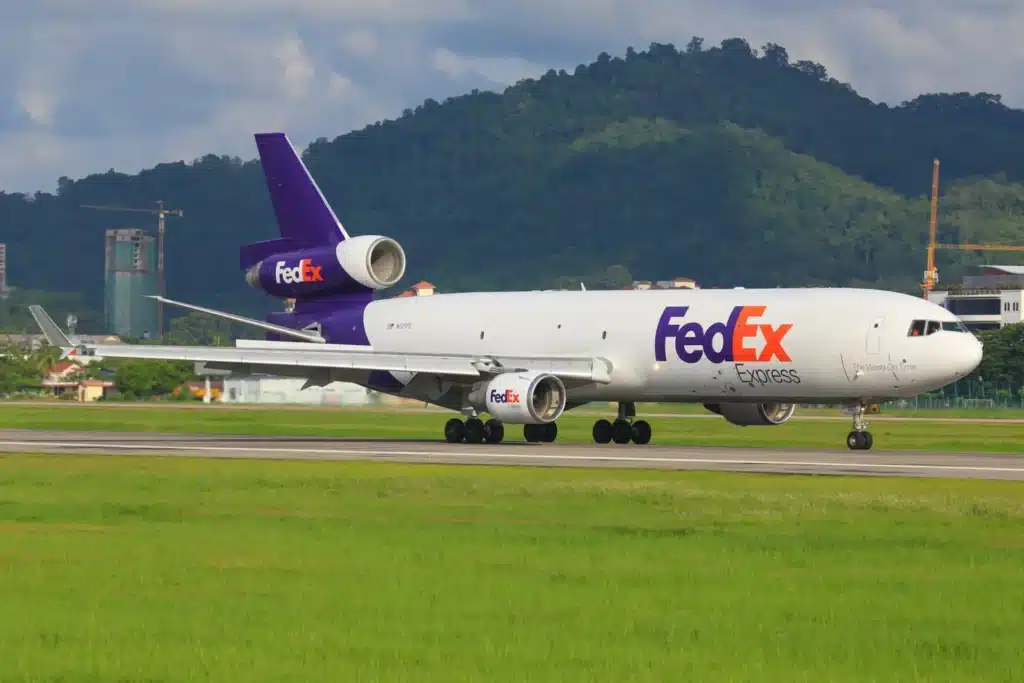
FedEx Express operates the largest MD-11F fleet with approximately 50-55 aircraft still flying. These handle overnight package delivery across North America and internationally. Complex cargo documentation and clearance processes govern these international freight operations.
FedEx continues heavy maintenance on their MD-11Fs, suggesting operation into the late 2020s. FedEx’s fleet operations demonstrate continued commitment to the type despite age. However, retirement plans exist as more efficient aircraft become available.
UPS Airlines Phase-Out
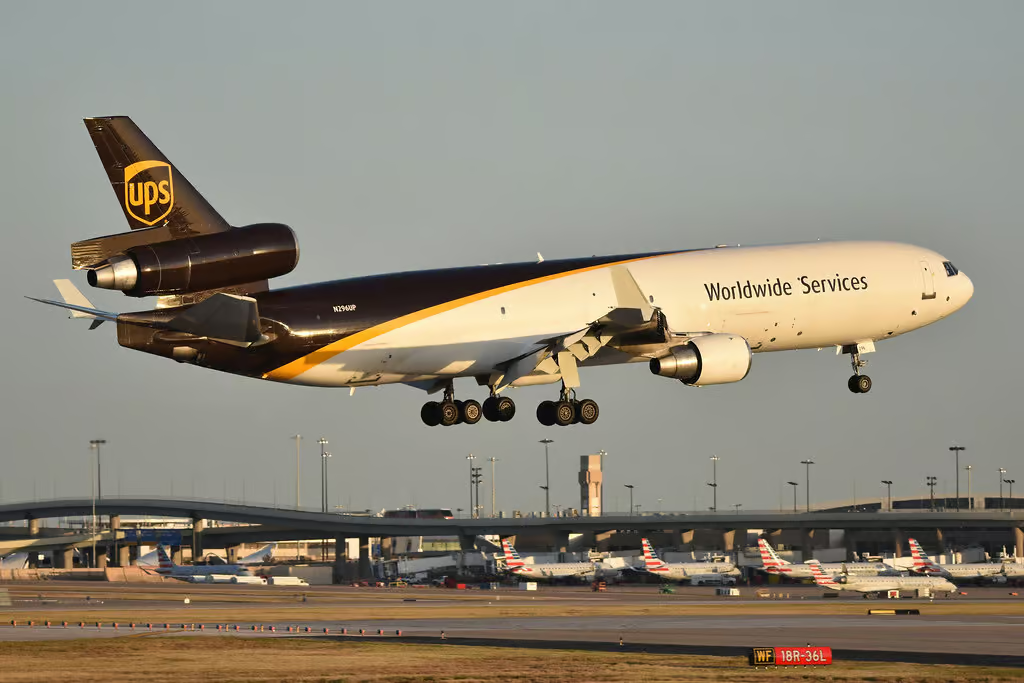
UPS Airlines has largely retired their MD-11F fleet. Most were phased out between 2020-2024 in favor of Boeing 767Fs and 747-8Fs.
Understanding fleet management strategies helps explain why UPS chose retirement over continued operations.
Lufthansa Cargo
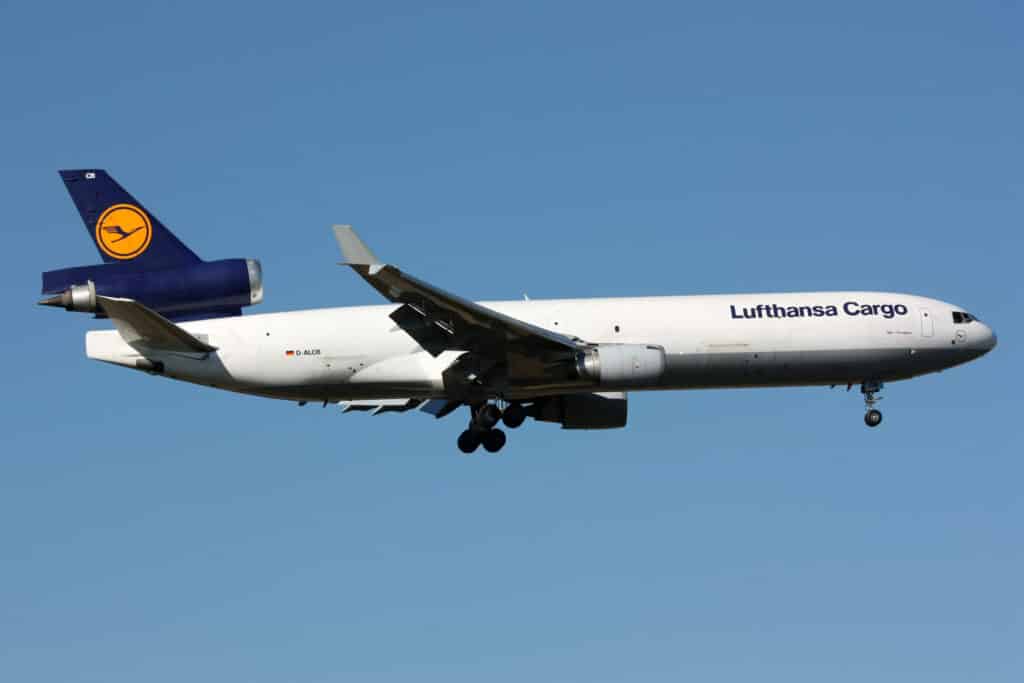
Lufthansa Cargo retired their last MD-11Fs in 2022. The German carrier replaced them with Boeing 777Fs offering better economics and environmental performance.
Other Operators
A handful of smaller cargo carriers operate remaining MD-11Fs. These include aircraft leasing companies and charter freight operators serving niche markets.
Passenger MD-11s occasionally appear in government or private configurations. Some nations use ex-airline MD-11s as VIP transports.
MD-11 vs DC-10 Production Comparison
Comparing the MD-11 to its DC-10 predecessor shows dramatically different market reception.
| Aircraft | Total Built | Production Years | Primary Era |
|---|---|---|---|
| DC-10 | 446 aircraft | 1968-1989 | Pre-ETOPS trijets |
| MD-11 | 200 aircraft | 1988-2000 | ETOPS twin-engine era |
Note: The DC-10 produced more than double the MD-11’s numbers despite being older technology. Market timing and competition explain the difference. Swipe left to see full table on mobile devices.
The DC-10 entered a different market environment. Before ETOPS regulations, airlines needed three or four engines for transoceanic routes. The DC-10 filled that requirement perfectly.
By the MD-11’s era, twin-engine aircraft could fly the same routes more efficiently. The market had fundamentally changed.
Was the MD-11 a Commercial Success?
The MD-11’s success depends on how you measure it. As a passenger aircraft, it failed. As a freighter, it proved more viable.
Passenger Market Failure
Airlines quickly soured on passenger MD-11s. Performance fell short of specifications. Fuel burn exceeded promises. Range disappointed operators.
Major carriers like American Airlines and Delta retired their MD-11s after just 10-15 years. These aircraft should have lasted 25-30 years in passenger service.
The passenger MD-11 never achieved profitability for most operators. It arrived at exactly the wrong time to compete with superior twin-engine alternatives.
Cargo Market Longevity
Cargo operations proved more forgiving. Freight carriers value payload capacity over passenger comfort or efficiency premiums.
FedEx’s continued operation shows the MD-11F works for specific missions. Overnight package delivery doesn’t require the efficiency long-haul passenger operations demand.
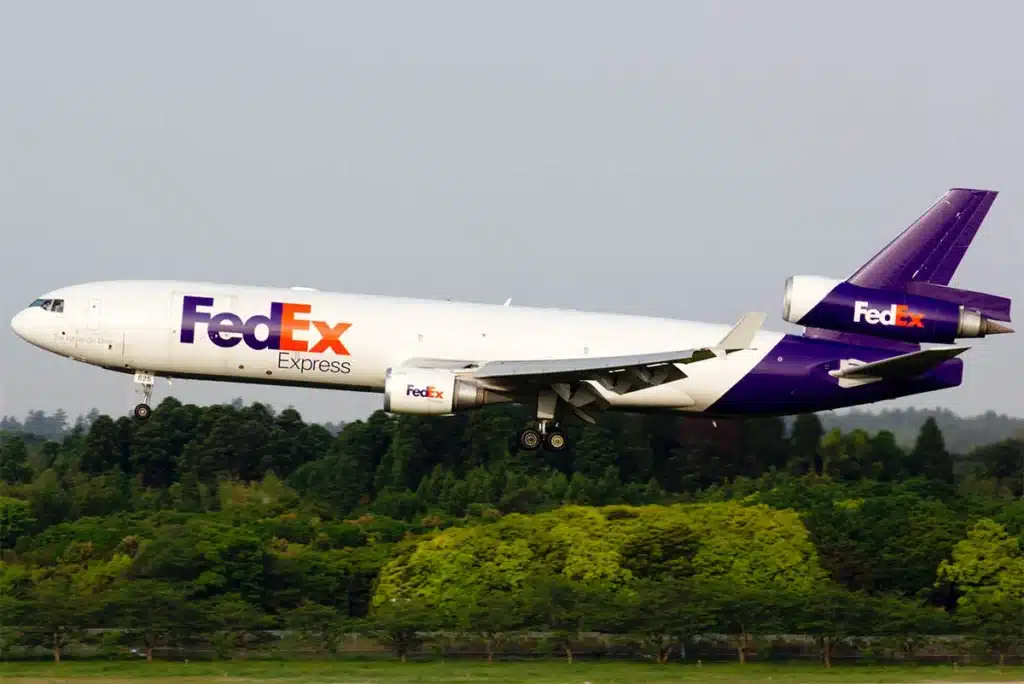
Factory-built MD-11Fs also benefited from lower acquisition costs than competitors. Used MD-11F prices dropped as passenger variants retired, creating cargo conversion opportunities.
Overall Assessment
McDonnell Douglas likely lost money on the MD-11 program. Development costs exceeded returns from just 200 deliveries.
The program demonstrated that incremental improvements weren’t enough. The MD-11 needed to be revolutionary, not evolutionary, to compete with the 777.
Why Aviation Enthusiasts Love the MD-11
Despite commercial failure, the MD-11 maintains devoted fans among aviation enthusiasts.
Distinctive Trijet Design
The three-engine configuration creates visual appeal modern twin-engine aircraft lack. That tail-mounted engine defines the MD-11’s profile.
Aviation photographers treasure MD-11 photo opportunities before the type disappears completely. The distinctive look stands out.
Final Commercial Trijet
The MD-11 represents the end of an era. No manufacturer will build another commercial trijet widebody. Future designs focus on twin-engine efficiency.
This finality makes the MD-11 historically significant. It closed the book on a design philosophy dominating aviation for decades.
Engineering Ambition
McDonnell Douglas tried hard with the MD-11. Winglets, advanced cockpit systems, and aerodynamic improvements showed genuine innovation.
The aircraft failed not from poor engineering but from market timing. Sometimes even good designs arrive at the wrong moment.
Frequently Asked Questions
How many MD-11 aircraft were built in total?
Exactly 200 MD-11 aircraft were built between 1988 and 2000. This includes approximately 131 passenger variants, 58 factory-built freighters (MD-11F), and 11 combi versions (MD-11C). Production ended when Boeing acquired McDonnell Douglas and chose to focus on twin-engine aircraft instead.
Who still operates the MD-11 in 2026?
FedEx Express remains the largest MD-11 operator with approximately 50-55 aircraft still flying cargo routes. UPS has largely retired their fleet. A handful of smaller cargo operators and government users continue flying MD-11s. Virtually no passenger MD-11s remain in commercial service.
Why did airlines retire the MD-11 so quickly?
Poor fuel efficiency compared to twin-engine alternatives. The MD-11 consumed 15-20% more fuel per seat than competing Boeing 777s. Airlines couldn’t justify the operating costs, especially as fuel prices rose. Performance also fell short of McDonnell Douglas’s promises, disappointing early operators.
Is the MD-11 still in production?
No, MD-11 production ended in 2000. The final aircraft was delivered to Lufthansa Cargo in February 2001. Boeing, which acquired McDonnell Douglas in 1997, had no interest in competing against its own successful 777 program. No plans exist to resume production.
How many MD-11F factory freighters were built?
Approximately 58 MD-11F aircraft were built as factory freighters. These dedicated cargo aircraft proved more successful than passenger variants. Many retired passenger MD-11s were also converted to freighters later, but those conversions aren’t included in the factory-built freighter total.
What aircraft replaced the MD-11?
The Boeing 777 effectively replaced the MD-11 in most airline fleets. Airlines choosing MD-11 replacements typically selected 777-200ER or 777-300ER variants offering better economics and similar range. In cargo markets, Boeing 777Fs and 767Fs replaced aging MD-11Fs at major carriers.
How does the MD-11 compare to the DC-10?
The DC-10 was more commercially successful with 446 aircraft built versus the MD-11’s 200. The DC-10 entered service during the pre-ETOPS era when airlines needed trijets for transoceanic routes. The MD-11 arrived when twin-engine aircraft could fly those routes more efficiently.
Will we see MD-11s flying in 2030?
Unlikely in significant numbers. FedEx will probably retire most MD-11Fs by 2028-2030 as more efficient replacements arrive. A few aircraft might operate with smaller cargo carriers into the early 2030s, but the type’s commercial viability continues declining. Environmental regulations and fuel costs drive retirements.
Conclusion
Exactly 200 McDonnell Douglas MD-11 aircraft were built during a 12-year production run. This relatively small number tells the story of an aircraft that arrived at the wrong time.
The MD-11 promised DC-10 improvements with better range, efficiency, and performance. Reality disappointed. Airlines found the Boeing 777 offered superior economics with twin-engine simplicity.
Passenger MD-11s retired quickly – most lasted just 10-15 years in airline service. The type couldn’t compete with more efficient alternatives as fuel prices rose.
Cargo operations proved more forgiving. FedEx continues flying approximately 50-55 MD-11Fs in 2026, though retirement plans exist. The freighter variant found a niche the passenger version never achieved.
Comparing 200 MD-11s to 446 DC-10s shows the dramatic market change between eras. The DC-10 thrived when regulations required multiple engines for ocean crossings. The MD-11 faced unrestricted twin-engine competition.
Commercial success eludes the MD-11, but historical significance remains certain. This aircraft represents the final commercial trijet widebody. No manufacturer will build another.
For aviation history, the MD-11 demonstrates that good engineering can’t overcome poor market timing. McDonnell Douglas built a capable aircraft, but the industry had moved on.
The remaining MD-11s flying today offer final glimpses of trijet design. Within a few years, these distinctive aircraft will exist only in museums and memories.
The answer to “how many were built” – 200 aircraft – represents ambition meeting reality. Sometimes even capable aircraft arrive too late.