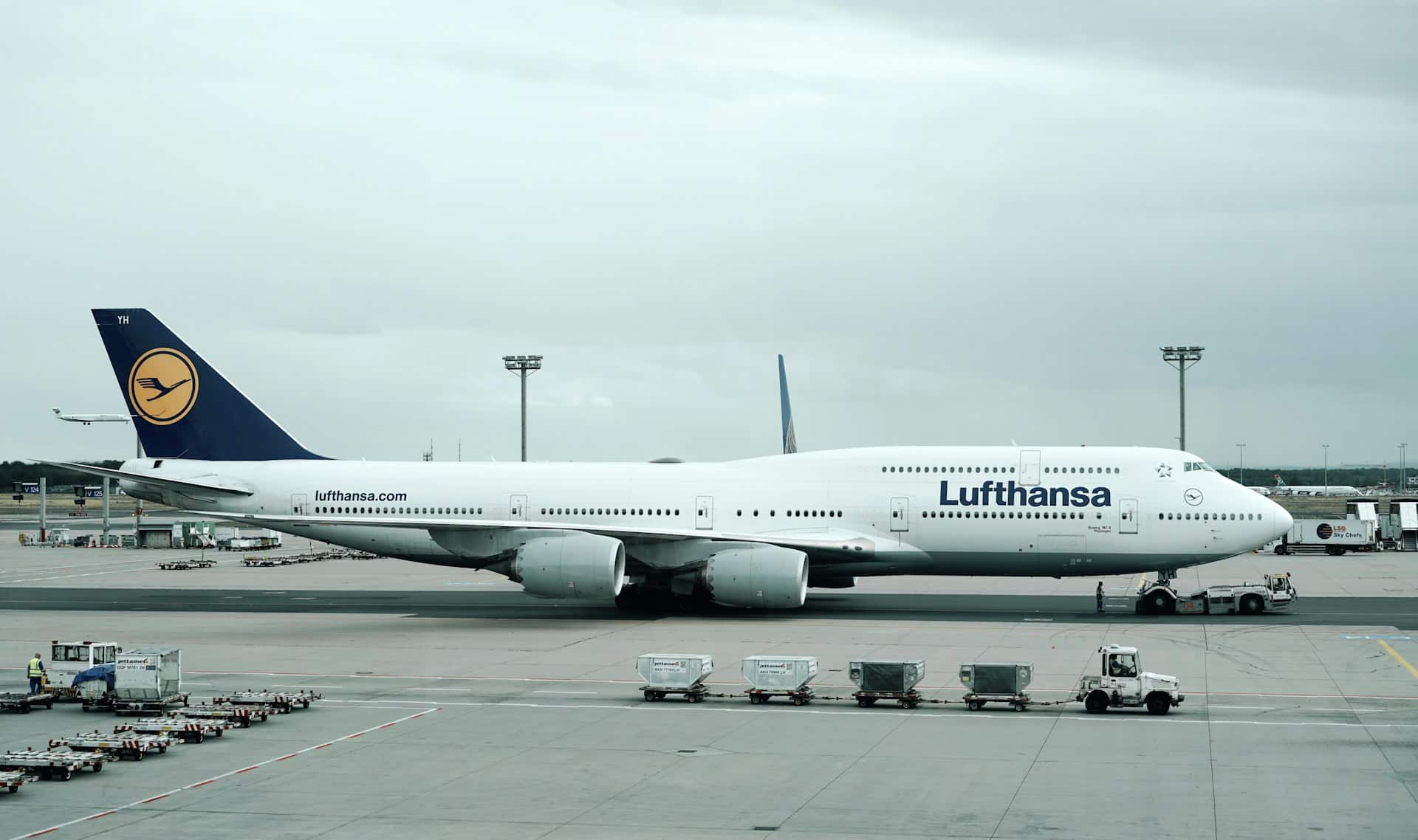
Lufthansa Group announced January 13, 2026, it will equip its entire fleet of approximately 850 aircraft with Starlink satellite internet connectivity, representing the largest deployment of the technology by a European airline group. The rollout begins in the second half of 2026, with full fleet installation targeted for completion by 2029.
The agreement covers all Lufthansa Group carriers including Lufthansa Airlines, SWISS, Austrian Airlines, Brussels Airlines, Eurowings, and ITA Airways. Status customers and Travel ID users across all airlines and travel classes will receive complimentary access to the high-speed internet service once operational.
Implementation Timeline and Scope
The phased deployment will commence during the second half of 2026, with initial installations on select aircraft allowing early operational testing and passenger feedback. The three-year timeline through 2029 accounts for the technical complexity of retrofitting 850 commercial aircraft with satellite communication systems while maintaining normal flight schedules.
Aircraft modifications require antenna installation on the fuselage exterior, routing of coaxial or fiber-optic cabling through the airframe, installation of modem equipment in avionics bays, and integration with cabin distribution systems. Each installation typically requires aircraft downtime during scheduled maintenance windows to minimize operational disruption.
| Lufthansa Group Airline | Fleet Coverage | Service Availability |
|---|---|---|
| Lufthansa Airlines | All aircraft | Free for status/Travel ID users |
| SWISS | All aircraft | Free for status/Travel ID users |
| Austrian Airlines | All aircraft | Free for status/Travel ID users |
| Brussels Airlines | All aircraft | Free for status/Travel ID users |
| Eurowings | All aircraft | Free for status/Travel ID users |
| ITA Airways | All aircraft | Free for status/Travel ID users |
Source: Lufthansa Group announcement, January 13, 2026. Total fleet: approximately 850 aircraft.
Starlink Technology Architecture
Starlink employs a low Earth orbit satellite constellation operating at altitudes between 340 and 614 kilometers, significantly lower than traditional geostationary communications satellites positioned at 35,786 kilometers. This reduced distance decreases signal latency and enables higher data throughput suitable for bandwidth-intensive applications.
The aviation version of Starlink utilizes phased-array antennas that electronically steer beams to maintain connectivity as aircraft move at cruise speeds exceeding 800 kilometers per hour. Unlike mechanically-steered satellite dishes, phased-array systems have no moving parts, reducing maintenance requirements and improving reliability in the vibration and temperature extremes of commercial aviation.
Lufthansa Group characterized Starlink as offering the fastest internet connection in the industry based on working speeds and high-speed application performance during flights. The satellite network’s global coverage enables connectivity over oceanic routes and remote regions where traditional air-to-ground systems cannot operate.
Operational and Commercial Strategy
Chief Commercial Officer Dieter Vranckx positioned the deployment as aligned with Lufthansa’s 100th anniversary year. “In our anniversary year, in which we are celebrating Lufthansa’s 100th birthday, we have decided to introduce a new high-speed internet service on all aircraft, on all airlines,” Vranckx stated in the official announcement. “The Lufthansa Group is taking the next step and setting an essential milestone for the premium travel experience of our customers. Connectivity on board plays an important role today, and not just in the satisfaction of our passengers.”
The decision to provide complimentary access to status customers and Travel ID users differentiates Lufthansa Group from competitors charging for in-flight internet regardless of passenger loyalty tier.
For airline operations, reliable broadband connectivity enables crew access to real-time flight planning updates, weather information, and operational communications. Maintenance personnel can receive technical documentation and troubleshooting support during flight, potentially reducing ground delays for minor technical issues.
The commercial implications extend beyond passenger amenity. Airlines can monetize connectivity through tiered access models for non-status passengers, in-flight entertainment streaming, and partnerships with content providers. Additionally, operational data transmission supports predictive maintenance programs that analyze aircraft systems performance during flight.
Competitive Context in European Aviation
Lufthansa Group’s announcement establishes the carrier as the first and largest European airline group to commit to Starlink across its entire fleet. The 850-aircraft deployment exceeds any existing European airline connectivity program by fleet size, creating competitive pressure for rival carriers to enhance their own in-flight internet offerings.
Other major European carriers currently rely on a mix of connectivity providers including Inmarsat, Viasat, and Panasonic Avionics. Lufthansa’s standardization on a single provider simplifies technical support, spare parts inventory, and crew training compared to operating multiple incompatible systems across different aircraft types.
The three-year implementation timeline through 2029 provides Lufthansa Group a window to establish operational experience and market positioning before competitors can complete similar fleet-wide installations.
Technical Integration Challenges
Installing satellite communication systems on 850 aircraft presents substantial engineering and logistics challenges. Each aircraft type within the Lufthansa Group fleet requires unique antenna mounting solutions, cable routing designs, and equipment installation procedures based on airframe-specific structural considerations and existing systems integration.
Wide-body aircraft operating long-haul routes require higher capacity systems to support more passengers simultaneously accessing the network. Narrow-body aircraft serving shorter routes may utilize scaled configurations optimized for smaller passenger counts and reduced flight durations.
Regulatory certification requirements add complexity. Equipment installations must receive approval from aviation authorities including the European Union Aviation Safety Agency and national civil aviation authorities. Certification processes verify that satellite communication systems do not interfere with flight-critical avionics or compromise aircraft structural integrity.
Weight considerations affect fuel efficiency calculations. Satellite communication equipment including antennas, modems, cabling, and power supplies adds mass to each aircraft. Airlines must balance connectivity benefits against marginal fuel consumption increases from additional weight carried throughout the aircraft’s operational life.
Service Architecture and User Experience
The complimentary access model for status customers and Travel ID users requires passenger authentication systems integrated with Lufthansa Group’s existing loyalty program databases. Passengers must verify their status or Travel ID credentials to receive free connectivity, while other passengers would access paid connectivity services.
Network capacity management becomes critical when hundreds of passengers simultaneously access streaming video, video conferencing, and other bandwidth-intensive applications. Airlines typically implement quality-of-service protocols that prioritize certain traffic types or limit individual user bandwidth to ensure acceptable performance across all connected devices.
The all-travel-classes availability represents a departure from some carriers that restrict complimentary connectivity to premium cabins. Extending free access across economy, premium economy, business, and first class requires sufficient system capacity to support peak simultaneous user loads during full-capacity flights.
Industry-Wide Implications
Lufthansa Group’s commitment establishes Starlink as a validated solution for large-scale commercial aviation deployment. The announcement may accelerate adoption by other carriers evaluating connectivity provider options, particularly airlines seeking global coverage including transoceanic routes.
For aircraft manufacturers and retrofit providers, the 850-aircraft installation program represents substantial business volume for antenna systems, installation services, and ongoing maintenance support. The timeline through 2029 indicates sustained demand for specialized aviation connectivity equipment and installation expertise.
Competing satellite connectivity providers face increased pressure to match or exceed Starlink’s performance characteristics and pricing to retain existing airline customers and compete for new deployments. The market dynamics may drive technology improvements and pricing competition benefiting airlines evaluating connectivity investments.
Passenger Expectations and Competitive Response
As high-speed internet becomes standard on Lufthansa Group flights, passenger expectations for connectivity quality and availability will likely increase across the industry. Airlines not offering comparable service may face competitive disadvantages, particularly on routes where Lufthansa Group carriers provide alternatives with superior connectivity.
Business travelers increasingly require reliable in-flight internet for remote work, video conferencing, and real-time communication. The availability of complimentary high-speed connectivity for status customers may influence corporate travel booking preferences and frequent flyer program participation.
Leisure travelers utilize connectivity for entertainment streaming, social media access, and travel coordination with ground contacts. Consistent availability across all Lufthansa Group carriers simplifies passenger experience compared to airlines with varying connectivity quality across different aircraft types or routes.
Financial and Strategic Considerations
The financial terms of the Lufthansa-Starlink agreement were not disclosed. However, retrofitting 850 aircraft represents substantial capital investment in equipment procurement, installation labor, aircraft downtime, and ongoing service fees. Airlines typically evaluate connectivity investments based on competitive positioning, passenger satisfaction metrics, and potential ancillary revenue generation.
The commitment through 2029 provides Lufthansa Group with fixed deployment timelines and budget certainty for connectivity infrastructure. The phased approach allows the carrier to spread capital expenditures across multiple years while progressively expanding service availability.
For Starlink, the Lufthansa Group agreement represents significant commercial validation of its aviation connectivity offering and establishes reference credentials for pursuing additional airline customers. Success with Europe’s largest airline group may accelerate market adoption globally.