The World's Largest Air Forces By Number Of Pilots
 Radu BalasPublished 14 min read
Modern air power isn't measured solely by aircraft count. A nation can possess thousands of advanced fighters yet lack the trained pilots to operate them effectively. The true measure of air force capability lies in pilot strength—the number of combat-ready aviators who can sustain operations under pressure.
Training a military pilot takes 18-36 months and costs millions of dollars. Unlike aircraft, which can be manufactured relatively quickly, pilots require years of investment. This makes pilot numbers the critical bottleneck in projecting air power.
Understanding the largest air forces by number of pilots reveals which nations possess genuine sustained combat capability versus those with impressive aircraft inventories but limited operational depth. The gap between these two metrics shapes modern military strategy and determines who controls the skies in extended conflicts. Elite military aviation training programs worldwide compete to produce the highly skilled pilots that modern air power demands.
Note: Exact pilot numbers are often classified. The figures presented represent credible estimates from defense publications, military balance reports, and official disclosures where available. Numbers fluctuate based on recruitment, attrition, and operational tempo.
Why Pilot Numbers Matter More Than Aircraft Count
Aircraft inventories create headlines. Pilot strength determines battlefield outcomes. The distinction matters enormously when assessing actual military capability versus theoretical potential.
Consider the bottleneck effect: A nation with 500 fighters but only 300 trained pilots can't utilize 40% of its fleet. Those grounded aircraft represent wasted investment and false capability assessments.
Key reasons pilot numbers supersede aircraft count:
- Training pipeline constraints: Fighter pilots require 2-3 years minimum training. This timeline can't be accelerated during crises.
- Operational readiness: Only pilots with current flight hours and recent combat training contribute to mission-ready status.
- Sustained operations: Extended conflicts require pilot rotation. Insufficient numbers force overwork, reducing effectiveness and increasing accidents.
- Multi-role requirements: Modern warfare demands pilots trained across multiple platforms and mission types. Specialization takes additional years.
- Attrition replacement: Combat losses, training accidents, and retirement create constant drain requiring robust training pipelines.
Aircraft can be purchased from foreign suppliers or ramped up through domestic production. Pilot expertise cannot be bought or rapidly manufactured. This fundamental constraint shapes military aviation strategy worldwide.
The World's Largest Air Forces By Number Of Pilots
Ranking nations by pilot strength reveals different strategic priorities and operational capabilities. These estimates combine active military pilots across air force, naval aviation, and army aviation where applicable.
| Rank | Country | Estimated Active Pilots | Key Characteristics |
|---|---|---|---|
| 1 | United States | ~18,000-20,000 | Most advanced training, global operations |
| 2 | China | ~12,000-15,000 | Rapid expansion, modernizing fleet |
| 3 | Russia | ~8,000-10,000 | Large but readiness concerns |
| 4 | India | ~7,000-9,000 | Mixed fleet, regional power |
| 5 | North Korea | ~5,000-6,000 | Large but outdated equipment |
| 6 | Pakistan | ~3,500-4,500 | Battle-tested force |
| 7 | France | ~3,000-3,500 | Highly trained, expeditionary |
| 8 | Egypt | ~3,000-3,500 | Largest in Middle East/Africa |
| 9 | South Korea | ~2,500-3,000 | US-aligned, modern fleet |
| 10 | United Kingdom | ~2,000-2,500 | Quality over quantity |
Note: These figures represent combined estimates across all military aviation branches. Exact numbers remain classified in most cases. Pilot strength includes active duty military aviators trained for combat operations.
United States – The Largest And Most Advanced Pilot Force
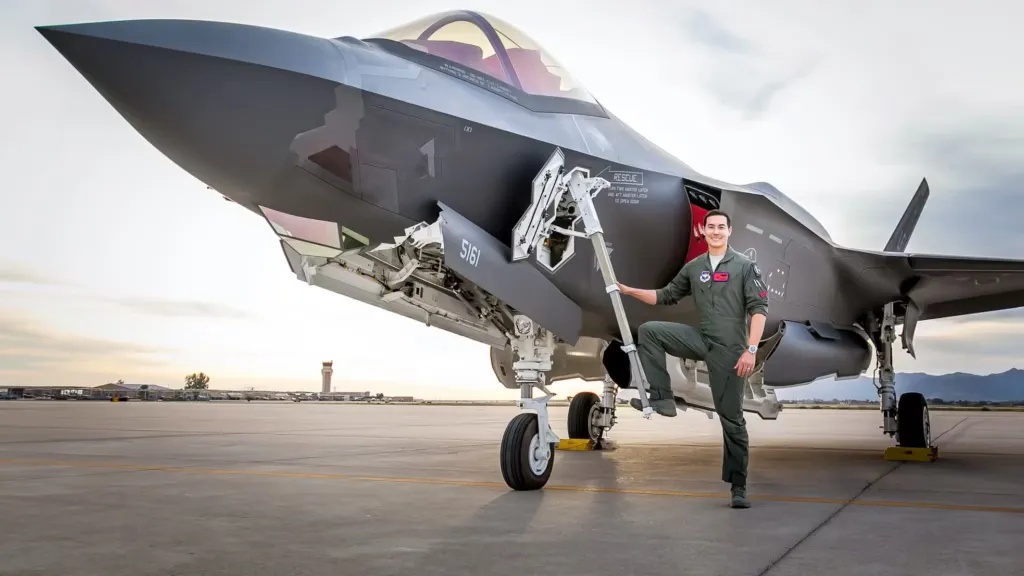
The United States operates the world's largest and most capable pilot force, with an estimated 18,000-20,000 active military pilots distributed across the Air Force, Navy, Marine Corps, and Army aviation.
This pilot strength supports global operations across six combatant commands. US pilots maintain proficiency across multiple aircraft types, from fifth-generation fighters to strategic bombers, tankers, and transport aircraft.
The USAF alone trains approximately 1,200-1,500 new pilots annually through Undergraduate Pilot Training (UPT). This robust pipeline replaces attrition from retirement, career changes, and operational losses while supporting force expansion when required.
Training advantages include:
- Advanced simulator technology reducing costs while increasing repetitions
- Red Flag and similar exercises providing realistic combat training
- Access to diverse training ranges across continental US and overseas bases
- Dedicated aggressor squadrons flying dissimilar aircraft for realistic opposition training
- Integration with allied forces through NATO and bilateral exercises
US pilots accumulate significantly more flight hours than counterparts in most nations. Fighter pilots typically log 200-250 hours annually, compared to 100-150 hours in many countries. This flight hour advantage translates directly to combat effectiveness.
The distributed force structure across Air Force, Navy, and Marine Corps provides redundancy and specialized expertise. Naval aviators train for carrier operations adding complexity beyond land-based air forces. This diversity strengthens overall capability.
China – Rapid Expansion And Training Growth
China's People's Liberation Army Air Force (PLAAF) and Naval Aviation forces represent the world's second-largest pilot force at 12,000-15,000 active military aviators. This marks dramatic growth from an estimated 8,000-10,000 pilots a decade ago.
The expansion reflects China's broader military modernization. New pilot training facilities, increased aircraft procurement, and emphasis on aviation capability demonstrate strategic prioritization of air power.
China graduates approximately 800-1,000 new military pilots annually, with capacity continuing to expand. New training bases in western China and upgraded facilities at established locations increase throughput.
Key developments include:
- Modernization from obsolete Soviet-era aircraft to indigenous J-10, J-11, J-16, and J-20 fighters
- Carrier aviation programs requiring specialized naval pilot training
- Emphasis on joint operations and modern tactics
- Investment in advanced simulators and training systems
However, flight hour limitations remain a constraint. Chinese pilots reportedly average 100-150 flight hours annually, below US standards but improving steadily. Budget increases and fleet modernization enable more flying time.
Combat experience remains minimal. Unlike US forces engaged in sustained operations for two decades, Chinese pilots lack recent combat exposure. Training exercises compensate partially but don't replicate actual warfare stress.
India – Large Force With Diverse Operations
The Indian Air Force (IAF) and Naval Air Arm maintain approximately 7,000-9,000 active pilots, making India's air arm the fourth or fifth largest globally depending on North Korean estimates.
India operates a remarkably diverse fleet-Russian, French, British, and indigenous aircraft from multiple manufacturers require pilots trained across multiple platforms. This diversity complicates training but provides operational flexibility.
The IAF faces a pilot shortage relative to authorized strength. Sanctioned positions exceed available trained pilots by several hundred, creating operational constraints. Aggressive recruitment and training expansion aim to close this gap.
Annual pilot production runs approximately 200-250 graduates from the National Defence Academy, Air Force Academy, and other training establishments. Plans call for increasing this to 300+ annually.
Operational challenges include:
- High-altitude operations along disputed borders with China and Pakistan
- Mixed fleet requiring diverse type ratings and maintenance expertise
- Geographic span from Himalayas to Indian Ocean requiring broad deployment
- Balancing modernization with maintaining legacy aircraft operational
Indian pilots benefit from regular exercises with international partners including the US, France, and Singapore. Red Flag participation and bilateral drills provide exposure to advanced tactics and peer competitor training.
Russia – Large But Operationally Challenged
Russia's military aviation maintains an estimated 8,000-10,000 pilots across the Air Force, Naval Aviation, and Army Aviation. This represents the third-largest pilot force globally but faces significant readiness challenges.
The Ukraine conflict exposed serious operational limitations. Initial operations revealed limited pilot proficiency, with many aviators lacking sufficient flight hours for complex missions. Reports indicate some pilots flew as few as 60-80 hours annually before the conflict.
Combat losses have degraded capability further. While exact figures remain disputed, credible estimates suggest Russia has lost dozens of pilots in combat operations. Replacing experienced aviators takes years, creating a capability gap that aircraft production cannot solve.
Systemic challenges include:
- Economic constraints limiting fuel availability for training flights
- Aging simulator infrastructure reducing cost-effective training options
- Brain drain as qualified pilots leave military service for commercial aviation
- Corruption and maintenance issues reducing aircraft availability
- Limited modern aircraft to equip the full pilot force
Russia possesses significant aircraft inventory—over 1,500 combat aircraft—but can't fully utilize this force. The gap between pilot numbers and aircraft count reveals the operational reality: capability constrained by human capital rather than hardware.
Training throughput remains unclear but likely produces 300-500 new pilots annually. Whether this sustains force levels amid combat losses and attrition depends on retention rates affected by economic and morale factors.
Other Major Air Forces
Several nations operate significant pilot forces meriting attention despite smaller absolute numbers.
Pakistan (3,500-4,500 pilots)
Pakistan maintains a battle-tested air force with recent combat experience. Despite economic constraints, the Pakistan Air Force prioritizes pilot quality and maintains respectable training standards. Limited budget restricts flight hours, but tactical proficiency remains high from necessity given regional tensions.
France (3,000-3,500 pilots)
France operates a highly professional expeditionary force. French pilots train to NATO standards and regularly deploy to Africa and Middle East operations. The Armée de l'Air emphasizes quality and operational experience over raw numbers.
Egypt (3,000-3,500 pilots)
Egypt fields the largest air force in Africa and the Middle East. Recent procurement from France, Russia, and the US (including Boeing aircraft) has modernized the fleet significantly. Pilot training capacity has expanded to support the larger and more diverse inventory.
Israel (2,000-2,500 pilots)
The Israeli Air Force maintains arguably the most capable pilots per capita globally. Rigorous selection, intensive training, and regular combat operations create exceptional proficiency. Israeli pilots average 200+ flight hours annually with extensive combat exposure.
NATO European Forces
Combined NATO European forces contribute approximately 15,000-18,000 pilots. Individual nations like Germany (~2,000), Italy (~1,800), Spain (~1,500), and Poland (~1,200) maintain capable forces integrated through alliance structures.
Why Training Pilots Is The Real Challenge
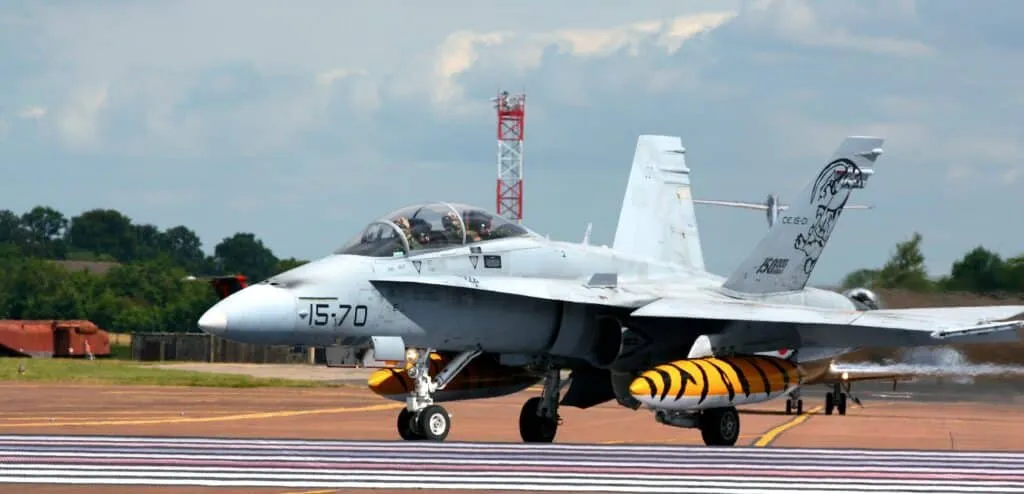
Creating a combat-ready military pilot requires extraordinary investment in time, money, and resources. This bottleneck determines air force growth rates and limits rapid expansion.
Financial costs are staggering:
- US Air Force spends approximately $10-15 million training a fighter pilot through initial qualification
- Navy fighter pilot training costs reach $15-20 million including carrier qualifications
- Transport and bomber pilot training runs $5-10 million per aviator
- These figures exclude aircraft acquisition, base operations, and administrative overhead
Time requirements cannot be compressed:
- Initial flight screening: 6-12 months
- Basic flight training: 12-18 months
- Advanced/fighter training: 12-18 months
- Combat mission qualification: 6-12 months
- Total: 3-5 years from selection to combat-ready status
Modern fighters demand even longer training cycles. Fifth-generation aircraft like the F-35 or F-22 require additional months mastering complex sensors, data fusion, and networked operations beyond traditional flight skills.
Attrition compounds the challenge:
- 15-30% of pilot candidates wash out during training
- Additional losses from medical disqualification, accidents, and voluntary separation
- Mid-career departures to commercial aviation drain experienced pilots
- Combat losses during wartime create immediate replacement demands
Nations must continuously train more pilots than needed just to maintain steady-state force levels. This perpetual requirement demands sustained budget commitment that many countries struggle to maintain.
Aircraft vs Pilots – What Matters More?
The comparison reveals a fundamental military aviation truth: aircraft are tools; pilots are irreplaceable assets.
Consider two hypothetical scenarios:
Scenario A: 500 advanced fighters with 300 fully trained pilots Scenario B: 300 capable fighters with 500 fully trained pilots
Scenario B offers superior operational capability. The 200 extra pilots provide rotation capacity, reduced fatigue, strategic reserve, and ability to absorb combat losses while sustaining operations.
Scenario A leaves 200 aircraft grounded, offers no rotation capacity, forces pilot overwork, and collapses rapidly under combat attrition.
Modern warfare complexity amplifies pilot importance:
- Sensor fusion demands cognitive load beyond traditional flying skills
- Network-centric operations require understanding broader battlespace beyond individual aircraft
- Electronic warfare adds layers of complexity impossible to fully replicate in training
- Split-second decisions under stress separate elite pilots from adequate ones
Aircraft technology continues advancing, but human decision-making remains central. Even autonomous systems require human oversight and authorization for lethal force under most rules of engagement.
The shortage of pilots relative to aircraft inventory affects numerous air forces. Israel, for example, maintains several hundred F-16s but can't fully utilize the fleet due to pilot constraints. Similar patterns exist elsewhere.
Future Of Military Pilots
The role of military pilots faces transformation from unmanned systems, artificial intelligence, and changing warfare concepts. These shifts don't eliminate pilots but alter requirements.
Unmanned Systems Integration
Drones don't replace pilots—they change what pilots do. Modern concepts envision manned fighters controlling multiple unmanned wingmen. This requires pilots with different skills: systems management, tactical coordination, and decision-making across distributed assets.
Remote pilots operating armed drones still require extensive training. US Air Force RPA (Remotely Piloted Aircraft) operators undergo 12-18 months training despite never leaving the ground. The cognitive demands differ from traditional flying but remain substantial.
AI-Assisted Flying
Artificial intelligence will augment rather than replace human pilots. AI excels at processing sensor data, optimizing flight paths, and managing complex systems. Humans provide judgment, creativity, ethical decision-making, and adaptability to unexpected situations.
The pilot-AI partnership model appears most likely, with automation handling routine tasks while pilots focus on tactical and strategic decisions. This may actually increase training requirements as pilots must understand AI systems deeply enough to override when appropriate.
Pilot Shortage Trends
Commercial aviation's explosive growth creates competitive pressure for military pilot retention. Airlines worldwide face pilot shortages, offering lucrative salaries that military compensation can't match. This "brain drain" affects nearly every air force, according to ICAO workforce studies.
Some nations respond with increased pay and benefits. Others emphasize patriotism and prestige. Long-term solutions require making military aviation careers more attractive relative to commercial alternatives.
What This Means For Global Air Power
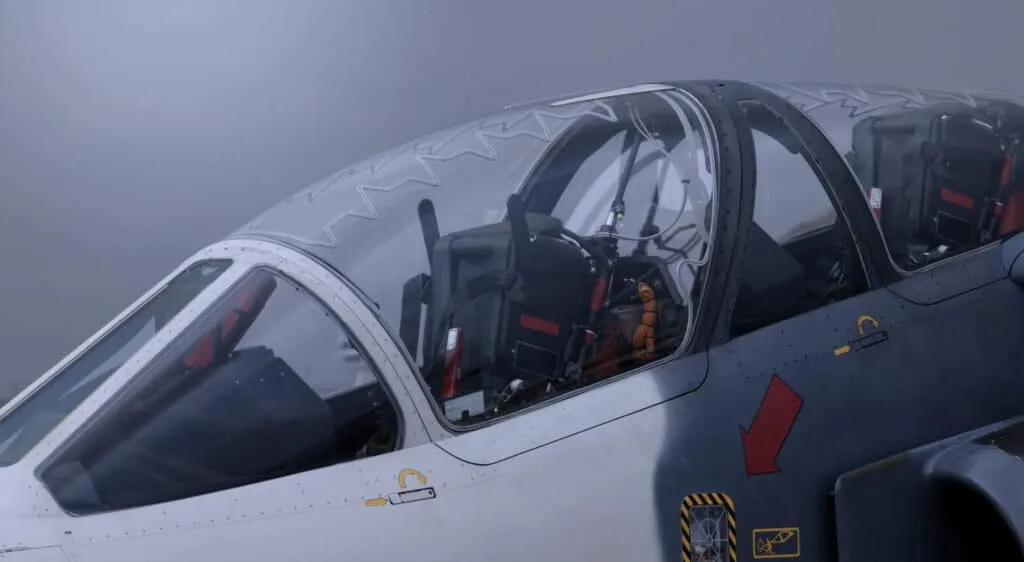
Pilot strength determines which nations can project sustained air power versus those with impressive but hollow capabilities. Several strategic implications emerge:
Sustained Operations Capability: Countries with deep pilot benches (US, China) can maintain extended operations. Those with thin margins (Russia, many European nations) face rapid degradation under conflict stress.
Strategic Reserve: Excess pilot capacity provides flexibility to surge operations, absorb losses, and sustain high operational tempo. Nations operating near maximum capacity with minimal reserve risk collapse if attrition exceeds replacement rates.
Alliance Force Multiplication: NATO's combined pilot strength exceeds any potential adversary, but integration challenges remain. Standardized training and interoperability create combat power greater than the sum of individual forces.
Quality vs Quantity Calculations: Smaller forces emphasizing pilot quality (Israel, France, UK) punch above their weight through superior training and tactics. Large forces with limited training (North Korea) present numbers without comparable capability.
Investment Priorities: Nations must balance aircraft procurement against pilot training costs. Buying advanced fighters without funding adequate pilot training creates capability gaps. The optimal mix prioritizes pilot development as the foundation supporting aircraft utilization.
Looking forward, the largest air forces by number of pilots will likely remain the US and China, with increasing separation from other nations. India's growth trajectory could challenge this if pilot production accelerates. Russia faces declining capability unless systemic challenges are addressed.
Regional powers will struggle maintaining pilot numbers as commercial aviation competition intensifies. Only nations with robust economies and sustained political will can fund the continuous pipeline required for effective air forces.
Frequently Asked Questions
Which country has the most military pilots?
The United States maintains the world's largest military pilot force with an estimated 18,000-20,000 active aviators across the Air Force, Navy, Marine Corps, and Army aviation. This represents roughly 25-30% more pilots than China, the second-largest force. US pilot strength supports global operations across six combatant commands and provides the deep bench necessary for sustained combat operations.
How many pilots does the US Air Force have?
The US Air Force alone has approximately 12,000-14,000 active duty pilots, representing the single largest air force pilot force globally. This figure includes fighter, bomber, transport, tanker, and special operations aviators. Additional pilots serve in Air National Guard and Air Force Reserve components, bringing total USAF pilot strength to roughly 16,000-18,000 when including reserve components.
Why are pilots more important than aircraft?
Pilots represent the irreplaceable bottleneck in air power projection. Aircraft can be manufactured in months or purchased from allies, but training combat-ready pilots requires 3-5 years minimum. A nation with 500 fighters but only 300 trained pilots can't utilize 40% of its fleet. Pilots provide the sustained capability, tactical expertise, and decision-making that determines combat effectiveness. Modern warfare complexity—sensor fusion, electronic warfare, network-centric operations—demands highly skilled aviators that technology alone cannot replace.
How long does it take to train a fighter pilot?
Training a combat-ready fighter pilot takes 3-5 years from initial selection through full mission qualification. The pipeline includes: basic flight training (12-18 months), advanced jet training (12-18 months), fighter transition and weapons training (6-12 months), and combat mission qualification in operational squadrons (6-12 months). Fifth-generation fighters like the F-35 add several months for complex systems training. This timeline assumes no setbacks—weather delays, aircraft availability issues, or medical problems can extend training by months or years.
How many pilots does China have?
China's People's Liberation Army Air Force and Naval Aviation forces maintain an estimated 12,000-15,000 active military pilots, making it the world's second-largest pilot force. This represents dramatic growth from approximately 8,000-10,000 pilots a decade ago, reflecting China's military modernization priorities. Chinese pilot training continues expanding with new facilities and increased annual throughput, though flight hours per pilot remain below US standards at approximately 100-150 hours annually.
Do drones reduce the need for pilots?
No-drones change pilot roles rather than eliminate them. Remote pilots still require 12-18 months specialized training to operate armed unmanned systems. Future concepts involve manned fighters controlling multiple unmanned wingmen, requiring pilots with enhanced systems management and tactical coordination skills. While automation handles routine tasks, human judgment remains essential for complex decisions, ethical considerations, and adapting to unexpected situations. The cognitive demands shift but don't disappear.
Which air force has the best trained pilots?
Israel's Air Force arguably maintains the most rigorously trained pilots globally, with extremely selective recruitment (roughly 1-2% acceptance rate), intensive training programs, and regular combat operations providing continuous real-world experience. US forces offer the most flight hours (200-250 annually for fighters) and most advanced training infrastructure. NATO allies like France and the UK maintain very high standards. "Best" depends on metrics—selection rigor, flight hours, combat experience, technological sophistication, or tactical proficiency. Multiple air forces achieve excellence through different approaches.
Conclusion
Air power ultimately depends on the men and women in the cockpit, not the aircraft they fly. The largest air forces by number of pilots don't always align with the biggest aircraft fleets, and this gap reveals strategic vulnerabilities.
Nations with deep pilot benches—the United States, China, India—can sustain extended operations and absorb combat losses. Those operating near capacity face rapid capability degradation under stress. Russia's experience in Ukraine demonstrates this dynamic clearly: impressive aircraft numbers masked insufficient pilot proficiency and sustainability.
The training bottleneck makes pilot numbers the long lead-time factor in military aviation. Aircraft can be bought or built relatively quickly. Creating combat-ready aviators requires years of sustained investment that cannot be accelerated during crises.
Looking ahead, commercial aviation's growth will pressure military pilot retention globally. Only nations with robust training pipelines and competitive retention packages can maintain force strength. The gap between leading air forces and the rest will likely widen as training costs escalate and competition for talent intensifies.
Understanding pilot numbers provides insight into genuine air power capabilities versus theoretical strength based on aircraft inventories alone. This metric matters more than ever in an era where quality, training, and sustained operations determine outcomes.