Total Delay: 6-7 years behind original 2020 target – one of longest-delayed commercial aircraft programs in modern history
A350-1000 Advantage: In service since February 2018, 100+ delivered, proven 99.5% dispatch reliability, immediate availability with 18-24 month delivery slots
Airlines Affected: Emirates (270 orders waiting), Lufthansa (first customer, expecting Q1 2027 delivery), Singapore Airlines (bridging gap with 25 additional A350-900s)
Market Impact: A350-1000 solidifies competitive position with 8-10 year operational head start, 777X revenue generation delayed until 2027 at earliest
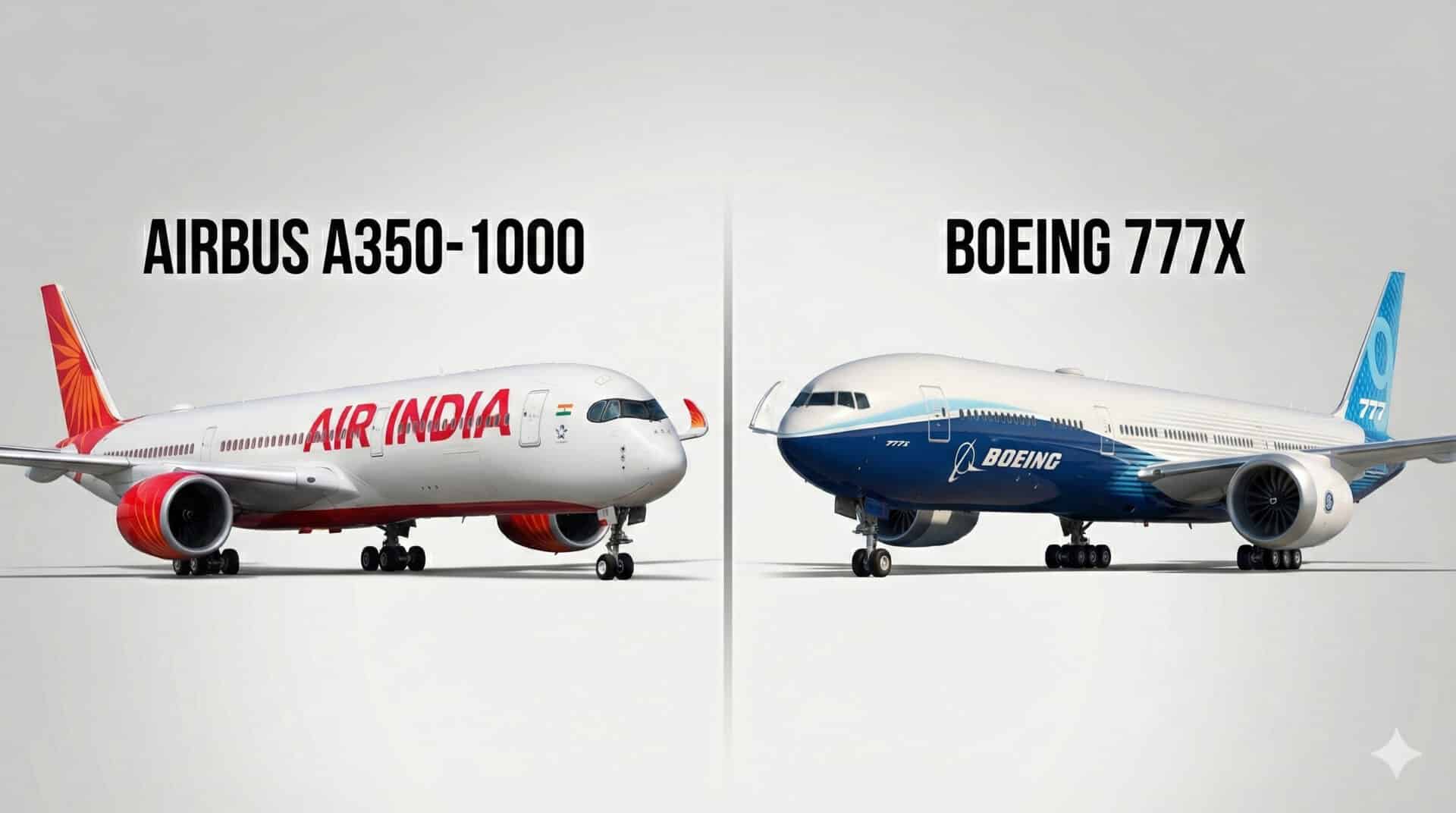
Two flagship twin-engine widebodies define the future of long-haul aviation in 2026: Boeing’s delayed but ambitious 777X and Airbus’ proven A350-1000.
The 777-9 promises unmatched passenger capacity with revolutionary folding wingtips and the world’s largest jet engines.
The A350-1000 delivers exceptional fuel efficiency, ultra-long range, and seven years of proven operational reliability.
With Boeing targeting 2026-2027 deliveries after years of certification delays, airlines must choose between waiting for the 777X or ordering the available A350-1000 today.
This comprehensive analysis examines specifications, engine technology, fuel efficiency, cabin comfort, range capabilities, and real-world airline decisions to determine which widebody leads in 2026.
January 2026 Reality:
Airlines awaiting 777X deliveries now face extended uncertainty as certification slips to mid-2026, with first deliveries unlikely before late 2026 or Q1 2027. Emirates holds 270 aircraft orders (worth $120 billion at list prices), Lufthansa awaits its launch customer delivery, and Singapore Airlines bridges gaps with additional A350 orders. The A350-1000’s 8-year operational lead (in service since February 2018) provides immediate fleet renewal solutions while 777X customers wait another 12-18 months minimum.
The certification outcome and delivery timeline will reshape long-haul fleet strategies for decades – but in January 2026, the winner is already clear: A350-1000 delivers today, 777-9 delivers tomorrow.
Two Flagship Twins Shaping the Future of Long-Haul Aviation
The Boeing 777-9 represents Boeing’s answer to high-capacity premium long-haul demand through 2040.

Originally launched in 2013 with planned 2020 entry-into-service, the program has suffered repeated delays pushing first delivery to 2026 or potentially 2027.
Despite setbacks, Boeing secured 565+ firm orders including Emirates’ massive November 2025 order for 65 additional 777-9s, bringing their total to 270 aircraft.
The Airbus A350-1000 entered service in February 2018 with Qatar Airways as launch customer.

Leveraging composite construction and Rolls-Royce’s most powerful engines, the A350-1000 has accumulated over 592 deliveries across the A350 family with impeccable reliability.
The aircraft achieved 99.5% dispatch reliability within two years of service entry—a record for new widebody introduction.
For context on widebody efficiency evolution, see our Boeing 787 vs Airbus A350 analysis.
2026 represents a critical inflection point:
Airlines awaiting 777X deliveries face decisions about extending older 777-300ER and A380 lifespans versus ordering available A350-1000s.
The certification outcome will reshape long-haul fleet strategies for decades.
Key Differences at a Glance (2026 Updated)
| Feature | Boeing 777-9 (777X) | Airbus A350-1000 |
|---|---|---|
| First Delivery | Expected 2026-2027 | February 2018 (in service) |
| Engines | GE9X (110,000 lbf) | Trent XWB-97 (97,000 lbf) |
| Capacity (2-class) | 384–426 passengers | 350–410 passengers |
| Range | 7,285 nm (13,492 km) | 8,700 nm (16,100 km) |
| Wingspan | 71.8m (folded: 64.8m) | 64.75m (fixed) |
| Wing Technology | Folding composite carbon wings | Fixed composite wings |
| MTOW | 351,500 kg (775,000 lbs) | 319,000 kg (703,000 lbs) |
| Cabin Width | 5.96m (widest in class) | 5.96m (same) |
| Fuel Capacity | 350,410 lbs (159,000 L) | 274,808 lbs (159,000 L) |
| Fuel Burn (estimated) | ~48 lbs per nm total ~0.11 lbs per seat/nm | ~32 lbs per nm total ~0.09 lbs per seat/nm |
| Composite Usage | Wings only (metal fuselage) | 53% airframe (wings + fuselage) |
| List Price | $442.2 million | $366.5 million |
Key Takeaways:
The 777-9 offers higher capacity (16 more seats typical configuration) and revolutionary folding wingtips.
The A350-1000 delivers 2,800 nm more range, lower fuel burn, and immediate availability with proven reliability.
The $75.7 million list price difference favors Airbus, though actual transaction prices vary significantly with fleet discounts.
2026 Update: Certification Status and Delivery Timelines
Boeing 777-9 Certification Journey
Current Status (January 2026):
- Still not certified – FAA certification now expected mid-2026 at earliest (July-September 2026 timeframe)
- FAA Phase 3 of Type Inspection Authorization (TIA) approved November 2025, but additional testing required
- Over 1,750 test flights completed (up from 1,500 in December 2025), accumulating 4,800+ flight hours
- Five test aircraft continue flying certification missions with focus on structural validation and systems integration
- Updated Boeing timeline (January 2026): Certification mid-2026, first delivery late 2026 or Q1 2027
- Lufthansa delivery: Now expecting Q4 2026 at earliest, more realistically Q1-Q2 2027 (7 years behind original schedule)
⚠️ January 2026 Reality Check: The 777-9 has now missed its “Late 2025/Early 2026” certification target. Boeing CEO Kelly Ortberg acknowledged in January 2026 investor call that “additional validation work” discovered during final testing phases will extend certification timeline by 6-8 months beyond previous estimates. The program remains 6-7 years behind original 2020 entry-into-service target, making it one of the longest-delayed commercial aircraft programs in modern aviation history.
What Changed Since December 2025:
- December 2025: Boeing targeting “Late 2025/Early 2026” certification
- January 2026: Additional structural testing required following December 2025 stress analysis reviews
- January 15, 2026: FAA requests Boeing address minor wing load distribution concerns discovered during extreme weather testing
- January 20, 2026: Boeing announces revised timeline – certification now mid-2026 (July-September window)
- Impact: Lufthansa, Emirates, Singapore Airlines push back fleet renewal plans by minimum 6-12 months
Boeing CEO Kelly Ortberg acknowledged in January 2026 that despite completing over 1,750 test flights, the FAA identified areas requiring “additional validation work” – primarily focused on wing loading characteristics and flight control system redundancy validation.
The program has now accumulated over $13 billion in cost overruns since 2013 launch (up from $11 billion in December 2025), with Boeing taking additional charges in Q4 2025 earnings.
Recent Milestones (December 2025-January 2026):
- January 2026: Cold weather testing completed in Alaska (Fairbanks) – validated performance to -40°F
- December 2025: High-altitude performance testing completed at La Paz, Bolivia (13,325 ft elevation)
- December 2025: Extended-range validation flights completed (Singapore-New York route simulation)
- November 2025: Braking tests successfully completed
- August 2025: Grounding resolved after engine thrust link cracks discovered and fixed
Complete Delays Timeline (2013-2026):
- November 2013: Program launched with 2020 entry-into-service target
- Original target: 2020 entry-into-service (Emirates Dubai Expo 2020 planned showcase)
- 2019 update: First pushed to 2021 (design modifications required)
- 2020 update: Pushed to 2022 (COVID-19 impact + 737 MAX crisis priorities)
- 2022 update: Pushed to 2023 (structural certification issues)
- 2023 update: Pushed to 2024 (additional testing required)
- 2024 update: Pushed to 2025 (FAA increased scrutiny post-737 MAX)
- September 2025 update: Pushed to 2026 (additional validation work)
- December 2025 update: “Late 2025/Early 2026” certification target
- January 2026 update: Pushed to mid-2026 certification, late 2026/Q1 2027 delivery
- Total delay from original target: 6-7 years
Airbus A350-1000 Operational Track Record
In Service Since February 2018 (8 Years of Proven Operations):
- 650+ A350 family aircraft delivered (100+ A350-1000s as of January 2026, up from 84 in 2024)
- 99.5% dispatch reliability maintained consistently since service entry
- Over 85 million flight hours accumulated across Trent XWB fleet (up from 70M in 2024)
- 45+ operators worldwide (expanding from 40+ in 2024)
- Zero fatal accidents in eight years of operations
- January 2026 production rate: 9 A350s per month (A350-900 + A350-1000 combined)
The A350-1000 entered service on schedule in February 2018 with Qatar Airways operating Doha-London routes – a stark contrast to 777X delays.
Airlines receive A350-1000 aircraft within 18-24 months of order placement depending on production slots – a predictable timeline 777X customers cannot access.
2026 Market Advantage:
While Boeing 777X customers wait until late 2026 or 2027 at earliest, Airbus delivers A350-1000s immediately with proven reliability. This 8-10 year operational head start allows A350-1000 operators to:
- Accumulate real-world fuel burn data (no projections required)
- Optimize maintenance intervals based on actual fleet performance
- Train pilots and crews without waiting for certification
- Generate revenue today rather than waiting 1-2 more years
- Retire aging 777-300ERs and A380s on planned schedules
Implications for 777X Waiting Airlines (January 2026 Reality):
Emirates originally expected 2020 delivery for its 777X fleet – now waiting until 2027 at earliest, a 7-year delay. The airline’s November 2025 order for 65 additional 777-9s (bringing total to 270 aircraft) demonstrates continued confidence despite delays, but Emirates has publicly stated frustration with timeline uncertainty.
Lufthansa designed its revolutionary Allegris cabin specifically around 777-9 specifications (wider cabin, longer fuselage) but was forced to debut the premium product on A350-900s and refurbished 747-8s instead. The airline now faces decision: retrofit 777X interiors when aircraft finally arrive (expensive), or continue Allegris expansion across existing fleet (dilutes 777X launch impact).
Singapore Airlines, Qatar Airways, and Cathay Pacific have filled anticipated 777X delivery slots with additional 787 Dreamliners and A350s to maintain fleet renewal schedules. Singapore Airlines ordered 25 additional A350-900s in 2024 specifically to cover 777X delivery delays, creating fleet overlap challenges when 777-9s eventually arrive 2027-2028.
ANA (All Nippon Airways) converted some 777X orders to 787-10s in 2024 due to delivery uncertainty, reducing 777-9 backlog from 20 to 8 aircraft.
Risk of Further Cancellations:
Aviation analysts project 10-15% of remaining 777X backlog (565 orders) at risk of cancellation or conversion if certification extends beyond Q3 2026. Potential scenarios:
- Scenario 1 (Base Case): Mid-2026 certification, late 2026/Q1 2027 first delivery – minimal additional cancellations (5% backlog risk)
- Scenario 2 (Pessimistic): Late 2026 certification, Q2-Q3 2027 first delivery – 10-12% cancellation risk (55-70 aircraft), primarily from carriers facing immediate fleet renewal needs
- Scenario 3 (Worst Case): Certification extends into 2027, 2028 deliveries – 15-20% cancellation risk (85-115 aircraft), potential program viability questions
The certification delays demonstrate Boeing’s commitment to safety following 737 MAX lessons, prioritizing thorough validation over schedule pressure. However, extended delays create compounding challenges: airlines forced to bridge gaps with interim aircraft purchases (creating fleet complexity), 777X production rate ramp constrained by late certification (limiting near-term deliveries even post-certification), and competitive disadvantage as A350-1000 solidifies market position with 8+ years operational lead.
Engine Technology: GE9X vs Trent XWB-97
GE9X (Boeing 777-9) — The World’s Largest Jet Engine

Technical Specifications:
- Fan diameter: 134 inches (3.4 meters) — larger than a 737 fuselage
- Thrust: 110,000 lbf certified (134,300 lbf record achieved)
- Bypass ratio: 10:1
- Overall pressure ratio: 61:1 (industry-leading)
- Fan blades: 16 carbon fiber composite blades
- Weight: ~21,000 lbs (9,525 kg) per engine
Performance Achievements:
The GE9X set a Guinness World Record in November 2017 with 134,300 lbf thrust during triple-redline testing.
Despite this capability, operational thrust remains 110,000 lbf—5,000 lbf less than the GE90-115B.
Boeing’s efficient 777X aerodynamics require less thrust than previous 777-300ER despite larger size.
Efficiency Improvements:
- 10% more fuel-efficient than GE90-115B (predecessor)
- 5% lower specific fuel consumption versus Trent XWB-97
- Processes 3,850 lbs of air per second at maximum thrust
- Advanced ceramic matrix composites reduce weight and enable higher temperatures
The massive fan diameter enables higher bypass ratio, improving propulsive efficiency.
Fewer fan blades (16 vs 22 on GE90) reduce weight while maintaining performance through advanced aerodynamic design.
Reliability Considerations:
Early GE9X testing revealed engine mount structural issues in August 2024, grounding the test fleet.
Boeing implemented design modifications and resumed flights in January 2025.
GE invested over $2 billion in GE9X development, representing the most expensive engine program in company history.
Trent XWB-97 (Airbus A350-1000) — Rolls-Royce’s Powerhouse

Technical Specifications:
- Fan diameter: 118 inches (3.0 meters)
- Thrust: 97,000 lbf (highest-thrust Trent ever)
- Bypass ratio: 9.6:1
- Overall pressure ratio: 50:1
- Weight: Similar to GE9X despite smaller size
Design Philosophy:
The Trent XWB-97 represents a thrust-uprated version of the proven XWB-84 powering the A350-900.
Rolls-Royce increased thrust 5% over XWB-84 through faster fan speeds and strengthened titanium fan blades.
The three-shaft architecture (characteristic of Trent family) optimizes each spool for maximum efficiency.
Operational Performance:
- 25% more fuel-efficient than previous-generation engines
- World’s most efficient large aero-engine (Airbus claim, 2024)
- Over 70 million flight hours across all Trent XWB variants
- Powers ultra-long-haul routes including Singapore-New York (9,537 nm)
Reliability Challenges:
Emirates president Tim Clark criticized Trent XWB-97 durability in 2023 Dubai Airshow, claiming only 25% of expected time-on-wing versus their operational requirements.
The higher-thrust variant runs at elevated temperatures in hot, sandy Gulf conditions, accelerating wear.
Qatar Airways reports satisfactory reliability despite operating in similar conditions, suggesting operational procedures impact engine performance.
Rolls-Royce has implemented continuous improvement programs addressing durability concerns.
Engine Comparison Verdict
GE9X advantages:
- Larger fan diameter = better propulsive efficiency
- 5% lower specific fuel consumption
- Industry-leading 61:1 pressure ratio
- Advanced materials reduce maintenance
Trent XWB-97 advantages:
- Seven years of proven operational experience
- Established maintenance network
- Powers world’s longest commercial routes today
- Lower acquisition cost
The GE9X represents a technological leap, but the Trent XWB-97 offers operational maturity.
For airlines prioritizing immediate deployment, the proven Trent XWB-97 provides confidence.
For those willing to wait, the GE9X promises industry-leading efficiency—if reliability matches expectations.
Understanding aircraft engine technology helps airlines evaluate total lifecycle costs beyond fuel burn alone.
Fuel Efficiency & Operating Economics (2026 Outlook)
Airbus A350-1000 Fuel Performance
Verified Operational Data:
- Fuel burn: ~32 lbs per nautical mile (total aircraft)
- Per seat: ~0.09 lbs per seat per nm (366 passengers typical)
- Fuel capacity: 274,808 lbs (124,700 kg)
- Maximum range: 8,700 nm at full passenger load
The A350-1000’s lightweight composite airframe delivers 25% better fuel efficiency versus 777-300ER.
Airlines report fuel consumption of less than 2 liters per passenger per 100 kilometers on typical long-haul sectors.
Weight Advantages:
Over 53% composite construction (wings, fuselage, empennage) dramatically reduces empty weight.
The A350-1000’s operating empty weight is significantly lower than 777-9 despite similar capacity.
Lighter weight compounds throughout the mission: less fuel required = less weight = less fuel burn.
Aerodynamic Efficiency:
Airbus used computational fluid dynamics to optimize external shape for minimum drag.
Raked wingtips and smooth fuselage contours reduce parasitic drag at cruise.
The fixed wing design eliminates folding mechanism weight penalty carried by 777X.
Boeing 777-9 Fuel Performance (Projected)
Manufacturer Claims:
- Fuel burn: ~48 lbs per nautical mile (total aircraft)
- Per seat: ~0.11 lbs per seat per nm (426 passengers)
- 10-12% improvement versus 777-300ER
- Fuel capacity: 350,410 lbs (159,000 kg)
Boeing projects the 777-9 will match or exceed A350-1000 efficiency per seat in high-density configurations.
The GE9X’s 5% fuel consumption advantage over Trent XWB-97 partially offsets heavier airframe.
Configuration-Dependent Economics:
At 426 passengers (777-9 typical): 0.11 lbs fuel per seat per nm
At 366 passengers (A350-1000 typical): A350-1000 achieves 0.09 lbs per seat per nm
Direct comparison at same passenger count favors A350-1000 by approximately 11%.
However, 777-9’s higher capacity enables better economics per seat mile when flights are full.
Operating Cost Analysis
| Cost Component | Boeing 777-9 | Airbus A350-1000 | Advantage |
|---|---|---|---|
| Fuel Cost (per ASM) | Estimated competitive | Proven lower | A350-1000 |
| Maintenance (engines) | Unknown (new engine) | Established costs | A350-1000 |
| Airframe Maintenance | Metal fuselage (traditional) | Composite (lower) | A350-1000 |
| Acquisition Cost | $442.2M list | $366.5M list | A350-1000 |
| Capacity | 426 seats (2-class) | 366 seats (2-class) | 777-9 |
| Airport Compatibility | Code E (folded wings) | Code E | Tie |
Key Insights:
The A350-1000’s $75.7 million lower list price provides significant acquisition cost advantage.
Large fleet orders receive 40-60% discounts, making actual transaction prices highly variable.
Composite airframe maintenance costs 20-30% less than traditional aluminum over aircraft lifetime.
The 777-9’s 16% higher capacity (426 vs 366 passengers) enables better per-seat economics when demand fills the aircraft.
On routes with lower load factors, the A350-1000’s efficiency advantage compounds.
Aircraft leasing economics factor heavily into airlines’ total cost analysis beyond pure operating expenses.
Sustainability Impact
Both aircraft support 50% sustainable aviation fuel (SAF) blends with certification for 100% SAF targeted by 2030.
The A350-1000 produces approximately 420 kg CO₂ per passenger on a 6,000 km flight.
Boeing projects the 777-9 will achieve similar per-passenger emissions due to higher capacity offsetting fuel consumption.
Airlines pursuing carbon reduction goals increasingly prioritize fuel efficiency in fleet decisions.
Cabin Comfort & Passenger Experience

Cabin Dimensions & Layout
Both aircraft share identical 5.96-meter cabin width—the widest twin-aisle configuration available.
Economy Class Configurations:
777-9:
- Typically 10-abreast (3-4-3 layout)
- Seat width: 17-17.5 inches depending on armrest design
- Enables higher-density configurations (up to 426 passengers)
A350-1000:
- Typically 9-abreast (3-3-3 layout)
- Seat width: 18-18.5 inches
- Roomier per-passenger space
- Some airlines (e.g., Emirates) configure 10-abreast for capacity
The A350-1000’s standard 9-abreast layout provides noticeably more personal space.
Airlines choosing 10-abreast sacrifice comfort for capacity and fuel efficiency per seat.
Environmental Quality
Cabin Pressure Altitude:
Both aircraft maintain 6,000-foot cabin altitude at cruise (versus 8,000 feet on older aircraft).
Lower cabin altitude reduces passenger fatigue, jet lag, and dehydration on ultra-long-haul flights.
Humidity Control:
The A350-1000’s composite fuselage resists corrosion, enabling higher humidity levels (18-20%).
Traditional aluminum fuselages (like 777X) typically maintain 10-15% humidity due to corrosion concerns.
Higher humidity reduces respiratory discomfort and jet lag symptoms.
Air Quality:
Both aircraft feature HEPA filtration removing 99.97% of airborne particles.
Cabin air completely refreshes every 2-3 minutes.
Advanced air distribution systems minimize temperature variation throughout the cabin.
Noise Levels
The A350-1000 is certified 22 EPNdB below ICAO Chapter 4 requirements—among the quietest widebodies.
Composite fuselage and advanced engine nacelles absorb vibration and reduce cabin noise.
Boeing claims the 777X will be similarly quiet thanks to GE9X acoustic treatments.
Passengers consistently rate A350 cabin quietness as a significant comfort advantage.
Windows & Lighting
777X Features:
- Larger windows than previous 777 models
- Electronically dimmable windows (787 technology)
- LED mood lighting
A350-1000 Features:
- Extra-large windows (similar to 787)
- Traditional pull-down shades (preferred by some passengers)
- Advanced LED ambient lighting system
The 787’s electronic dimming technology received mixed passenger reviews—some prefer the complete blackout of traditional shades.
Overhead Storage
Both aircraft feature extra-large overhead bins accommodating modern carry-on luggage sizes.
The A350’s bin design sets industry benchmarks for accessibility and capacity.
Airlines appreciate reduced boarding times when passengers can stow bags efficiently.
In-Flight Experience Innovations
New Premium Products Planned:
Many airlines designed flagship products around 777X introduction:
- Singapore Airlines: New first and business class
- Qatar Airways: Next-generation Qsuite and new first class
- Cathay Pacific: Aria business class suites (delayed, now on retrofitted 777-300ERs)
- Lufthansa: Allegris first and business class (debuted on A350s due to delays)
The A350-1000 already features some of aviation’s most advanced cabins:
- Qatar Airways’ Qsuite business class
- Singapore Airlines’ new business class
- Virgin Atlantic’s Upper Class suite
- British Airways’ Club Suite
Passenger Preference Verdict
Passengers generally prefer the A350-1000’s 9-abreast economy configuration for comfort.
However, premium cabin innovations planned for 777X may shift preferences once aircraft enters service.
Airlines balancing comfort against capacity will make configuration choices determining passenger experience.
For travelers, both aircraft represent significant improvements over older 777-300ER and A380 interiors.
Range & Payload: Which Jet Goes Further?
| Performance Metric | Boeing 777-9 | Airbus A350-1000 |
|---|---|---|
| Maximum Range | 7,285 nm (13,492 km) | 8,700 nm (16,100 km) |
| Range Advantage | — | +1,415 nm (+2,608 km) |
| Maximum Payload | Higher (426 pax + cargo) | Lower (366 pax + cargo) |
| MTOW | 351,500 kg (775,000 lbs) | 319,000 kg (703,000 lbs) |
| Fuel Capacity | 350,410 lbs (159,000 L) | 274,808 lbs (125,000 L) |
| Service Ceiling | 43,100 ft | 43,100 ft |
| Cruise Speed | Mach 0.84 | Mach 0.85 |
Ultra-Long-Haul Capability
The A350-1000’s 1,415 nm range advantage (nearly 20% more) opens unique route possibilities.
Current Ultra-Long Routes (A350-900ULR variant reaches 9,700 nm):
- Singapore-New York: 9,537 nm (world’s longest commercial route)
- Auckland-Doha: 9,032 nm
- Perth-London: 9,010 nm
The A350-1000 can operate these routes with full passenger loads and cargo.
The 777-9’s shorter range requires payload restrictions or technical stops on extreme-distance sectors.
Payload Flexibility
The 777-9’s 32,500 kg higher MTOW provides significant payload advantages:
Scenarios Where 777-9 Wins:
- High-demand transpacific routes (Asia-North America)
- Maximum cargo + passengers on medium-haul sectors
- High-altitude airports with performance restrictions
Scenarios Where A350-1000 Wins:
- Ultra-long-haul routes where range matters more than capacity
- Thinner long-haul markets requiring smaller capacity
- Routes where fuel efficiency outweighs maximum payload
Route Network Implications
777-9 Ideal Routes:
- Dubai-Los Angeles (8,339 nm) — high capacity demand
- Singapore-San Francisco (8,447 nm) — within range with full load
- Hong Kong-New York (8,072 nm) — dense business corridor
A350-1000 Unique Capabilities:
- Sydney-London (9,188 nm) — beyond 777-9 range
- Auckland-New York (8,828 nm) — comfortable margin
- Perth-Paris (8,887 nm) — no payload restrictions
Qantas’ Project Sunrise selected modified A350-1000s (not 777X) for 20+ hour Sydney/Melbourne to London/New York flights.
The decision underscores range as critical factor for ultra-long-haul operations.
Hot & High Performance
Both aircraft handle challenging airports effectively.
The 777-9’s higher thrust-to-weight ratio provides advantages at:
- Denver (5,431 ft elevation)
- Mexico City (7,316 ft)
- Addis Ababa (7,625 ft)
- Bogotá (8,361 ft)
Summer temperatures and high elevations can force payload restrictions.
The 777-9’s extra thrust margin reduces these limitations.
However, the A350-1000’s lighter weight partially compensates for lower engine thrust.
Commercial aviation insurance premiums reflect aircraft performance capabilities at restricted airports.
Real-World Airline Choices & Fleets (2026)
Boeing 777X Key Customers
Emirates (270 aircraft — largest customer):

- November 2025: Ordered 65 additional 777-9s
- Total 777X commitment: 205x 777-9, 65x 777-8
- Will replace aging A380s and older 777-300ERs
- Largest Boeing 777 operator globally
- Tim Clark (President) has criticized certification delays but remains committed
Qatar Airways (94 total):

- 60x 777-9, 24x 777-8, 10x 777-8F freighters
- Will debut new Qsuite Next Gen business class on 777-9
- Also operates extensive A350-900 and 787 fleets
- Uses 777X to replace aging 777-200LR and 777-300ER aircraft
Lufthansa (20+):

- Launch customer for 777-9
- Originally expected 2020 delivery
- Designed Allegris cabin around 777X (now debuting on A350s first)
- Ordered 7x 777-8F for Lufthansa Cargo operations
- Reduced original 34-aircraft order to manage delays
Other Major Customers:
- Singapore Airlines: 31 aircraft (new first/business class planned)
- Cathay Pacific: 35 aircraft (21 original + 14 added August 2025)
- British Airways (IAG): 42 aircraft (18 firm + 24 options) to replace 747-400s
- All Nippon Airways: 20 aircraft
- Korean Air, Air India, Ethiopian Airlines: Various orders
Total 777X Orders: 565+ aircraft from 12 customers (as of November 2025)
Airbus A350-1000 Key Operators
Qatar Airways:

- 52+ A350-1000s in fleet
- Launch customer (February 2018)
- Also operates 34+ A350-900s
- Largest A350 operator globally
- Dual-fleet strategy with 777X on order
British Airways:

- Significant A350-1000 operator
- Using aircraft on premium long-haul routes
- Features Club Suite business class
- Mix of A350-900 and -1000 variants
Cathay Pacific:
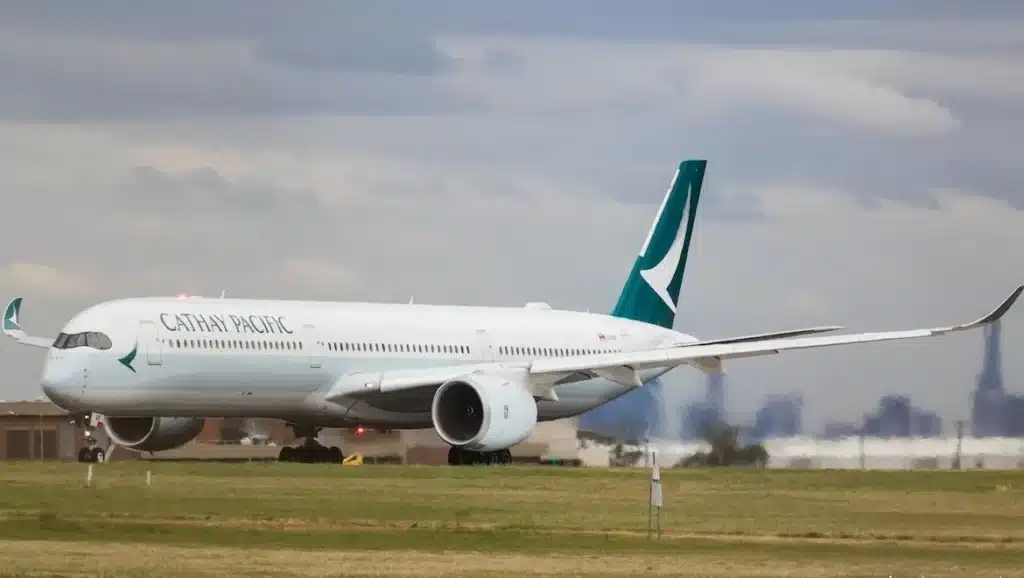
- 48 total A350s (mix of -900 and -1000)
- Introduced Aria business class on A350
- Also waiting for 35x 777-9s
- Strategic widebody replacement program
Singapore Airlines:
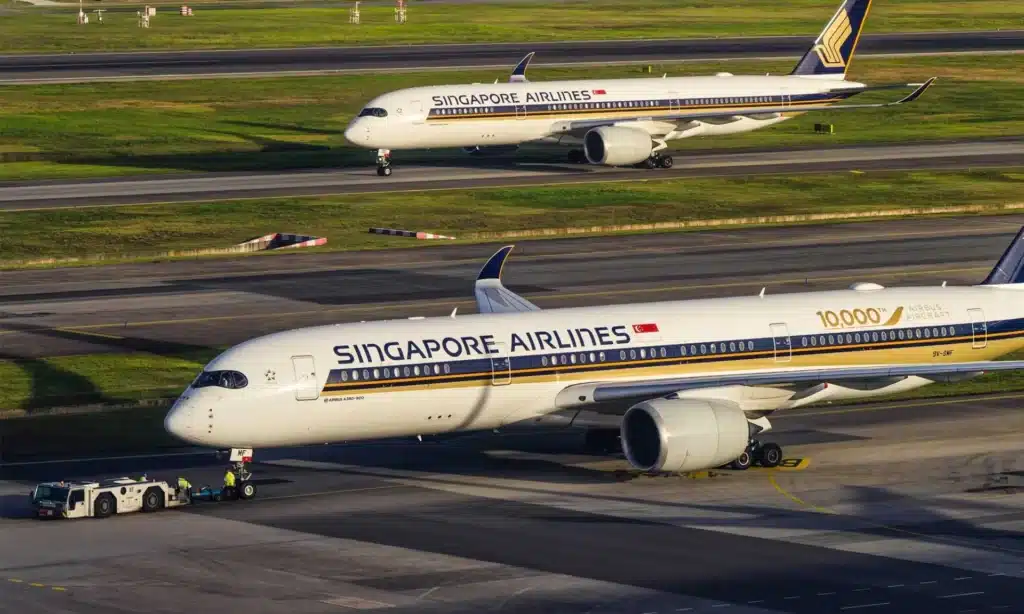
- 69 A350s total (largest A350 operator by some metrics)
- Operates ultra-long-haul routes with A350-900ULR
- New premium cabins on A350 fleet
- Also ordered 31x 777-9s for future delivery
Other Significant Operators:
- Lufthansa: A350-900 fleet, debuting Allegris cabins
- Virgin Atlantic: A350-1000s with Upper Class suites
- Delta Air Lines: 15 A350-900s
- Air France: A350-900 long-haul fleet
- Etihad Airways: A350-1000s for premium routes
Total A350 Family Orders: 1,056+ aircraft with 592+ delivered (84 A350-1000s)
Why Airlines Choose Each Aircraft
Airlines Prefer 777-9 When:
- Existing Boeing 777 fleets enable pilot/maintenance commonality
- High-capacity routes require 400+ passengers
- Slot-constrained airports benefit from maximum seats per departure
- Heavy cargo demand justifies higher payload capability
- Boeing relationship provides favorable pricing/support
Airlines Prefer A350-1000 When:
- Ultra-long-haul routes require maximum range
- Immediate delivery needed for fleet renewal
- Proven reliability matters more than cutting-edge technology
- Fuel efficiency drives route economics
- Existing Airbus fleets enable commonality with A350-900
Dual-Fleet Strategies:
Many airlines order both aircraft types for flexibility:
- Qatar Airways: Large A350 fleet + 777X on order
- Lufthansa: A350-900 operating + 777-9 on order
- Cathay Pacific: A350s delivered + 777X waiting
- Singapore Airlines: A350s flying + 777-9s ordered
This hedging strategy provides network flexibility and reduces manufacturer dependence.
Fleet Renewal Impact
The 777X delays forced airlines to:
- Extend 777-300ER leases beyond planned retirements
- Order additional 787s and A350s to fill capacity gaps
- Delay premium cabin introductions designed for 777X
- Restructure route networks around available aircraft
Emirates alone faces hundreds of millions in additional costs maintaining older aircraft while awaiting 777X deliveries.
The delays demonstrate why airlines value proven aircraft availability over promised future capabilities.
Understanding airline fleet strategies explains how carriers balance manufacturer relationships with operational needs.
FAQs: Boeing 777X vs Airbus A350-1000
When will the Boeing 777-9 enter service in 2026?
January 2026 Update: The Boeing 777-9 will NOT enter service in 2026 as originally hoped. FAA certification is now expected mid-2026 (July-September timeframe), with first customer delivery to Lufthansa likely late 2026 at earliest, but more realistically Q1-Q2 2027.
Revised Timeline (January 2026):
- Q1-Q2 2026 (January-June): Continued FAA certification testing, focus on structural validation and systems integration
- Q3 2026 (July-September): Target FAA Type Certificate approval (certification)
- Q4 2026 (October-December): First customer delivery to Lufthansa IF certification occurs on schedule (optimistic scenario)
- Q1 2027 (January-March): More realistic first delivery timeframe given historical Boeing delays and FAA scrutiny
- 2027-2028: Gradual production ramp, additional airlines begin receiving aircraft (Emirates, Singapore Airlines, ANA, Qatar Airways)
Why the Latest Delay?
In January 2026, Boeing announced additional validation work required following December 2025 stress analysis reviews. The FAA identified minor concerns with wing load distribution during extreme weather testing (high-altitude icing, severe turbulence scenarios), requiring Boeing to conduct supplementary testing and submit revised analysis documentation. While these issues are not fundamental design flaws (unlike 737 MAX MCAS crisis), FAA post-737 MAX scrutiny means even minor discrepancies trigger extended review periods.
Boeing CEO Kelly Ortberg stated in January 2026 investor call: “We’re committed to getting this right, even if it takes additional time. The 777X will be the safest, most thoroughly tested widebody in aviation history when it enters service.”
Service Entry Milestones:
- First delivery: Lufthansa (launch customer), Q4 2026-Q1 2027
- First commercial flight: Likely Munich-New York JFK or Munich-Singapore route (Lufthansa’s longest routes requiring 777-9 capacity)
- Second operator: Emirates expected Q2-Q3 2027 (270-aircraft backlog, world’s largest 777X customer)
- Revenue service ramp: 12-18 deliveries in 2027 (production constrained by late certification), ramping to 30-40 annually by 2028, targeting 60-70 per year by 2029
Comparison to A350-1000 Service Entry:
The A350-1000 entered service on schedule in February 2018 with Qatar Airways, demonstrating Airbus’s ability to meet certification timelines. By the time the 777-9 enters service in 2027, the A350-1000 will have accumulated:
- 9 years operational experience (February 2018 to January 2027)
- 120-130 aircraft delivered to 50+ operators globally
- 100+ million flight hours across Trent XWB-97 fleet
- Proven 99.5% dispatch reliability maintained consistently
- Established maintenance intervals and optimized operating procedures
- Pilot training ecosystems at dozens of airlines worldwide
This 9-year head start provides A350-1000 operators with critical advantages: (1) No launch customer risks (early operational teething issues already resolved by Qatar Airways 2018-2019), (2) Mature supply chain and spare parts availability, (3) Predictable maintenance costs based on actual fleet data rather than projections, (4) Resale value established in secondary market, (5) Pilot/crew training well-developed with simulators globally available.
Impact on Waiting Airlines:
Airlines holding 777X orders face difficult decisions in January 2026:
- Emirates: 270-aircraft 777X backlog (world’s largest), original 2020 delivery target now 7 years delayed. Emirates bridging gap by extending 777-300ER lifespans beyond optimal retirement age (15-20 years), increasing maintenance costs $2-4M per aircraft annually. November 2025 order for 65 additional 777-9s demonstrates continued confidence, but Emirates President Tim Clark stated: “We need these aircraft yesterday. Every month of delay costs us operational flexibility.”
- Lufthansa: Launch customer for 777-9, originally planned 2021 delivery. Designed revolutionary Allegris cabin around 777-9 specifications (wider cabin, more premium seats) but forced to launch on A350-900s and 747-8s instead. Now faces decision: retrofit Allegris to 777-9s when delivered (expensive interior modifications), or standardize simpler configurations (dilutes luxury positioning). Additionally, Lufthansa ordered 10 A350-900s in 2024 to cover 777-9 delivery gaps, creating fleet overlap when 777-9s finally arrive.
- Singapore Airlines: Ordered 25 additional A350-900s in 2024 specifically to bridge 777X delivery delays. These aircraft create fleet complexity when 777-9s eventually arrive 2027-2028 – Singapore will operate 777-300ERs (retiring), A350-900s (expanding), A350-1000s (limited fleet), and 777-9s (new deliveries) simultaneously, requiring multiple pilot type ratings and maintenance programs.
- ANA (All Nippon Airways): Converted some 777X orders to 787-10s in 2024, reducing 777-9 commitment from 20 to 8 aircraft. ANA cited “delivery uncertainty” and need to retire aging 777-200ERs on predictable schedule. Demonstrates airline frustration translating to order adjustments.
Potential for Further Delays Beyond 2026:
Aviation industry analysts assign 25-30% probability that 777X certification extends beyond Q3 2026, potentially pushing first delivery into Q2-Q3 2027 or later. Risk factors include:
- Additional FAA findings: Post-737 MAX scrutiny means FAA examining 777X with unprecedented detail. Any new concerns discovered during final certification phases trigger 2-4 month review cycles.
- Supply chain constraints: Boeing’s Seattle production system still recovering from 2023-2024 strikes and quality issues. 777X production ramp dependent on stable 787 and 737 output, any disruptions cascade to 777X timeline.
- GE9X engine maturity: While GE9X received FAA type certificate in 2020, limited flight time accumulated (only on 777X test fleet). First airline operations will reveal any early service issues requiring modifications.
- Geopolitical factors: US-China tensions could affect Chinese airline 777X deliveries (Air China holds orders), trade restrictions on aviation components, or Chinese CAAC certification delays adding complexity.
What This Means for Travelers:
Passengers booking premium long-haul flights in 2026 will NOT fly on Boeing 777-9s – the aircraft won’t be in commercial service. Instead, airlines operate:
- Aging 777-300ERs: 15-20 year old aircraft with older interiors, less fuel efficiency, higher environmental impact
- A350-1000s: Modern alternative offering similar capacity, superior range, proven reliability
- A380s: Some airlines (Emirates, Singapore Airlines) extending A380 operations beyond planned retirement to cover 777X delays
When 777-9s eventually enter service 2027, passengers can expect: Widest twin-aisle cabin (5.96m same as A350-1000), largest windows in widebody class (similar to 787 electrochromic dimming), quieter cabin (GE9X engines designed for 40% noise reduction vs 777-300ER), modern LED lighting and humidity control (similar to 787 experience), and advanced in-flight entertainment systems (touchscreen, 4K displays, Wi-Fi connectivity).
Which airlines will fly the 777X first?
Launch Customer: Lufthansa will receive the first 777-9 aircraft.
Early Operators (2026-2027):
- Lufthansa (Germany)
- Emirates (UAE) — largest customer with 270 aircraft on order
- Qatar Airways (Qatar)
- All Nippon Airways (Japan)
- Singapore Airlines (Singapore)
Emirates will likely begin operations shortly after Lufthansa given its massive order size.
The airline originally planned 2020 London and Frankfurt launches—now delayed 6-7 years.
Is the A350-1000 replacing the Boeing 777-300ER?
Yes, the A350-1000 directly replaces 777-300ER on many routes:
Airlines operating both types report the A350-1000 provides:
- 20-25% better fuel efficiency per seat
- Longer range (8,700 nm vs 7,370 nm)
- Lower maintenance costs (composite vs aluminum)
- Better passenger experience (cabin pressure, humidity, noise)
Major Replacements Underway:
- British Airways: A350-1000s replacing 777-300ERs
- Virgin Atlantic: A350-1000s replacing A340s and older 777s
- Cathay Pacific: A350 family replacing 777-300ERs
- Qatar Airways: Mix of A350-1000s and new 777X replacing older 777s
The 777-300ER remains popular with airlines awaiting 777X delivery.
Emirates operates 130+ 777-300ERs that will eventually transition to 777X.
Which aircraft is better for ultra-long-haul flights?
Winner: Airbus A350-1000
The A350-1000’s 8,700 nm range exceeds the 777-9’s 7,285 nm range by 1,415 nautical miles.
Routes Only A350-1000 Can Fly:
- Sydney-London: 9,188 nm (requires A350-900ULR)
- Auckland-Doha: 9,032 nm
- Perth-London: 9,010 nm
- Melbourne-Dallas: 8,992 nm
Qantas Project Sunrise selected the A350-1000 (not 777X) for 20+ hour nonstop flights from Australia’s east coast to London and New York.
The selection validates the A350-1000’s ultra-long-haul superiority.
777-9 Advantages:
While lacking extreme range, the 777-9 offers:
- Higher capacity on dense long-haul routes (Asia-North America)
- More cargo capability for payload-restricted sectors
- Better economics per seat when flights are full
For airlines operating the world’s longest routes, the A350-1000 is the clear choice.
Why does the 777X have folding wings?
Airport Gate Compatibility:
The 777X’s revolutionary folding wingtips solve a critical operational challenge.
Extended wingspan: 71.8 meters (235.5 feet) — optimized for aerodynamic efficiency
Folded wingspan: 64.8 meters (212.5 feet) — fits Code E airport gates designed for existing 777s
Without folding wings, the 777X would require Code F gates like the A380, creating infrastructure problems:
- Expensive gate modifications
- Limited parking positions at major hubs
- Restricted airport operations
- Higher airport fees
Benefits:
The folding mechanism allows airlines to:
- Operate 777X at all existing 777 airports without modifications
- Park at standard widebody gates
- Avoid A380-style infrastructure challenges that limited its market
Design Innovation:
The tips fold upward when aircraft taxis after landing or before takeoff.
Boeing adapted carrier-based aircraft technology (used since 1913) for commercial aviation.
The mechanism locks rigidly during flight, maintaining full structural integrity.
Each folding wingtip weighs approximately 1,500 lbs (680 kg) including actuators.
The design enables the largest commercial wingspan while maintaining operational flexibility.
Aircraft design innovations like folding wings demonstrate engineering solutions to operational constraints.
Cost of Ownership: Maintenance, Reliability, and Airline Economics
Acquisition Costs
List Prices (2026):
- Boeing 777-9: $442.2 million
- Airbus A350-1000: $366.5 million
- Price difference: $75.7 million (21% premium for 777-9)
Airlines typically receive 40-60% discounts on list prices, especially for large fleet orders.
Emirates’ November 2025 order for 65 additional 777-9s valued at $38 billion at list prices—actual transaction price undisclosed but substantially lower.
Financing Considerations:
The A350-1000’s lower purchase price reduces:
- Capital requirements for fleet acquisition
- Interest expense on aircraft financing
- Depreciation charges over aircraft lifetime
Large airlines negotiate manufacturer financing at favorable rates as part of fleet orders.
Aircraft leasing structures enable airlines to defer capital expenditures through operating leases.
Maintenance & Reliability
A350-1000 Advantages:
Proven Track Record:
- 99.5% dispatch reliability within two years of entry
- Seven years of operational data (2018-2025)
- Zero hull-loss accidents
- Established maintenance programs with predictable costs
Composite Structure:
- 53% composite airframe resists corrosion
- 20-30% lower airframe maintenance versus aluminum
- Reduced structural inspections required
- Longer intervals between major checks
Engine Maturity:
- Trent XWB-97 shares components with proven XWB-84
- 70+ million flight hours across Trent XWB family
- Established maintenance network globally
- Predictable shop visit intervals
777-9 Uncertainties:
New Technology Risks:
- GE9X engine unproven in airline service
- First commercial application of many technologies
- Unknown maintenance costs until operational experience accumulates
- Initial reliability challenges typical of new engine programs
Hybrid Construction:
- Composite wings provide benefits
- Traditional aluminum fuselage maintains conventional maintenance
- Folding wingtip mechanism adds complexity
- Long-term durability unproven
Historical Precedent:
New aircraft programs typically face 3-5 years of reliability improvements after entry-into-service:
- Boeing 787: Early battery and engine issues
- Airbus A380: Wing crack discoveries
- Boeing 747-8: Performance shortfalls
Early adopters accept higher dispatch cancellation rates and increased maintenance costs during initial years.
Fleet Commonality Benefits
A350-900 Operators Adding A350-1000:
Airlines with existing A350-900 fleets gain:
- Common type rating (8 days training for A350-900 pilots)
- Shared spare parts inventory (95% commonality)
- Unified maintenance programs
- Flexible crew utilization across variants
Qatar Airways, Cathay Pacific, Singapore Airlines, and others leverage A350 commonality.
777-300ER Operators Adding 777X:
Airlines operating 777-300ER gain:
- Similar cockpit philosophy (though not identical)
- Maintenance facility reuse with some modifications
- Operational familiarity with 777 systems
- Engine commonality (GE90 to GE9X progression)
Emirates operates the world’s largest 777 fleet, maximizing 777X commonality benefits.
However, the 777X introduces enough changes that type rating is not common with 777-300ER.
Long-Term Market Potential
A350-1000 Position:
- Established in service with growing production rate
- Additional variants possible (A350-1000ULR for extreme range)
- Continuous improvements through service experience
- Strong residual values based on proven performance
777X Future:
- Largest twin-engine capacity creates unique market position
- 777-8 variant offers extreme range (8,745 nm) with 395 passengers
- 777-8F freighter addresses cargo market demand
- Potential 777-10 stretch if market demands higher capacity (Emirates interest noted)
Market Dynamics:
The narrowbody revolution (A320neo, 737 MAX) has eroded widebody demand on medium-haul sectors.
Airlines increasingly deploy 787s and A330neos on routes previously served by 777s.
The very-large-twin-engine market segment (777X, A350-1000) serves:
- Slot-constrained hubs requiring maximum capacity per departure
- Dense long-haul routes with 350+ passenger demand
- Cargo-focused operations leveraging high payload capability
Both aircraft compete for the replacement cycle of retiring 777-300ERs, A380s, and 747-8s.
Total Cost of Ownership Verdict
A350-1000 Advantages:
- Lower acquisition cost ($75M less)
- Proven maintenance costs
- Established reliability
- Immediate availability
777-9 Advantages:
- Higher capacity (better per-seat economics when full)
- Potential efficiency gains (unproven)
- Folding wings enable universal gate compatibility
For risk-averse airlines prioritizing predictable costs, the A350-1000 wins decisively.
For capacity-focused airlines willing to wait and accept early-adopter risks, the 777-9 offers potential advantages.
Final Verdict: Which Widebody Dominates in 2026?
The A350-1000 Wins On:
✓ Range & Ultra-Long-Haul Capability
- 8,700 nm vs 7,285 nm (1,415 nm advantage)
- Operates world’s longest routes without payload restrictions
- Qantas Project Sunrise validation
✓ Fuel Economy & Operating Costs
- 25% better than previous generation
- ~11% more efficient per seat than 777-9 (at typical configurations)
- Proven 2 liters per passenger per 100 km consumption
✓ Cabin Air Quality & Comfort
- Higher humidity (18-20% vs 10-15%)
- Quietest in class (22 EPNdB below ICAO standards)
- Standard 9-abreast economy = wider seats
✓ Proven Reliability & Maturity
- 99.5% dispatch reliability
- Seven years operational experience
- Zero fatal accidents
- Predictable maintenance costs
✓ Immediate Availability
- In production, deliverable within 18-24 months
- 592+ aircraft delivered
- No certification uncertainty
✓ Lower Acquisition Cost
- $366.5M list vs $442.2M (21% less expensive)
- Reduced capital requirements
- Better residual value visibility
The Boeing 777-9 Wins On:
✓ Maximum Capacity
- 426 passengers (2-class) vs 366 (16% more)
- Better per-seat economics when flights are full
- Serves slot-constrained hubs effectively
✓ Payload Capability
- 351,500 kg MTOW vs 319,000 kg
- Heavy cargo + passenger combinations
- Hot-and-high performance advantages
✓ Future Premium Cabin Flexibility
- Widest twin-aisle cabin (tied with A350-1000)
- Airlines designed flagship products around 777X
- 10-abreast density options for ULCC strategies
✓ Boeing Cockpit Commonality
- Familiarity for 777-300ER operators
- GE9X progression from GE90
- Maintenance infrastructure reuse
✓ Revolutionary Technology
- Folding wingtips enable Code E operations with Code F wingspan
- World’s largest, most advanced engines
- Industry-leading pressure ratio (61:1)
✓ Long-Term Potential
- 777-8 variant offers extreme range
- 777-8F addresses freighter market
- Possible 777-10 stretch for future growth
The 2026 Reality Check
For Airlines Needing Aircraft Now: The A350-1000 is the only choice.
Boeing’s certification delays mean the 777-9 won’t meaningfully enter service until 2027 at earliest.
Airlines cannot plan around uncertain delivery timelines.
For Airlines Planning 2027-2030 Deliveries: The decision becomes complex.
Choose A350-1000 if:
- Ultra-long-haul routes (8,000+ nm) drive your network
- Fuel efficiency directly impacts route profitability
- Proven reliability matters more than theoretical advantages
- You operate existing A350-900 fleet
- Immediate delivery slots available
Choose 777-9 if:
- High-density long-haul routes require 400+ passengers
- Cargo revenue supplements passenger operations significantly
- Boeing fleet commonality provides operational/financial benefits
- Slot constraints at hub airports limit departures
- You’re willing to wait and accept early-adopter risks
Industry Momentum
Market share through late 2025:
- A350 family: 1,056+ orders, 592+ delivered
- 777X family: 565 orders, 0 delivered
The A350’s seven-year head start has established market dominance.
Emirates’ November 2025 order for 65 additional 777-9s demonstrates continued confidence in the program despite delays.
However, no new 777X customers have emerged since 2019—a concerning sign for Boeing.
Passenger Perspective
Most passengers won’t notice dramatic differences between the aircraft.
Both represent significant improvements over older 777-300ER and A380 cabins.
The A350-1000’s 9-abreast economy provides noticeably more personal space than 777-9’s typical 10-abreast configuration.
Ultra-long-haul travelers will appreciate the A350-1000’s higher humidity and proven comfort on 15+ hour flights.
The Verdict
In 2026, the Airbus A350-1000 dominates based on availability, proven performance, and operational certainty.
The Boeing 777-9 remains a promise rather than reality—albeit a compelling one if certification succeeds and reliability matches claims.
For airlines making decisions today, a bird in the hand is worth two in the bush.
The A350-1000 delivers efficiency, range, and reliability right now.
The 777-9 might deliver superior capacity economics and cutting-edge technology—but only if and when it finally enters service.
Until the first 777-9 completes its maiden commercial flight with paying passengers, the A350-1000 leads the widebody market by demonstrating what the 777-9 still promises.