
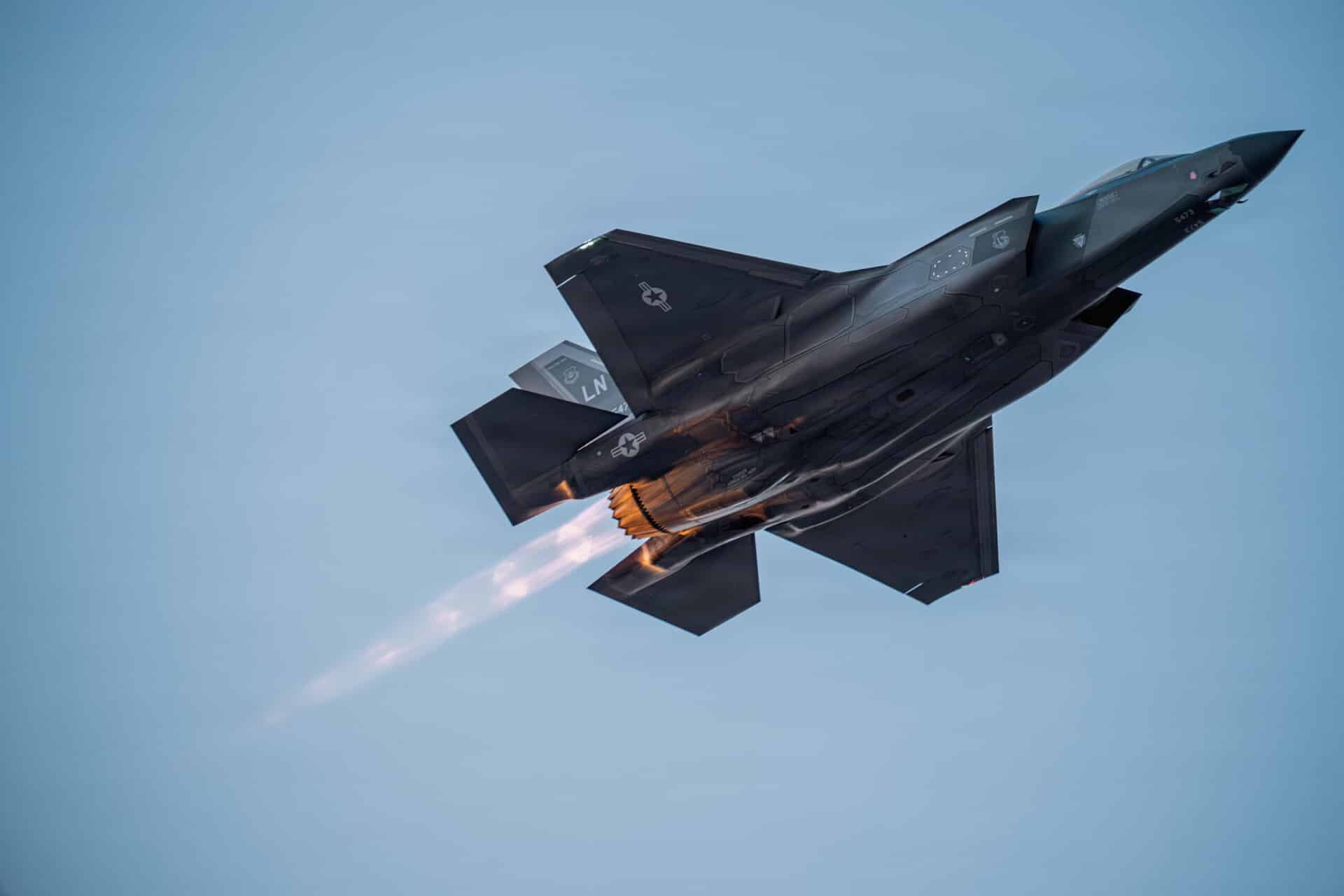
US military aircraft including advanced F-35 stealth fighters have sustained damage during operations related to the ongoing Iran conflict, according to reports citing defense officials and Air & Space Forces Magazine publications released this week.
The reports, which indicate approximately 16 to 20 US Air Force aircraft have been damaged or destroyed since the conflict escalated, raise significant questions about airbase vulnerability and the operational risks facing even the most sophisticated military aviation platforms in modern warfare environments.

Details emerging from defense sources suggest the aircraft losses occurred across multiple incidents during the first three weeks of intensified operations. The damaged aircraft reportedly include F-35A Lightning II stealth fighters, F-16 Fighting Falcons, and various support aircraft, though exact numbers remain subject to verification by the Department of Defense.
Air & Space Forces Magazine reported March 22 that an F-35A sustained damage during a combat mission over Iran, with the pilot executing an emergency landing. The aircraft was described as being in “stable condition” following the incident, according to a US Central Command spokesperson quoted in the publication.
The report did not specify whether the F-35 sustained damage from enemy fire or encountered mechanical issues during operations. A separate incident reportedly involved another F-35 being struck by hostile fire while conducting operations, though the aircraft returned safely to base according to preliminary accounts.
Additional reports indicate that F-16 multirole fighters have also sustained damage during strikes against Iranian military installations and systems. The F-16s, which typically operate at altitudes where they remain vulnerable to modern air defense systems, encountered what defense officials described as “intense defensive fire” during operations.
Iran’s Islamic Revolutionary Guard Corps released video footage March 19 claiming to show an F-35 being targeted but did not confirm hitting the aircraft. US Central Command has not confirmed this claim, and independent verification of such footage remains challenging given the classified nature of stealth aircraft operations.
The incident involving F-35 damage carries particular significance given the aircraft’s status as the most advanced fighter in the US inventory. The F-35 program, which has cost more than $400 billion in development and production, represents the cornerstone of American air superiority strategy for coming decades. Understanding the role of advanced military aircraft in modern defense strategy provides context for these losses.
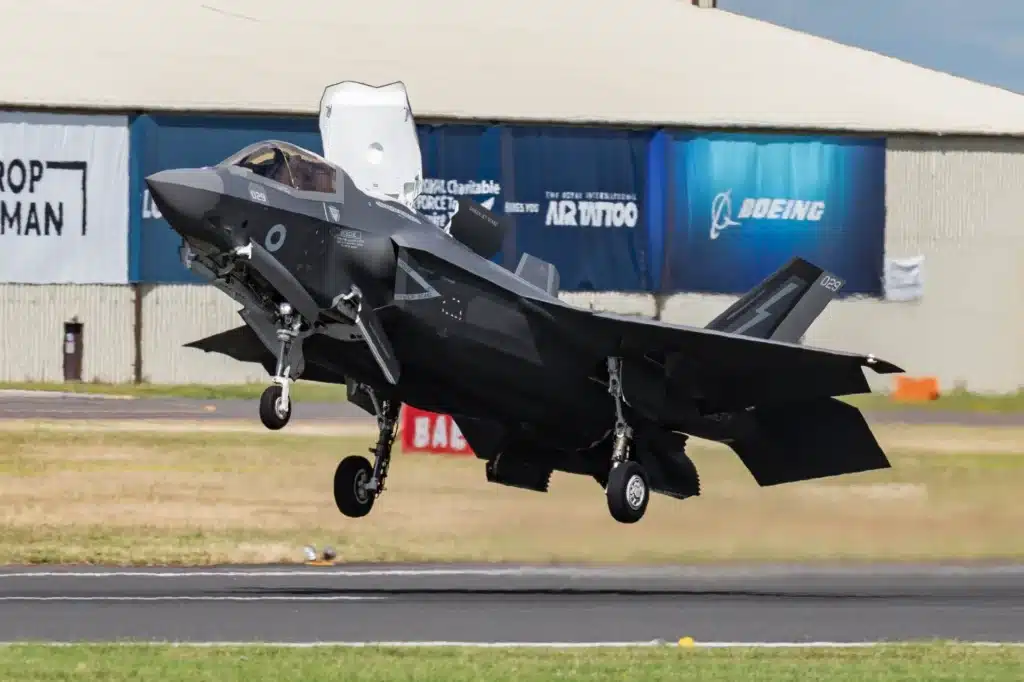
F-35 stealth characteristics are designed to make the aircraft extremely difficult to detect and track using conventional radar systems. The jet’s radar cross-section reportedly approximates that of a small bird or insect when viewed from certain angles, providing substantial survivability advantages in contested airspace.
However, the aircraft’s stealth properties do not render it invulnerable. Modern integrated air defense systems, particularly those employing multiple radar frequencies and advanced tracking algorithms, can under certain circumstances detect and engage even low-observable aircraft. Defense publications like Jane’s Defence have documented the evolution of air defense capabilities that challenge stealth technology assumptions.
The reported damage to F-35s suggests that Iranian defensive capabilities, which include Russian-supplied S-300 systems and domestically developed air defense networks, pose credible threats to advanced Western aircraft under operational conditions. This reality challenges assumptions about stealth aircraft capabilities operating with impunity in hostile airspace. The US Air Force continues evaluating operational tactics in response to evolving threat environments.
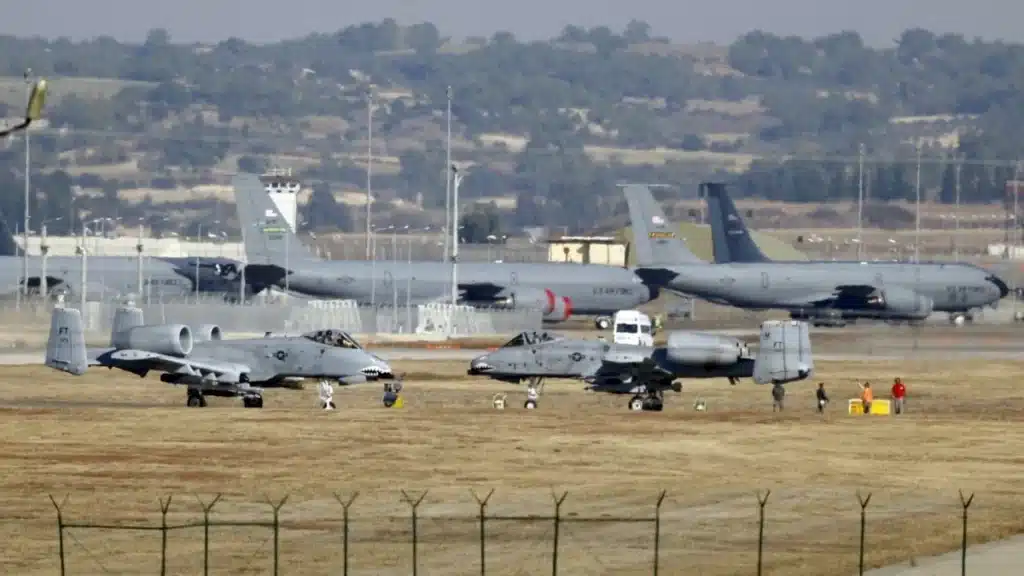
Defense analysts note that aircraft on the ground face different vulnerability profiles than those in flight. Several reports indicate that a portion of the aircraft losses resulted from strikes on US bases rather than air-to-air or surface-to-air engagements during flight operations. The role of maintenance, repair, and overhaul capabilities becomes critical when assessing force readiness following such attacks.
Iran has demonstrated ballistic missile capabilities through multiple strikes targeting US military installations in the region. These attacks, which involved salvos of precision-guided ballistic missiles, have proven capable of penetrating airbase defenses and damaging aircraft on the ground despite defensive systems in place.
A March 2 incident reportedly saw multiple US aircraft damaged when Iranian ballistic missiles struck an air base housing American forces. The attack, which involved what defense officials described as a “heavy barrage,” damaged aircraft parked on the flight line along with support infrastructure.
Tanker aircraft and intelligence, surveillance, and reconnaissance platforms operating in support roles have also reportedly sustained damage. These assets, while less prominent than fighter aircraft, provide critical enabling capabilities for air operations and represent significant investment in military aviation capability.
The US military acknowledged that strikes against bases have occurred but has not provided comprehensive details about the extent of damage to aircraft or infrastructure. A Department of Defense spokesperson stated March 25 that “operational security considerations” limit public disclosure of specific damage assessments.
Military officials have emphasized that damaged aircraft represent a small fraction of total US aviation assets deployed to the region. The United States maintains hundreds of combat aircraft across multiple bases supporting operations, with robust maintenance and logistics networks enabling sustained operations despite losses. Understanding aviation risk management in military contexts differs substantially from commercial operations but shares fundamental principles.
“We maintain overwhelming air superiority and the capability to conduct sustained operations,” a senior Air Force official stated in a March 24 briefing, speaking on background to discuss operational matters. “Individual incidents do not alter the fundamental balance of air power in theater.”
The broader implications of these losses extend beyond immediate operational impacts. Military aviation planning traditionally assumes some level of attrition during high-intensity conflicts, but the nature of damage to advanced platforms like F-35s prompts reassessment of operational assumptions. Defense research organizations like RAND Corporation have long studied force attrition rates and their implications for military readiness.
Defense experts have noted that modern conflicts increasingly feature adversaries with sophisticated anti-access/area denial capabilities. These systems, which combine advanced air defense networks with precision strike weapons, create challenges for airpower that differ substantially from conflicts of recent decades.
Operations in Iraq and Afghanistan, while involving significant air activity, rarely exposed US aircraft to peer-level air defense systems. The Iranian conflict represents a different operational environment where adversary capabilities approximate those of near-peer military powers.
Airbase vulnerability has emerged as a central concern. US military doctrine traditionally relies on forward bases providing sustained air operations. However, the proliferation of precision strike weapons threatens this model by putting fixed installations at risk from standoff attacks.
Some defense analysts have argued that the conflict demonstrates the need for distributed basing concepts where aircraft operate from multiple dispersed locations rather than concentrated hubs. This approach, while complicating logistics, reduces vulnerability to massed strikes against single facilities.
The role of unmanned systems has also featured in discussions about aviation losses. While reports have not extensively detailed drone losses, military operations in the region involve substantial unmanned aerial vehicle activity for reconnaissance and strike missions. The evolution of modern aircraft technology increasingly blurs lines between manned and unmanned platforms in combat operations.
Drones, being less expensive than manned platforms and not risking pilots, can operate in higher-threat environments. However, their loss still represents capability reduction and intelligence gathering limitations that affect overall operational effectiveness.
Questions about the accuracy of loss reports persist. Information emerging from conflict zones often contains inconsistencies, and both sides in military confrontations have incentives to manage public narratives about operational outcomes. Defense analysts and aviation media continue working to verify claims through multiple independent sources.
Iranian sources have claimed higher numbers of US aircraft destroyed than Western sources report. These claims, while potentially including exaggeration for propaganda purposes, complicate assessment of actual losses. The US military’s reluctance to provide detailed damage reports further obscures the complete picture.
Some reports circulating in defense media have cited figures ranging from 16 to over 20 aircraft affected. Whether these figures represent destroyed aircraft, damaged aircraft, or a combination remains unclear pending official confirmation from the Department of Defense.
The distinction between “damaged” and “destroyed” carries operational significance. Aircraft sustaining damage but remaining repairable may return to service after maintenance, while destroyed aircraft represent permanent losses requiring replacement.
Congressional oversight committees have reportedly requested detailed briefings on aircraft losses and operational readiness. These closed-door sessions, classified due to the sensitive nature of current operations, will likely inform future defense appropriations and strategic planning. International accountability mechanisms, similar to those used in previous aviation incidents, may eventually examine conflict-related aircraft losses.
The conflict’s impact on the F-35 program specifically has drawn attention from defense procurement specialists. With production continuing and international partners awaiting deliveries, any perception that the aircraft faces unexpected vulnerabilities could affect program momentum and international sales.
Lockheed Martin, the F-35’s manufacturer, has not commented publicly on specific operational incidents. The company typically defers to military customers regarding combat performance and does not discuss classified operational matters.
International F-35 operators, including allied nations in Europe and Asia, will likely monitor developments closely. These countries have invested billions in the platform based partly on assumptions about its survivability in contested environments. The global aircraft manufacturing industry watches closely as operational performance data influences future procurement decisions across allied nations.
The broader strategic context involves escalating tensions that have drawn multiple nations into supporting roles. Regional allies hosting US military installations face their own vulnerability assessments as the conflict demonstrates that even well-defended bases can sustain damage from modern strike systems. International aviation standards set by organizations like ICAO face new challenges when civilian and military operations intersect in conflict zones.
Aviation maintenance and logistics networks supporting deployed forces face increased demands as operations continue. Replacing damaged aircraft, repairing repairable platforms, and maintaining operational readiness across distributed forces requires substantial resources and coordination. The complexities of aviation supply chain management become even more critical during active conflict operations.
Looking forward, the conflict appears likely to continue influencing military aviation doctrine and procurement decisions. The operational environment demonstrates both the continued relevance of airpower and the evolving challenges that advanced defensive systems pose to air operations.
Defense planners face questions about force structure and basing concepts as they assess lessons from ongoing operations. The balance between expensive platforms like F-35 and larger numbers of less sophisticated aircraft remains subject to debate.
As the conflict continues, additional information about aircraft losses will likely emerge. The Department of Defense has indicated it will provide updates as appropriate while balancing transparency with operational security.
For now, the reports of F-35 and other aircraft damage underscore the risks military aviation faces even as technology advances. The modern battlespace presents challenges that no single platform fully resolves.
The coming weeks will likely bring clarity about the extent of US aircraft losses and operational adjustments being implemented. Until then, the reports serve as reminder that aviation operations in contested environments carry inherent risks.