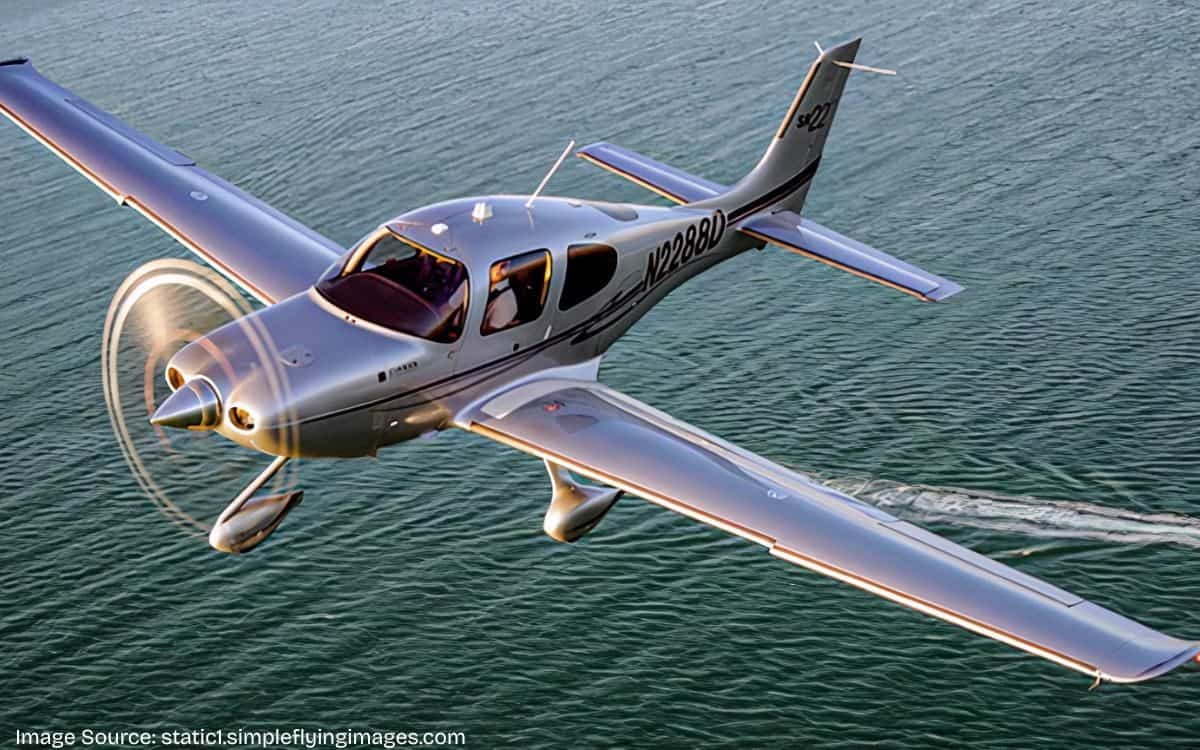
Choosing the right aircraft is crucial for any pilot. The Cirrus SR22, Cessna 182, Diamond DA40, Bonanza G36, and Piper M350 are some of the top contenders in the general aviation market. Each has unique features, but which one is the best? Let’s dive into the details and compare these models.
Cirrus SR22 vs Cessna 182
Performance Comparison
The Cirrus SR22 stands out with its speed and range. It cruises at 183 knots and has a range of 1,207 nautical miles. On the other hand, the Cessna 182 cruises at 145 knots and has a range of 915 nautical miles.
| Feature | Cirrus SR22 | Cessna 182 |
|---|---|---|
| Cruise Speed | 183 knots | 145 knots |
| Range | 1,207 nautical miles | 915 nautical miles |
Comfort and Safety
The Cirrus SR22 boasts a modern, sleek interior that seats up to five people comfortably. The Cessna 182, while also seating four, doesn’t offer the same level of luxury. The Cirrus provides a quieter and smoother ride, making it ideal for longer flights. The Cirrus SR22’s parachute system is a standout safety feature.
Acquisition and Operating Costs (2026)
The Cirrus SR22 commands a significant premium – new 2026 models cost $1,250,000-$1,305,000 compared to Cessna 182’s $580,000-$650,000. However, the price difference reflects substantial capability advantages: 38-knot cruise speed advantage, CAPS parachute safety system, composite construction, and Perspective Touch+ avionics vs Garmin G1000 NXi.
Operating costs favor the Cessna 182 at approximately $250/hour vs SR22’s $641/hour. The 182 burns 15 gallons per hour vs SR22T’s 16 gallons, but the real cost difference stems from the SR22’s turbocharged engine maintenance, advanced avionics support, composite structure care, and CAPS parachute system repack (required every 10 years at $18,000-$22,000).
Best Choice: Choose Cirrus SR22 for maximum speed, safety (CAPS parachute), and modern technology if budget allows $641/hour operating costs. Choose Cessna 182 for proven utility, lower acquisition cost ($580K-$650K), and economical operations ($250/hour) when outright speed is not priority.
Cirrus SR22 vs Cessna 172
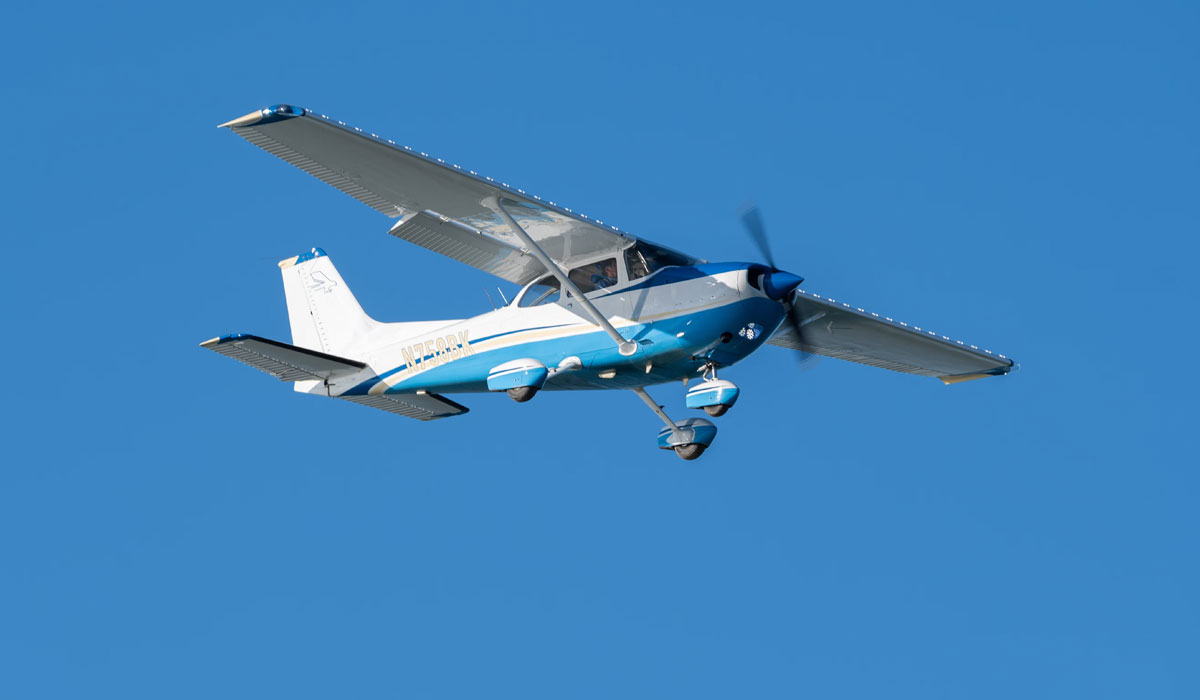
Image source: https://simpleflying.com/cessna-172-flight-training-favorite-list/
Performance Comparison
The Cirrus SR22 cruises at 183 knots with a range of 1,207 nautical miles, whereas the Cessna 172 has a cruise speed of 122 knots and a range of 640 nautical miles.
| Feature | Cirrus SR22 | Cessna 172 |
|---|---|---|
| Cruise Speed | 183 knots | 122 knots |
| Range | 1,207 nautical miles | 640 nautical miles |
Comfort and Safety
The Cirrus SR22 offers more advanced avionics and a luxurious cabin compared to the more basic interior of the Cessna 172. The Cirrus’s parachute system also provides an additional layer of safety.
Acquisition and Operating Costs (2026)
The price gap between these aircraft is substantial. New 2026 Cirrus SR22 costs $1,250,000-$1,305,000 compared to Cessna 172’s $450,000-$500,000 – the SR22 costs nearly 3× more. This massive difference reflects fundamentally different missions: the Cessna 172 is designed as a primary trainer and entry-level aircraft, while the SR22 targets experienced pilots seeking high-performance cross-country capability.
Operating costs diverge even more dramatically. The Cessna 172 operates at approximately $180/hour – the most economical option in single-engine aviation. The SR22 costs $641/hour, over 3.5× higher. For a pilot flying 100 hours annually, this translates to $18,000/year (Cessna 172) vs $64,100/year (SR22) – a $46,100 annual difference. The 172 burns 8-10 gallons per hour vs SR22T’s 16 gallons, and maintenance on the proven Lycoming O-360 engine costs significantly less than the turbocharged Continental TSIO-550-K.
Speed Difference Reality: The SR22’s 183-knot cruise vs Cessna 172’s 122-knot cruise means a 500 nm trip takes 2.7 hours in the SR22 vs 4.1 hours in the 172 – saving 1.4 hours. For frequent long-distance travelers, this time savings justifies the cost premium. For local flights, pattern work, or $100 hamburger runs, the 172’s economy makes more sense.
Best Choice: Choose Cessna 172 for flight training, building hours, local flying, and budget-conscious operations ($180/hour). The 172 is the perfect first aircraft and most popular trainer worldwide for good reason. Choose Cirrus SR22 after gaining 100-200 hours experience when you need serious cross-country speed (183 knots), CAPS safety system, and modern avionics – accepting the $641/hour operating cost as the price of performance and technology.
Cirrus SR22 vs. Diamond DA40

Image source: https://www.diamondaircraft.com/en/private-owners/aircraft/da40/overview/
Performance Comparison
The Cirrus SR22 cruises at 183 knots with a range of 1,207 nautical miles. The Diamond DA40 cruises at 145 knots and has a range of 940 nautical miles.
| Feature | Cirrus SR22 | Diamond DA40 |
|---|---|---|
| Cruise Speed | 183 knots | 145 knots |
| Range | 1,207 nautical miles | 940 nautical miles |
Comfort and Safety
The Diamond DA40 is known for its spacious and modern interior with large windows. However, the Cirrus SR22 offers a quieter ride and a more luxurious cabin. Both aircraft have excellent safety records, but the Cirrus’s parachute system is a unique advantage.
Acquisition and Operating Costs (2026)
The Cirrus SR22 and Diamond DA40 occupy different price segments despite similar roles. New 2026 SR22 costs $1,250,000-$1,305,000 vs Diamond DA40’s $500,000-$550,000 – the SR22 costs 2.3-2.6× more. Both target pilots seeking modern glass cockpit aircraft with good cross-country performance, but the price difference reflects the SR22’s turbocharged power, composite construction complexity, and CAPS parachute system.
Operating economics favor the Diamond DA40 significantly. The DA40 operates at approximately $200/hour vs SR22’s $641/hour – saving $441/hour or over $44,000 annually at 100 hours. The DA40 achieves this through naturally aspirated diesel engine option (Austro Engine AE300, burning Jet-A at lower cost than avgas), lighter composite construction, and simpler systems. Both aircraft cruise at 145 knots (DA40) vs 183 knots (SR22), but the SR22’s 38-knot speed advantage comes at substantial cost premium.
Fuel Efficiency Advantage: Diamond DA40 with diesel engine burns approximately 6 gallons per hour compared to SR22T’s 16 gallons – achieving 2.7× better fuel economy. For European operators where Jet-A costs less than avgas, this compounds the DA40’s economic advantage. The DA40’s composite construction also means corrosion-proof airframe requiring less long-term maintenance than traditional aluminum structures.
Best Choice: Choose Diamond DA40 for fuel efficiency ($200/hour), lower acquisition cost ($500K-$550K), corrosion-proof composite construction, and excellent training platform if speed is not critical priority. The DA40 offers modern glass cockpit experience at half the SR22’s operating cost. Choose Cirrus SR22 for 38-knot cruise speed advantage (183 vs 145 knots), CAPS parachute safety system, greater range (1,207 nm vs 940 nm), and turbocharged high-altitude capability when budget allows premium pricing.
Cirrus SR22 vs. Diamond DA50
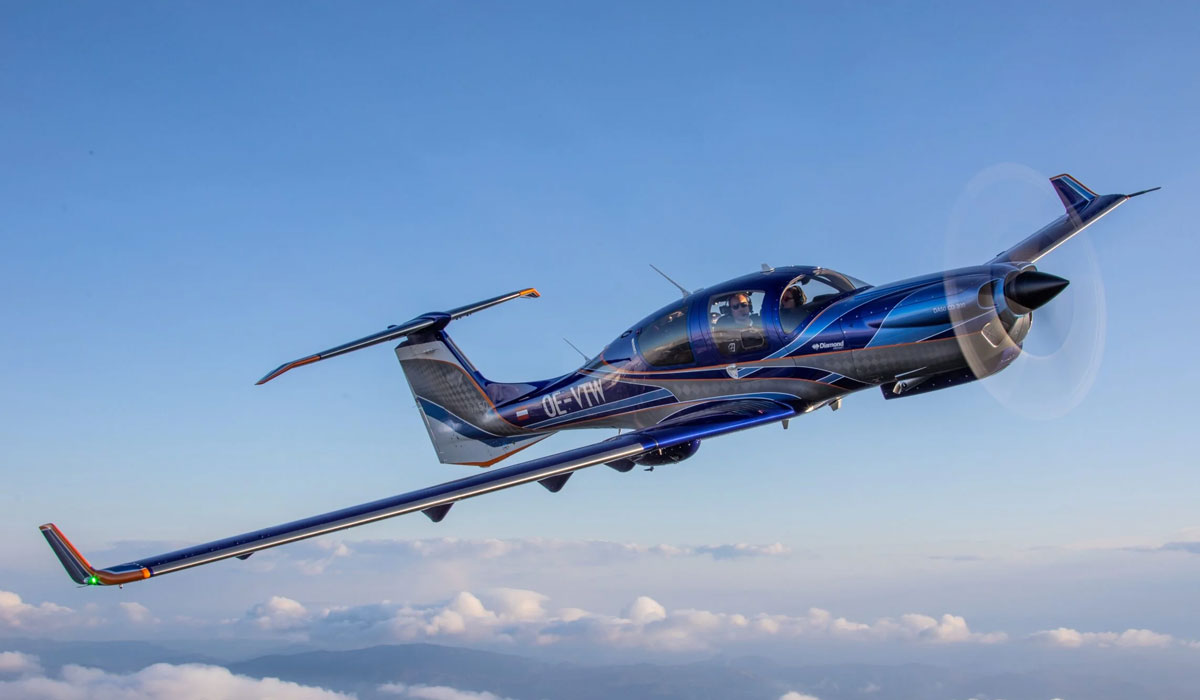
Image source: https://www.flyingmag.com/we-fly-diamond-da50-rg-the-high-performance-retract-that-shines/
Performance Comparison
The Cirrus SR22 cruises at 183 knots with a range of 1,207 nautical miles. The Diamond DA50 is a newer model with a cruise speed of 181 knots and a range of 750 nautical miles.
| Feature | Cirrus SR22 | Diamond DA50 |
|---|---|---|
| Cruise Speed | 183 knots | 181 knots |
| Range | 1,207 nautical miles | 750 nautical miles |
Comfort and Safety
The Diamond DA50 offers a very spacious and luxurious interior, similar to the Cirrus SR22. However, the Cirrus’s parachute system gives it a notable edge in terms of safety.
Acquisition and Operating Costs (2026)
The Cirrus SR22 and Diamond DA50 compete directly in the high-performance single-engine market with similar pricing. New 2026 SR22 costs $1,250,000-$1,305,000 vs Diamond DA50’s $800,000-$900,000 – the SR22 commands a $350,000-$405,000 premium. Both seat 5 passengers and target serious cross-country missions, but differ significantly in design philosophy: SR22 emphasizes proven platform with CAPS safety vs DA50’s modern composite design with retractable gear.
Operating costs favor the Diamond DA50 at approximately $400/hour vs SR22’s $641/hour – saving $241/hour or $24,100 annually at 100 hours. The DA50 achieves lower costs through composite construction efficiency, optional diesel engine (Austro Engine AE330 burning Jet-A), and newer design optimized for economy. However, the SR22 offers superior range: 1,207 nautical miles vs DA50’s 750 nm – a 457 nm advantage enabling nonstop missions the DA50 cannot complete.
Range vs Economy Trade-off: The SR22’s 457 nm range advantage is substantial for long-distance travelers. A 1,000 nm trip requires one fuel stop in the DA50 (adding 30-45 minutes) vs nonstop in the SR22. For missions under 600 nm, the DA50’s $241/hour cost savings and retractable gear efficiency make it attractive. For missions exceeding 700 nm regularly, the SR22’s range justifies its premium.
Best Choice: Choose Diamond DA50 for operating economy ($400/hour vs $641/hour), modern composite retractable design (introduced 2017), lower acquisition cost ($800K-$900K), and corrosion-proof construction if typical missions are under 700 nm. Choose Cirrus SR22 for superior range (1,207 nm vs 750 nm), proven platform (13,000+ delivered since 2001), established service network, CAPS parachute safety system, and nonstop long-distance capability justifying $1.25M-$1.3M investment.
Cirrus SR22 vs. Bonanza G36
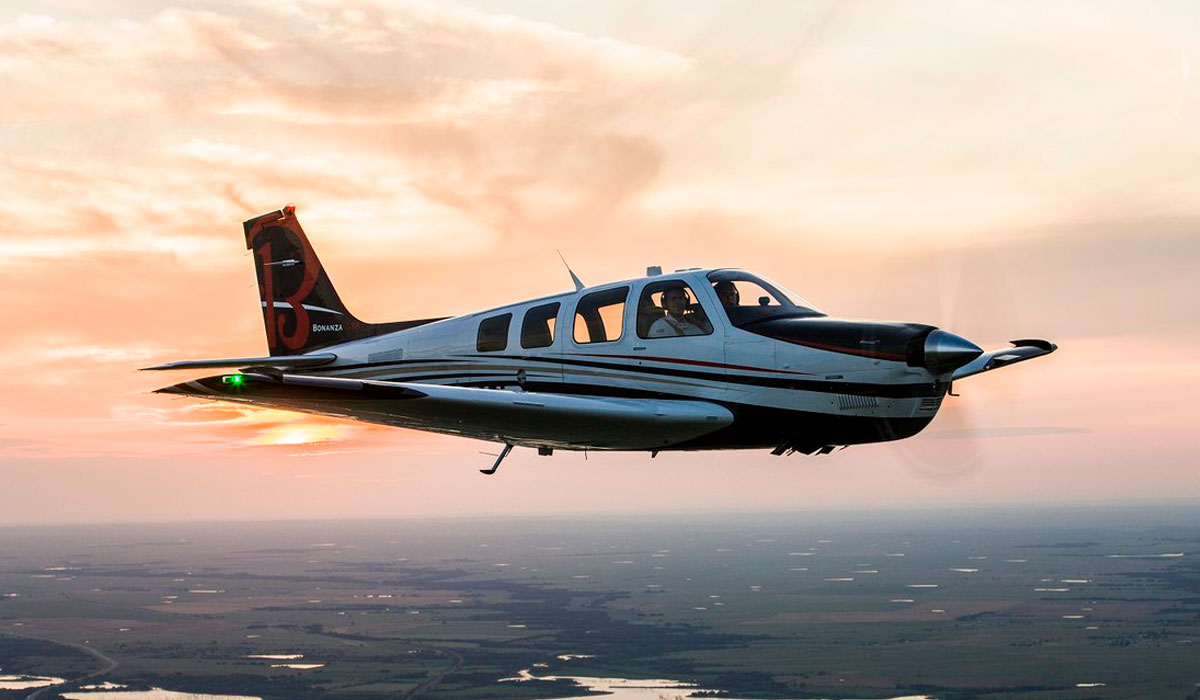
Image source: https://x.com/Beechcraft/status/1532450737887887374
Performance Comparison
The Cirrus SR22 cruises at 183 knots with a range of 1,207 nautical miles. The Bonanza G36 cruises at 176 knots with a range of 920 nautical miles.
| Feature | Cirrus SR22 | Bonanza G36 |
|---|---|---|
| Cruise Speed | 183 knots | 176 knots |
| Range | 1,207 nautical miles | 920 nautical miles |
Comfort and Safety
The Bonanza G36 provides a luxurious cabin with club seating for up to six passengers. While the Cirrus SR22 also offers comfort, the Bonanza has a slight advantage in seating capacity. However, the Cirrus’s parachute system is a significant safety feature.
Acquisition and Operating Costs (2026)
The Cirrus SR22 and Beechcraft Bonanza G36 represent different philosophies in high-performance singles. New 2026 SR22 costs $1,250,000-$1,305,000 vs Bonanza G36’s $880,000-$950,000 – the SR22 costs $300,000-$425,000 more. The Bonanza counters with 6-seat capacity vs SR22’s 5 seats and 70+ years of continuous production proving design longevity. The SR22 emphasizes modern composite construction and revolutionary CAPS parachute safety.
Operating costs favor the Bonanza G36 at approximately $550/hour vs SR22’s $641/hour – saving $91/hour or $9,100 annually at 100 hours. Both are premium aircraft with substantial operating costs, but the Bonanza’s aluminum construction, conventional retractable gear, and proven IO-550 engine offer slightly lower maintenance expenses than SR22’s composite structure and turbocharged powerplant. The SR22 cruises 7 knots faster (183 vs 176 knots) – negligible for most missions.
Six vs Five Seats: Bonanza’s 6-seat capacity is genuine advantage for families or business teams. The additional seat increases payload flexibility and passenger-carrying capability the SR22 cannot match. However, the SR22’s CAPS parachute system has saved 210+ lives – a safety feature no Bonanza variant offers. For families prioritizing maximum occupant protection, CAPS is compelling despite one fewer seat.
Best Choice: Choose Beechcraft Bonanza G36 for 6-seat capacity (vs SR22’s 5), lower acquisition cost ($880K-$950K vs $1.25M-$1.3M), 70+ year proven design, classic retractable gear performance, and slightly lower operating costs ($550/hour vs $641/hour). The Bonanza is aviation’s longest-production aircraft for excellent reasons. Choose Cirrus SR22 for CAPS parachute safety system (210+ lives saved), modern composite construction, Perspective Touch+ avionics, established position as best-selling high-performance single (13,000+ delivered), and 7-knot cruise advantage if fifth seat suffices for your mission.
Cirrus SR22 vs. Piper M350
Performance Comparison
The Cirrus SR22 cruises at 183 knots with a range of 1,207 nautical miles. The Piper M350 cruises at 213 knots and has a range of 1,343 nautical miles.
| Feature | Cirrus SR22 | Piper M350 |
|---|---|---|
| Cruise Speed | 183 knots | 213 knots |
| Range | 1,207 nautical miles | 1,343 nautical miles |
Comfort and Safety
The Piper M350 offers a high-end interior with a pressurized cabin, making it ideal for high-altitude flights. While the Cirrus SR22 is luxurious, the Piper M350’s pressurization and speed make it a superior option for long-distance travel.
The Cirrus SR22 stands out for its performance, comfort, and safety features, especially its unique parachute system. However, depending on specific needs, other models like the Piper M350, Bonanza G36, or Diamond DA40 might be more suitable.
Acquisition and Operating Costs (2026)
The Piper M350 competes above the Cirrus SR22 in capability and price. New 2026 Piper M350 costs $1,200,000-$1,350,000 vs SR22’s $1,250,000-$1,305,000 – roughly equivalent acquisition costs. However, these aircraft serve fundamentally different missions: the M350 is pressurized and certified to 25,000 feet for high-altitude operations, while the SR22T reaches 25,000 feet unpressurized (requiring oxygen masks). The M350’s cabin pressurization is transformative for passenger comfort on long flights.
Operating costs diverge significantly. The Piper M350 operates at approximately $700/hour vs SR22’s $641/hour – the M350 costs $59/hour more or $5,900 annually at 100 hours. The M350’s pressurization system adds complexity: environmental control system maintenance, pressurization checks, door seal replacements. The M350 burns similar fuel (17 GPH vs SR22T’s 16 GPH) but delivers 30-knot cruise speed advantage: 213 knots vs 183 knots. This 30-knot advantage saves approximately 30 minutes on a 500 nm trip.
Pressurization Value Proposition: The M350’s pressurized cabin maintains 8,000-foot cabin altitude while flying at 25,000 feet. Passengers experience airline-like comfort without oxygen masks, reducing fatigue on 4-6 hour flights dramatically. For business travelers covering 800+ nm routes regularly, this comfort justifies the complexity and cost. The SR22T requires all occupants to use oxygen masks above 12,500 feet, acceptable for 2-3 hour flights but fatiguing on longer missions.
Best Choice: Choose Piper M350 for pressurized cabin comfort (8,000-foot cabin at 25,000 feet flight), fastest cruise speed in class (213 knots), 6-seat capacity, and weather-avoidance capability flying above most weather systems – accepting $700/hour operating costs and pressurization system complexity. Ideal for business travelers, longer missions (4-6+ hours), and those prioritizing passenger comfort on high-altitude flights. Choose Cirrus SR22 for CAPS parachute safety system, simpler unpressurized systems ($641/hour vs $700/hour), proven best-selling platform, lower maintenance complexity, and excellent performance for missions under 4 hours where oxygen mask use is acceptable trade-off for $59/hour savings and reduced system complexity.
Comprehensive Comparison Table
| Specification | Cirrus SR22 | Cessna 182 | Cessna 172 | Diamond DA40 | Diamond DA50 | Bonanza G36 | Piper M350 |
|---|---|---|---|---|---|---|---|
| Cruise Speed | 183 knots | 145 knots | 122 knots | 145 knots | 181 knots | 176 knots | 213 knots |
| Range (nm) | 1,207 | 915 | 640 | 940 | 750 | 920 | 1,343 |
| Seating Capacity | 5 | 4 | 4 | 4 | 5 | 6 | 6 |
| Engine Power | 310 HP (SR22T) | 230 HP | 180 HP | 180 HP | 300 HP | 300 HP | 350 HP |
| Avionics (2026) | Perspective Touch+ (G7+) | Garmin G1000 NXi | Garmin G1000 NXi | Garmin G1000 NXi | Garmin G1000 NXi | Garmin G1000 NXi | Garmin G1000 NXi |
| Unique Safety Feature | CAPS Parachute System | High-wing visibility | Proven reliability | Crashworthy design | Composite construction | Advanced avionics | Pressurized cabin |
| New Price 2026 | $1,250,000-$1,305,000 | $580,000-$650,000 | $450,000-$500,000 | $500,000-$550,000 | $800,000-$900,000 | $880,000-$950,000 | $1,200,000-$1,350,000 |
| Operating Cost/Hour | $641 | $250 | $180 | $200 | $400 | $550 | $700 |
| Landing Gear | Fixed tricycle | Fixed tricycle | Fixed tricycle | Fixed tricycle | Retractable | Retractable | Retractable |
| Service Ceiling | 25,000 ft (SR22T) | 18,100 ft | 14,000 ft | 16,400 ft | 20,000 ft | 18,500 ft | 25,000 ft |
| Best For | Speed, safety, modern tech | Utility, training, value | Training, entry-level | Efficiency, low operating cost | Modern performance | Classic performance, 6-seat | High-altitude, pressurized |
Color coding: Green = Best value/performance in category | Red = Highest cost
Each aircraft has its strengths. Choosing the right one depends on your specific needs, whether it’s performance, comfort, safety, or cost. Fly safe and enjoy the journey!
Maintaining a Cirrus SR22 involves regular checks and servicing to ensure optimal performance and safety. Key tasks include engine overhauls every 2,000 hours, annual inspections, and periodic updates to avionics and safety systems. Proper maintenance of the Cirrus SR22 also includes monitoring the aircraft’s composite structure, managing the parachute system, and ensuring all components are in top condition to prevent any in-flight issues. For a comprehensive guide on maintaining your Cirrus SR22, check out our detailed Cirrus Maintenance Guide