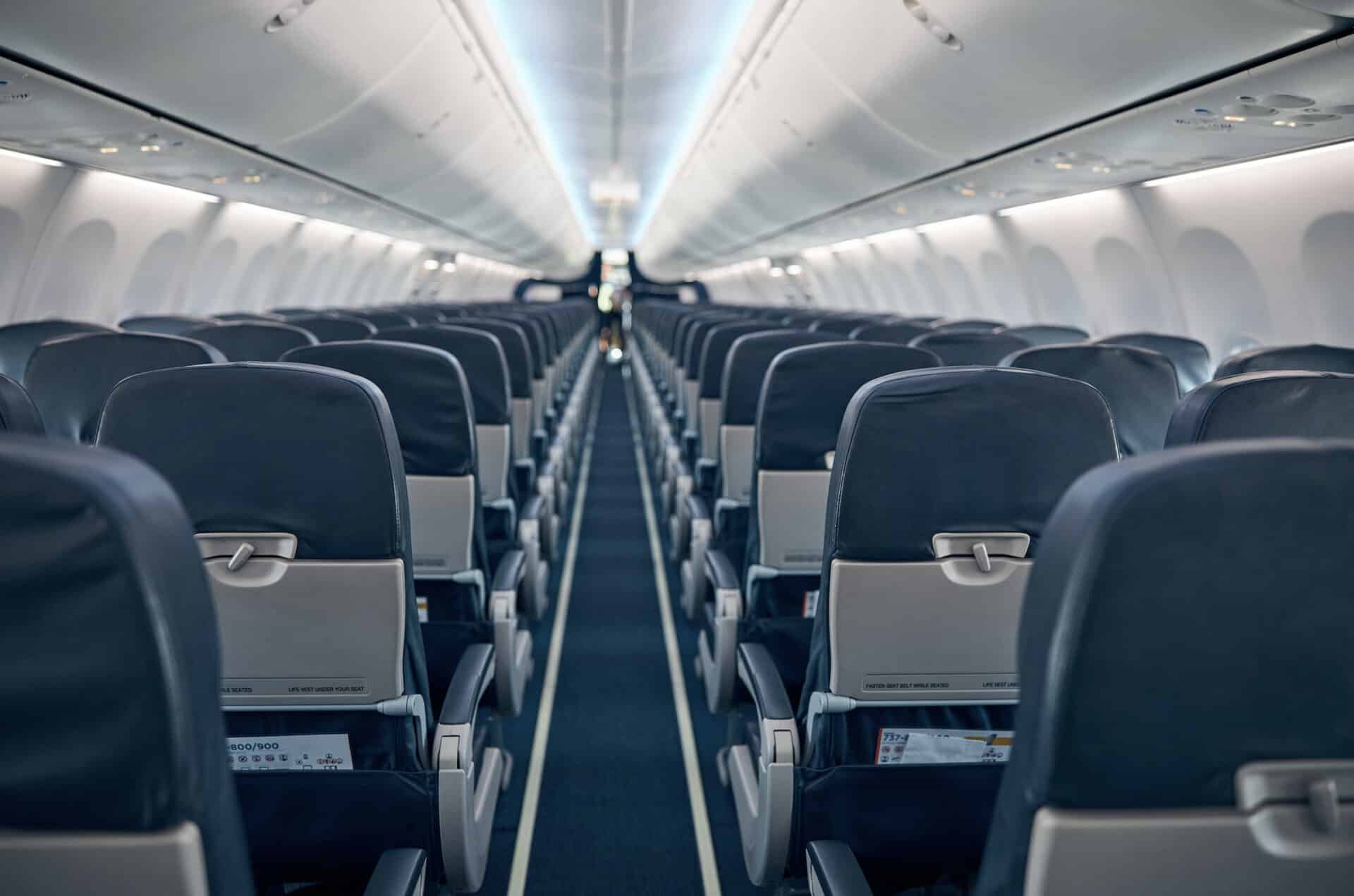
Your knees press against the seat in front. You can’t recline without guilt. The person next to you claimed both armrests.
Seat choice transforms flights from tolerable to miserable or comfortable to restful. Same ticket price, completely different experience. This guide shows you exactly which airplane seats deliver comfort, which trap you in discomfort, and how to grab the best ones without paying extra.
Why Seat Choice Matters More Than You Think

Airlines sell economy seats at identical prices. But row 12A flies nothing like row 32C.
Legroom varies by 10+ inches across economy cabins. Noise levels differ dramatically between front and rear. Some seats vibrate more during turbulence. Others leave you trapped when you need the bathroom.
Long-haul flights magnify these differences. Eight hours in a bad seat versus eight hours in an optimal seat changes your entire trip. You arrive exhausted or refreshed. Productive or wrecked.
Smart travelers pick seats strategically. Location matters as much as cabin class.
Best Seats in Economy Class
Economy isn’t uniform. Specific seats offer substantially better experiences than others.
Exit Row Seats: Maximum Legroom
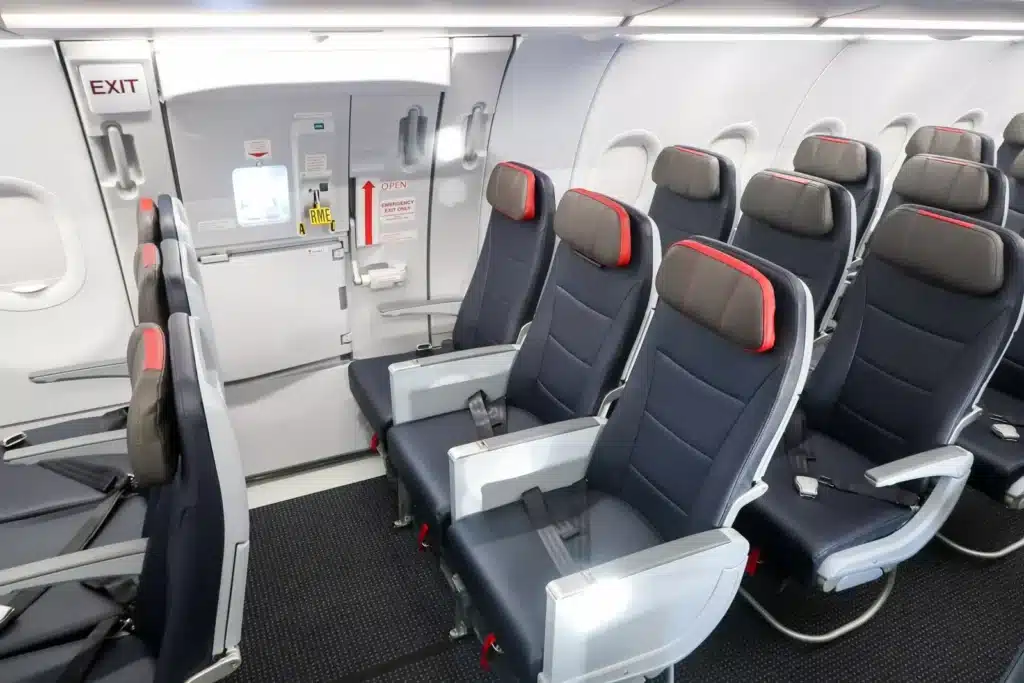
Legroom: 36 to 40 inches (vs 30-32 inches standard economy)
Pros:
- Extra 6-10 inches legroom allows full leg extension
- Perfect for tall passengers over 6 feet
- Easier movement during long flights
- Reduced cramping and circulation issues
Cons:
- No under-seat storage (life vests occupy space)
- Seats don’t recline or recline less
- Exit row responsibilities required (assist in emergency)
- Often cost $30-80 extra to select
- Can be colder near exit doors
Best for: Tall passengers, overnight flights where sleep requires leg room, anyone with knee or back issues.
Bulkhead Seats: Front Wall Advantage
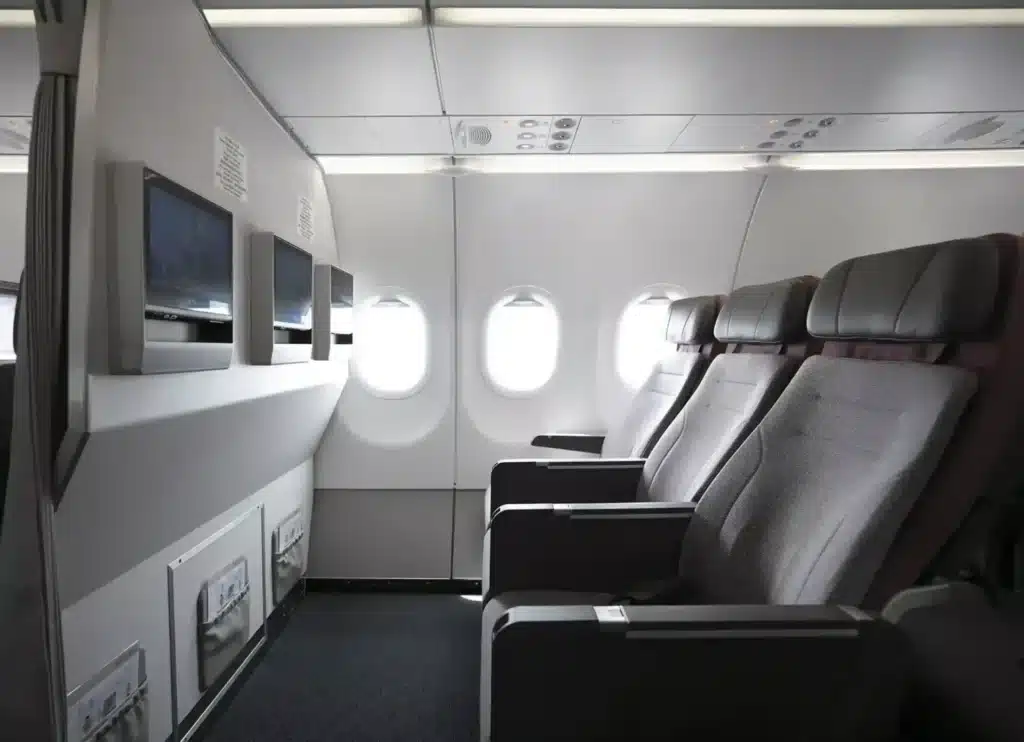
Location: First row behind dividing walls (galleys, lavatories, or cabin dividers)
Pros:
- Nobody reclining into your space
- Extra legroom on many aircraft
- Easy access to overhead bins
- First off plane on arrival
- Bassinet attachments for families with infants
Cons:
- No under-seat storage
- Tray tables fold out from armrests (narrower seats)
- Screens mount on walls (sometimes fixed position)
- Close to galley noise and lavatory traffic
Best for: Passengers prioritizing personal space, families with babies, quick exit needs.
Window vs Aisle in Economy

Window Seat Advantages:
- Wall to lean against for sleeping
- Control over window shade
- Views during takeoff, landing, and flight
- No passenger traffic disturbance
- Extra storage along fuselage wall
Window Seat Disadvantages:
- Trapped when needing bathroom
- Must disturb others to exit
- Limited movement freedom
- Harder to stretch legs in aisle
Aisle Seat Advantages:
- Easy bathroom access anytime
- Freedom to stand and stretch
- Leg extension into aisle during service breaks
- Quick exit upon landing
- No climbing over sleeping passengers
Aisle Seat Disadvantages:
- Hit by passing beverage carts and passengers
- Disturbed by seat neighbors needing exit
- No wall to lean against for sleeping
- Flight attendants bump your shoulder
Choose window for sleep. Choose aisle for movement.
Seats to Avoid in Economy
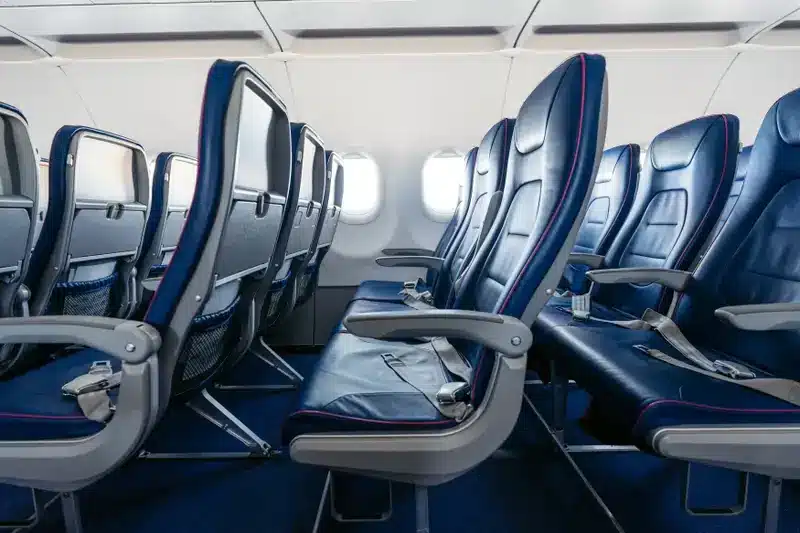
Last Row Seats:
- Limited or zero recline (wall behind prevents it)
- Lavatory odor and traffic
- Engine noise louder at rear
- Longer deplaning wait
- Galley activity and crew conversations
Seats Near Lavatories:
- Constant passenger traffic and line formation
- Door slamming and lock clicking
- Unpleasant odors
- Light from opening doors disrupts sleep
Seats Near Galleys:
- Crew activity noise throughout flight
- Cart preparation sounds
- Crew conversations audible
- Bright galley lights
Middle Seats:
- No window, no aisle access
- Armrest competition both sides
- Disturb neighbors for any movement
- Most uncomfortable economy option
Best Seats in Business Class

Business class seat quality varies dramatically by aircraft type and airline configuration. Not all business class seats create equal.
Lie-Flat Seats with Direct Aisle Access

Modern business class features lie-flat seats converting to 6.5 to 7-foot beds. Direct aisle access means no climbing over neighbors.
Best configurations:
- 1-2-1 layout: All passengers get aisle access (A350, 787, 777)
- Reverse herringbone: Angled seats with privacy and aisle access
- Staggered layout: Alternating window and aisle priority seats
Seats to prefer:
- Window “throne” seats (A and K on widebody) for privacy
- Odd-numbered rows where foot space doesn’t intrude on neighbor
- Forward cabin sections (quieter, smoother ride)
Seats to avoid:
- Middle pairs without direct aisle access (2-2 configurations)
- Bulkhead seats where footwell is restricted
- Seats near galleys and lavatories
Why Aircraft Type Matters in Business Class
Modern widebody aircraft like the Boeing 787 and Airbus A350 deliver superior cabin environments.
Boeing 787 Dreamliner advantages:
- Larger windows with electronic dimming
- Lower cabin altitude (6,000 ft vs 8,000 ft reduces fatigue)
- Higher humidity (15% vs 10% prevents dryness)
- Quieter engines and smoother ride
Airbus A350 advantages:
- Widest business class cabin (9 feet 5 inches)
- Advanced air filtration system
- LED mood lighting reduces jetlag
- Quieter than older widebodies
Boeing 777 characteristics:
- Proven reliability on long-haul routes
- Mature business class products from major carriers
- Spacious overhead bins
Airbus A380 superjumbo:
- Upper deck business class (quieter, less turbulence)
- Largest business class cabins
- Some carriers offer onboard bars and lounges
Check aircraft type when booking. 787 and A350 deliver measurably better comfort than older aircraft on ultra-long flights.
Best Seats in First Class

First class occupies the front of the aircraft for good reasons. Smoothest ride. Quietest cabin. Fastest service.
Privacy and Space
Modern first class features:
- Enclosed suites with sliding doors (Emirates A380, Singapore A380)
- Seats converting to 6.5 to 8-foot beds
- Personal storage space and wardrobe
- 32 to 40-inch entertainment screens
- Some airlines offer double beds or separate lounge chairs
Layout Differences
1-1-1 configuration: Each passenger gets window and aisle access (rare, maximum privacy)
1-2-1 configuration: Center pairs for couples, outer singles for solo travelers
Best first class seats:
- Window seats (A and K) for maximum privacy and views
- Front rows (faster service, less disturbance, first off plane)
- Avoid seats near galley (activity noise throughout flight)
First class worth it on premium carriers operating A380s, 777s, or A350s with dedicated first class cabins.
Economy vs Business vs First: Quick Comparison
| Feature | Economy | Business | First |
|---|---|---|---|
| Seat Pitch | 30-32 inches (36-40 exit row) | 60-80 inches (lie-flat) | 80-95 inches (enclosed suite) |
| Sleep Quality | Poor (upright with slight recline) | Good (lie-flat bed) | Excellent (full bed with bedding) |
| Privacy | None | Moderate (some configurations) | High (suites with doors) |
| Best For | Short flights, budget travel | Long-haul work or sleep | Ultimate comfort, special occasions |
| Long-Haul Comfort | Tolerable (exit row best) | Comfortable | Luxurious |
Window Seat vs Aisle Seat: Which Is Better?
Neither seat is objectively better. Choice depends on your priorities and flight duration.
Choose a window seat if you:
- Want to sleep: Wall provides lean surface, nobody climbing over you
- Value views: Takeoff, landing, and in-flight scenery
- Avoid bathrooms: Pre-flight bathroom visit eliminates mid-flight need
- Prefer minimal disturbance: No aisle traffic bumping you
- Travel with companion: Window + middle keeps group together
Choose Aisle Seat If You:
- Need bathroom freedom: Frequent visits without disturbing others
- Value movement: Stand and stretch whenever needed
- Want quick exit: First off plane, faster connections
- Dislike confinement: Open aisle feels less trapped
- Have long legs: Extend into aisle during non-service times
Long-haul flights (8+ hours): Window seat wins for sleep priority. Aisle seat better if you can’t sit still.
Short flights (under 4 hours): Aisle seat wins for convenience. Window offers little advantage.
Middle seat loses always. Avoid at all costs.
Best Seats for Long-Haul Flights

Flight duration changes seat priorities. Comfort compounds over hours.
Over-Wing vs Front Cabin
Seats over the wing:

- Smoother ride: Less pitch and yaw movement
- Turbulence feels milder: Center of gravity location
- Faster boarding: Middle of plane boards earlier
- Wing blocks window views
Front cabin seats:
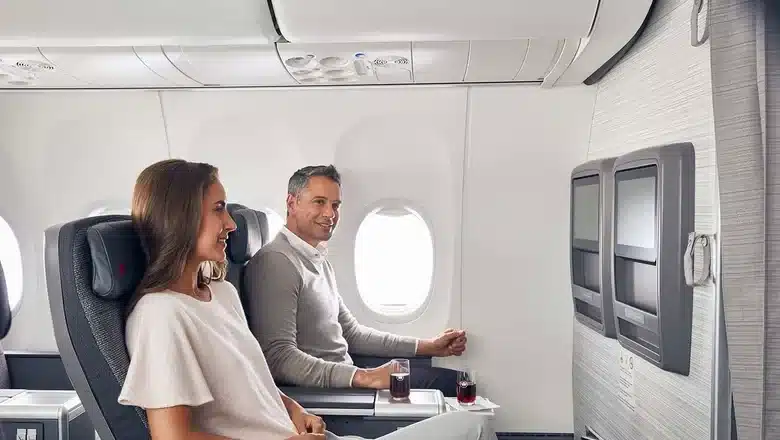
- Quieter: Away from engine noise
- Faster service: Meals served front to back
- Quick exit: First off plane
- More pitch movement in turbulence
Rear cabin seats:
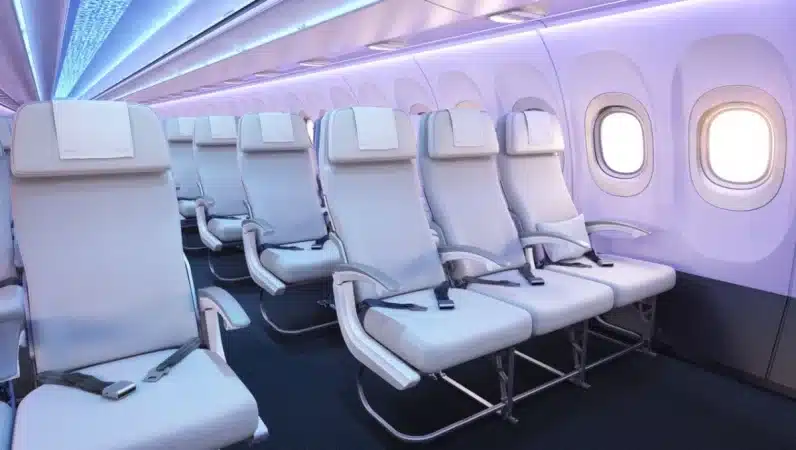
- Louder: Engine noise travels backward
- More turbulence sensation: Tail amplifies movement
- Slower service: Last for meals
- Longer deplaning: Wait for front passengers
Best compromise: Rows just behind wing on widebody aircraft. Balanced ride, reasonable noise, decent service timing.
Aircraft Type Importance
Modern aircraft deliver measurably better long-haul experiences. Top airlines prioritize newest aircraft on longest routes.
787 and A350 advantages over older widebodies:
- Lower cabin altitude reduces fatigue by 15-20%
- Higher humidity prevents excessive dryness
- Better air filtration (removes more bacteria and viruses)
- Quieter engines (3-5 decibels lower)
- Larger windows improve mood and reduce claustrophobia
Check aircraft type when booking long-haul flights. 787 or A350 on 12-hour flight feels significantly better than older 777 or A330.
How to Get Best Seat Without Paying Extra
Airlines charge $15 to $150 for preferred seat selection. Smart strategies grab good seats free.
Check-In Timing Strategy
- Check in exactly 24 hours before departure: When online check-in opens
- Airlines release held seats: Premium seats blocked for elite members get released if unclaimed
- Set alarm: 24 hours minus your time zone from departure
- Mobile apps faster: Check in via airline app beats website
Use Seat Maps Effectively
- SeatGuru.com: Shows actual seat quality with passenger reviews
- Airline seat maps: Green seats available, yellow seats taken
- Check multiple times: Passengers change seats, opening better options
- ExpertFlyer: Paid service tracks seat availability and sends alerts
Aircraft Swap Awareness
- Airlines change aircraft types for operational reasons
- Your selected seat may not exist on new aircraft
- Monitor booking 48-72 hours before departure
- Airlines notify via email or app (check spam folder)
- Re-select seat immediately when swap occurs
Loyalty Status Advantages
- Elite status: Free preferred seat selection
- Complimentary upgrades: Move to premium economy or business
- Priority boarding: Secure overhead bin space
- Blocked seats released: Best economy seats open to elite members
Consider premium economy upgrade if preferred economy seats cost $50+. Premium economy adds $100-150 but delivers substantially better experience.
Who Should Choose Which Seat?
Tall Passengers (Over 6 Feet)
- First choice: Exit row seats (36-40 inches legroom)
- Second choice: Bulkhead seats (varies by aircraft)
- Third choice: Aisle seat anywhere (leg extension freedom)
- Avoid: Standard economy middle seats (torture)
Nervous Flyers
- Best location: Over wing or just behind (smoothest ride)
- Prefer: Window seat (visual reference, lean surface)
- Avoid: Rear cabin (amplified turbulence sensation)
- Consider: Front rows in business class (minimal movement)
Couples Traveling Together
- Best configuration: Window + middle on half-empty flights (aisle often stays empty)
- Alternative: Two aisle seats across from each other
- Business class: Center pairs (seats next to each other)
- Avoid: Middle + middle (both uncomfortable)
Solo Travelers
- Window seat: Maximum privacy and sleep capability
- Aisle seat: Freedom of movement
- Business class: Window “throne” seats for solo privacy
- Avoid: Middle seats unless flight nearly empty
Families with Young Children
- Bulkhead rows: Bassinet attachment points for infants
- Window + aisle: Contain children, hope middle stays empty
- Rear cabin: Less disturbance concern if children cry
- Extra legroom: Space for children to move slightly
- Near lavatories: Frequent diaper changes easier
Business Travelers
- Aisle seats: Quick exit, laptop work easier
- Forward cabin: Faster deplaning for connections
- Business class: Lie-flat for overnight flights, arrive fresh
- Check airport layouts: Front of plane cuts connection time
Frequently Asked Questions
What are the best seats on an airplane?
Best economy seats: exit rows for legroom (36-40 inches) or forward window seats for sleep and quiet. Best business class seats: window “throne” seats (A or K) with direct aisle access on 1-2-1 configured aircraft. Best first class seats: front window suites with sliding doors for maximum privacy.
Which seat is best for long flights?
Exit row window seats or bulkhead window seats in economy for 8+ hour flights. Window provides sleep support without disturbance. Exit row adds crucial legroom. Business or first class window seats optimal for ultra-long routes (12+ hours) requiring proper sleep.
Is window or aisle seat better?
Window seats better for sleeping (wall to lean on, no disturbance). Aisle seats better for frequent bathroom use or stretching needs. Long-haul overnight flights favor window seats. Daytime short flights favor aisle convenience. Middle seats never optimal.
Which seats should be avoided on a plane?
Last row (no recline, lavatory noise), seats near lavatories (traffic, odor, door sounds), seats near galleys (crew noise, light), middle seats anywhere (no benefits, all disadvantages), bulkhead seats on some aircraft (reduced legroom, no underseat storage).
Are exit row seats worth it?
Yes for passengers over 5’10” on flights exceeding 4 hours. Extra 6-10 inches legroom prevents knee pain and circulation issues. Worth $30-50 fee. Not worth it for short flights under 2 hours where legroom matters less or passengers under 5’8″ who fit comfortably in standard seats.
Do newer planes have better seats?
Significantly better. Boeing 787 and Airbus A350 feature lower cabin altitude (6,000 ft vs 8,000 ft reduces fatigue), higher humidity (15% vs 10% prevents dryness), quieter cabins, and better air filtration. Seat comfort improves through better padding and ergonomics on newer aircraft.
Can I change my seat after booking?
Yes. Most airlines allow free seat changes via website or app up to 24 hours before departure. Changes possible during online check-in or at airport (subject to availability). Elite status members change seats anytime free. Others may pay fees for preferred seats.
Why do airlines charge for seat selection?
Airlines unbundle services to show lower base fares. Preferred seat fees generate ancillary revenue. Exit rows, bulkheads, and front cabin command premiums. Standard seat assignment remains free but occurs automatically without passenger choice until check-in opens.
Choose Your Seat Wisely
Seat selection matters more than most travelers realize. Right seat transforms your flight. Wrong seat ruins it.
You don’t need business class for comfort. Strategic economy seat selection delivers acceptable experience on most routes. Exit rows provide crucial legroom. Window seats enable sleep. Forward cabin reduces noise.
Check aircraft type. Modern 787s and A350s feel measurably better than older planes. Time your check-in. Best free seats vanish within minutes of 24-hour window opening.
Smart travelers pick seats first, worry about price second. Comfort compounds over hours. Worth spending time getting it right.
Your next flight starts with seat selection. Choose wisely.