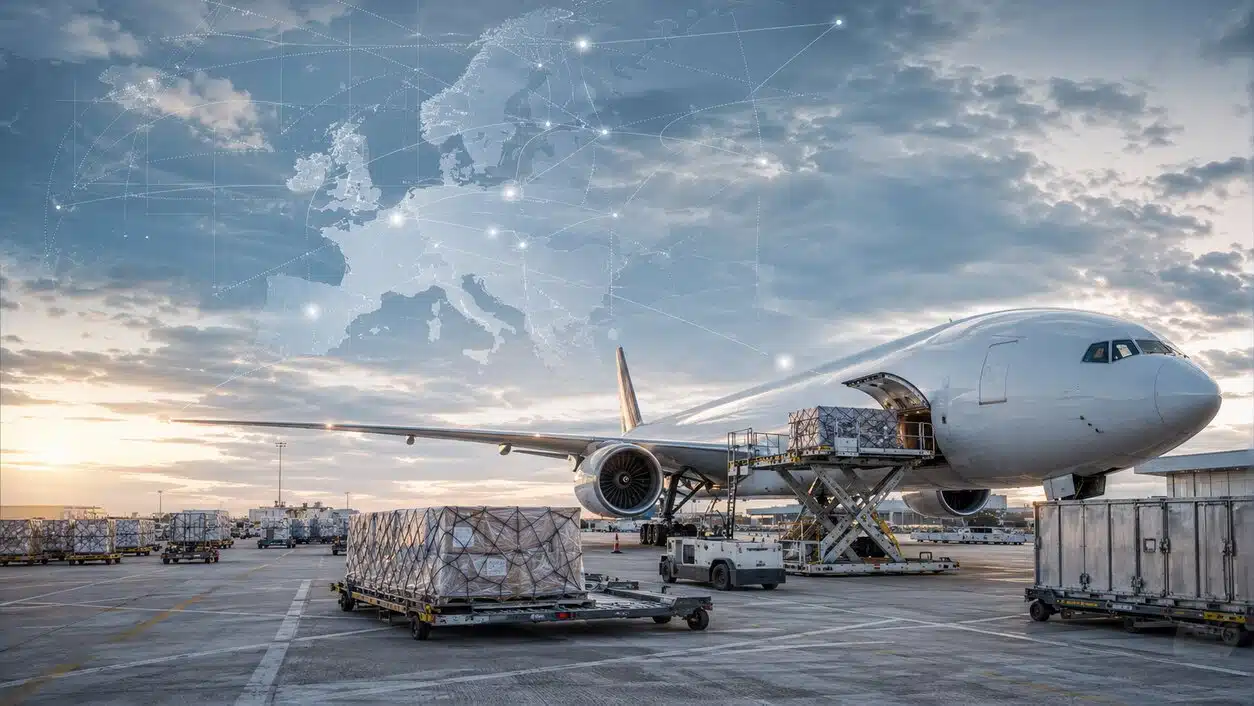
Europe’s aviation industry runs on one of the most tangled, interconnected industrial networks anywhere in the world. Aircraft manufacturers, airlines, maintenance shops, airports, component suppliers – all of them depend on materials and specialist parts moving across a dozen different borders just to keep things running. And with trade policy, geopolitical tension, and sanctions all shifting at once these days, companies are being forced to rethink how these supply chains actually get organized and watched over.
You can see this most clearly in anything tied to Russia. European restrictions haven’t stayed focused on just direct exports anymore – they’ve increasingly gone after goods and technologies that could still sneak through to restricted destinations by routing through some third country along the way. That’s made supply-chain transparency a much bigger deal for aviation businesses than it used to be, and honestly, a lot of companies are still catching up to that reality.
Sanctions Are Changing Aviation Trade Routes
European sanctions against Russia have come a long way since 2022. The EU’s 21st sanctions package, adopted in July 2026, widened export restrictions on products and technologies tied to Russia’s military-industrial sector. Buried in there were restrictions on certain metals and alloys used in aerospace work, plus specific equipment linked to unmanned aircraft.
For aviation companies, this isn’t just a yes-or-no question about whether some product can be exported anymore. Businesses now pretty much have to trace the entire journey a good takes – who the intermediaries are, who the distributors are, and who’s actually on the receiving end.
That’s pushed a lot of companies to tighten up their due diligence and start second-guessing transactions that would’ve looked completely routine a few years back. A part that leaves an EU country headed for what looks like a perfectly legitimate trading partner can still end up needing extra scrutiny if there’s any doubt about where it really lands.
Third-Country Trade Receives Greater Attention
One of the bigger shifts in how Europe enforces trade rules lately is just how much attention third countries are getting. Restrictions basically lose their teeth if controlled goods can get quietly rerouted through some outside jurisdiction before finally reaching where they were headed all along.
This has already come up in conversations around aviation supply networks tied to Russia. The EU Today aviation supply-chain review digs into how networks running through Central Asia, the UAE, and a few other spots have become part of the wider sanctions-enforcement conversation.
That doesn’t mean routing trade through a third country is automatically shady, though. International supply chains touch a lot of markets by nature, and plenty of legitimate businesses work with distributors and logistics providers scattered all over the globe. The real challenge – for regulators and companies alike – is telling normal international commerce apart from setups that exist purely to dodge restrictions.
Supply-Chain Mapping Becomes More Important
A modern aircraft leans on thousands of parts, and a good chunk of them come from niche, specialist suppliers. One single component might have its raw materials sourced in one country, get manufactured in another, get certified somewhere else entirely, and then finally get assembled in a fourth location.
That kind of complexity is exactly why supply-chain mapping has become such a big deal. Companies need eyes on suppliers well beyond their immediate first tier, especially when there’s sensitive tech or export-controlled materials involved.
Mapping can mean digging into ownership structures, tracing distribution channels, checking shipping routes, figuring out who the actual end users are. It also helps catch weird shifts in buying behavior – like if a distributor suddenly starts placing much bigger orders for controlled aviation parts than they normally would. That kind of thing tends to raise a flag.
And this isn’t purely a box-checking, stay-out-of-trouble exercise either. Better visibility can help businesses spot operational weak points before those turn into real headaches down the line.
Diversification and European Resilience
All this is also nudging European companies toward diversifying more. Leaning too hard on a single supplier, a single country, or a single transport route is risky – one geopolitical event and access can vanish overnight.
Diversifying doesn’t necessarily mean cutting ties with established suppliers, though. More often it just means building out backup sources for the components or materials that really matter strategically. Companies might also keep several logistics routes running side by side, so a disruption in one part of the world doesn’t grind everything to a halt.
European industrial policy has been leaning harder into resilience as part of what it means to stay competitive overall. And recent debates around European manufacturing keep circling back to that same tension – building up domestic production versus staying plugged into integrated global markets.
For aviation, getting that balance right is especially tricky, because certification rules mean swapping out a component supplier is almost never as simple as just finding another factory. Alternative parts usually need testing, paperwork, and regulatory approval before they’re even allowed near an actual aircraft.
Logistics and Security Risks
There’s yet another layer of complexity here, because the transportation infrastructure itself has turned into a strategic concern in its own right. Airports, cargo facilities, logistics hubs – these are essential links in Europe’s trade network, not just background infrastructure.
Recent security incidents at major European aviation sites have made that pretty clear. Leipzig/Halle Airport, for example, dealt with heightened security concerns after a drone-related incident, which really drove home just how exposed major cargo hubs can be to newer kinds of threats.
For the people managing these supply chains day to day, that means resilience now has to cover physical security too, not just keeping business running. Companies increasingly need contingency plans ready for airport closures, disrupted airspace, cyberattacks, and whatever else might interrupt cargo movement.
Technology and Compliance Are Becoming Connected
Digital systems can genuinely help companies keep up with how complicated trade requirements have gotten. Automated screening tools can check transactions against sanctions lists, flag odd shipping patterns, and pick out destinations that look potentially sensitive.
That said, no piece of software replaces human judgment here. Sanctions regimes change constantly, and figuring out whether a transaction is even allowed can involve legal, technical, and commercial questions all tangled together.
The EU’s latest measures also bring in restrictions targeting entities based in third countries, which shows enforcement is stretching well past the old model of just restricting direct EU-Russia trade.
So companies need compliance systems that can actually keep pace as the rules shift, and just as important, they need people on staff who genuinely understand how trade controls play out in real transactions – not just on paper.
Looking Ahead
European aviation trade is probably going to keep getting pulled in two directions at once: keeping a smooth, efficient global supply network running, while also trying to cut down exposure to geopolitical and regulatory risk.
What that likely adds up to is a more closely watched aviation supply chain going forward – more emphasis on knowing your suppliers, having backup sourcing in place, keeping solid documentation, and verifying who’s actually on the other end of a transaction. All of that adds administrative overhead, no question, but it also tends to leave companies in much better shape when something unexpected hits.
As European sanctions policy keeps shifting, aviation businesses are increasingly going to have to treat supply-chain management and trade compliance as basically the same job, not two separate ones. Where European aviation trade ends up going won’t just hinge on aircraft production or how much air transport capacity exists – it’ll also come down to how well the industry manages to keep its international supply networks transparent, resilient, and on the right side of the law.