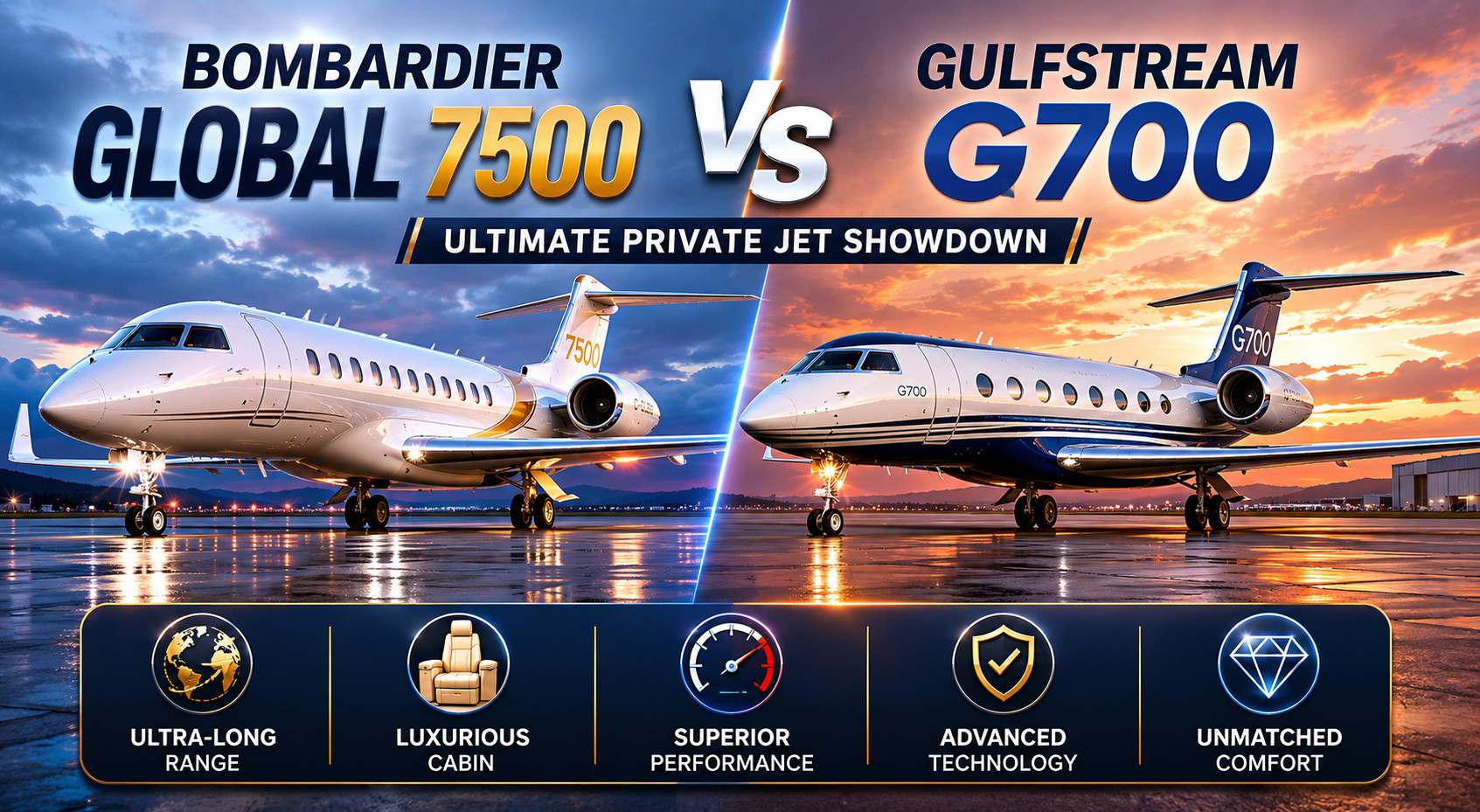

The ultra-long-range business jet market has entered a new era of competition, with Dassault Aviation’s Falcon 10X and Gulfstream’s G700 representing the absolute pinnacle of private aviation. Both aircraft redefine what ultra-wealthy buyers expect from business jets, offering unprecedented cabin space, global range, and technology borrowed from fighter jets and commercial airliners.
The Falcon 10X vs Gulfstream G700 debate dominates conversations among corporate aviation departments, fractional ownership providers, and billionaires evaluating their next aircraft acquisition. Each manufacturer brings decades of business jet leadership to these flagship models, making the choice between them remarkably difficult.
This comparison examines cabin luxury, engineering innovation, operational capabilities, and the distinct philosophies driving each aircraft’s design. Understanding which jet better serves specific missions requires looking beyond specifications to how these aircraft deliver their promised experiences at 41,000 feet.

Meet The Two Giants Of Private Aviation
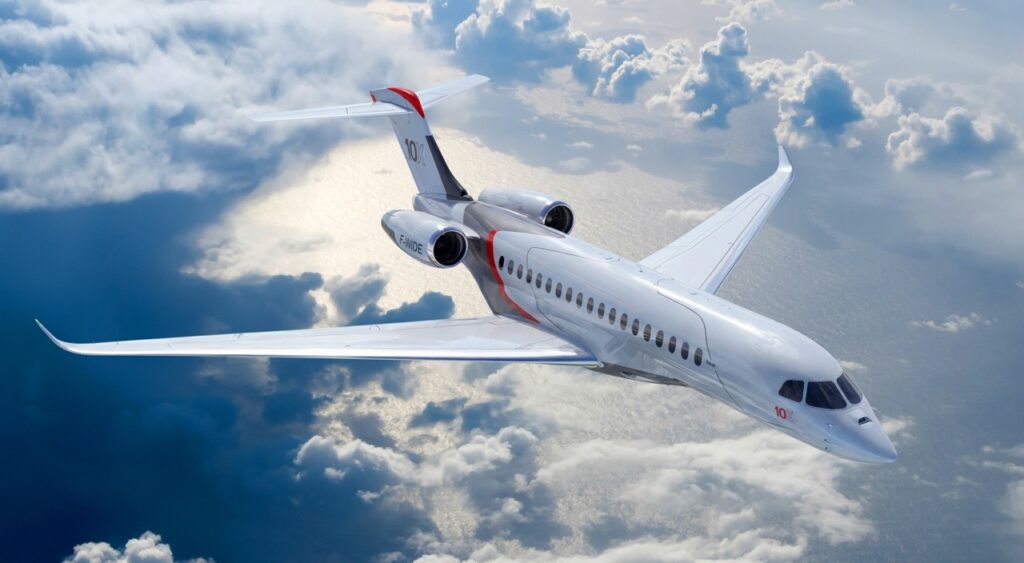
The Dassault Falcon 10X represents the French manufacturer’s most ambitious business jet ever conceived. Dassault brings fighter jet engineering heritage to civilian aviation, incorporating technology and design philosophies from its Rafale combat aircraft program into an ultra-luxury business platform dispelling common misconceptions about private aviation.
The Falcon 10X features the widest cabin in business aviation at 9.1 feet, exceptional range exceeding 7,500 nautical miles, and advanced digital flight controls leveraging Dassault’s military aviation expertise. The aircraft targets buyers prioritizing cutting-edge technology, cabin width, and European design sensibility.
Dassault positions the 10X as the ultimate expression of business aviation, challenging Gulfstream’s long-standing dominance in the ultra-long-range segment with innovations in cabin comfort, cockpit technology, and operational flexibility.
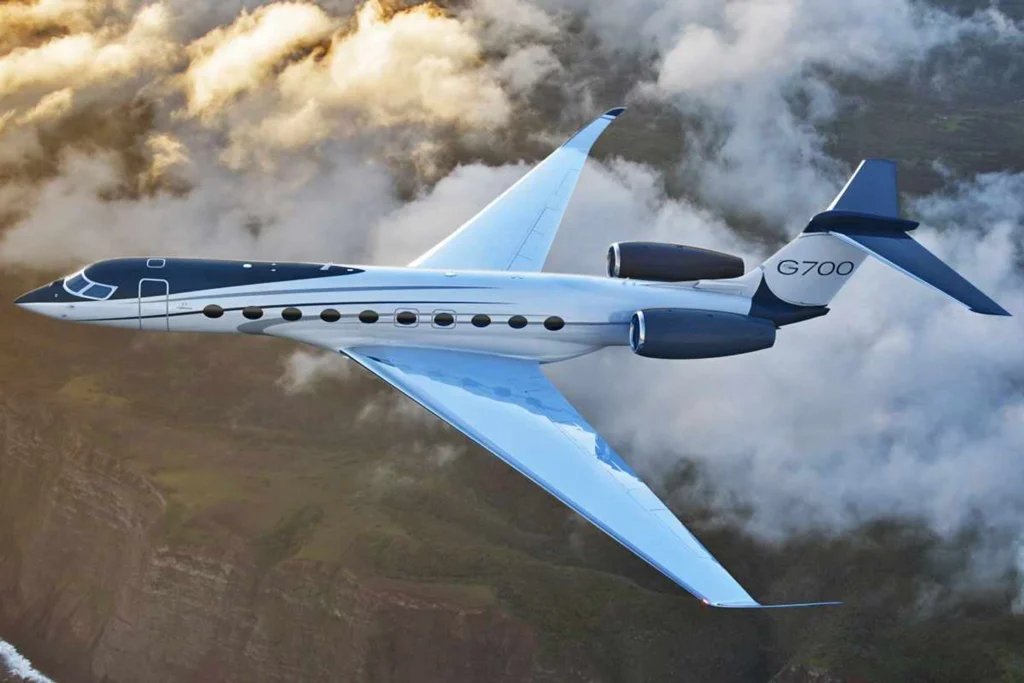
The Gulfstream G700 represents the American manufacturer’s flagship, building on decades of business jet leadership and the proven G650ER platform. Gulfstream focuses on range, speed, reliability, and the prestige associated with owning what many consider the industry’s gold standard.
The G700 delivers 7,500 nautical miles range, cruise speeds approaching Mach 0.925, and Gulfstream’s renowned cabin altitude technology creating one of the most comfortable high-altitude environments in aviation. The aircraft appeals to buyers valuing proven performance, extensive global support networks, and Gulfstream’s established reputation.
Both manufacturers target the same customer base: ultra-high-net-worth individuals, Fortune 500 corporations, and governments requiring the absolute best in private aviation. The competition drives continuous innovation benefiting all business jet buyers.
Cabin Size And Luxury Comparison
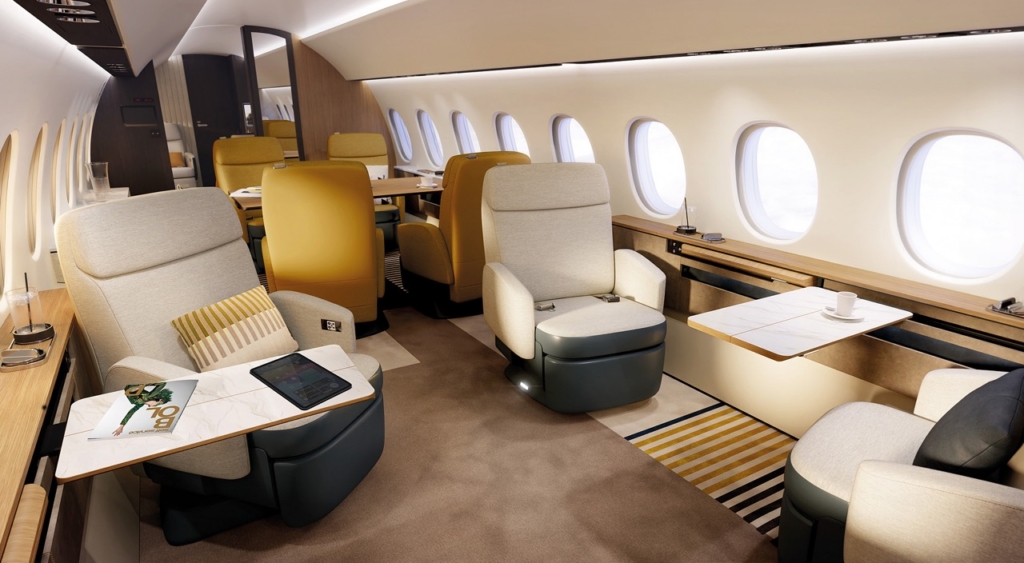
Cabin dimensions define the Falcon 10X advantage. At 9.1 feet wide, the Falcon 10X claims the widest business jet cabin available, providing more shoulder room and aisle space than any competitor including the G700.
This extra width enables configurations impossible in narrower jets:
- Side-by-side seating that doesn’t feel cramped
- Wider aisles allowing comfortable movement even during meal service
- Bedroom layouts with more spacious sleeping areas
- Conference zones accommodating larger tables
The Falcon 10X cabin height reaches 6.7 feet, tall enough for most passengers to stand comfortably throughout. Cabin length extends 53.1 feet, providing approximately 2,830 square feet of usable space. Dassault’s Skylight overhead lighting system uses 30 intelligent LED zones creating natural light patterns throughout the day.
The Gulfstream G700 counters with proven cabin technology and slightly longer dimensions. The G700 cabin measures 8.2 feet wide, 6.3 feet tall, and 56.7 feet long, offering approximately 2,806 square feet total space.
While narrower than the Falcon 10X, the G700 compensates through:
- Proven layouts refined over decades of business jet leadership
- 19 panoramic windows flooding the cabin with natural light
- Five living areas in typical configurations
- Ultra-low cabin altitude technology reducing fatigue
The G700 typically configures with master bedroom featuring permanent bed and ensuite bathroom, conference/dining area, multiple lounge spaces, and crew rest area. Gulfstream’s circadian lighting system adjusts color temperature and intensity helping passengers manage jet lag on ultra-long flights.
Noise levels favor the Falcon 10X slightly, with Dassault claiming the quietest cabin in business aviation through advanced soundproofing and engine mounting optimization. The G700 remains impressively quiet but prioritizes other comfort factors over absolute noise reduction.

Which Aircraft Has Better Range?
Range capability separates these aircraft from smaller business jets, enabling nonstop global travel that eliminates refueling stops and their associated delays, customs complications, and security concerns.
The Falcon 10X achieves maximum range of 7,500 nautical miles, enabling city pairs like:
- New York to Dubai: 6,850 nm — comfortable nonstop
- Los Angeles to Tokyo: 5,500 nm — well within range
- London to Singapore: 6,750 nm — nonstop capability
- Hong Kong to New York: 7,990 nm — requires favorable winds
The Gulfstream G700 matches the Falcon 10X with 7,500 nautical miles maximum range at Mach 0.85, or 6,400 nautical miles at faster Mach 0.90 cruise. This flexibility allows passengers to choose between maximum range or minimum flight time depending on mission requirements.
Gulfstream’s range advantage appears in high-speed cruise scenarios. The G700 maintains better range at higher Mach numbers, making it slightly more flexible for time-sensitive missions where speed outweighs fuel economy.
For practical purposes, both aircraft cover virtually any business aviation route nonstop. The choice between them depends less on maximum range than on how that range combines with other factors like cabin comfort, operating costs, and passenger preferences.
Neither aircraft can reliably operate New York to Hong Kong nonstop against prevailing winds, though both handle the return trip easily with tailwinds. This represents the practical limit of current business jet technology regardless of manufacturer.
Speed And Performance
The Gulfstream G700 holds clear speed advantages. Maximum cruise speed reaches Mach 0.925, making it one of the fastest civilian aircraft in production. Typical long-range cruise operates at Mach 0.85-0.90, balancing speed with fuel efficiency.
This speed capability matters most on time-sensitive missions where arriving 30-45 minutes earlier justifies higher fuel consumption. For executives managing global operations, the cumulative time savings over years of ownership can prove substantial.
The Falcon 10X cruises at Mach 0.85 maximum, prioritizing efficiency over absolute speed. Dassault argues that few business aviation missions benefit from speeds exceeding Mach 0.85, especially considering the fuel penalty and reduced range at higher Mach numbers.
Runway performance slightly favors the Falcon 10X. Its balanced field length of approximately 5,490 feet enables operations from airports the G700 cannot access without restrictions. The G700 requires roughly 6,250 feet for balanced field length, limiting access to some secondary airports.
Both aircraft operate efficiently at high altitude, with the Falcon 10X certified to 51,000 feet and the G700 to 51,000 feet. These altitudes enable flying above most weather and commercial traffic, improving ride quality and ATC efficiency.
Cockpit Technology And Pilot Experience
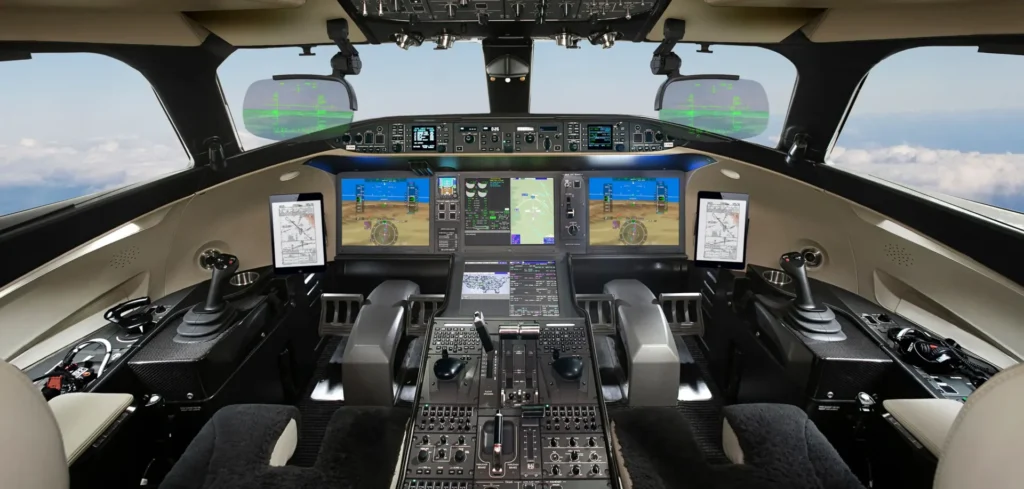
Cockpit philosophy distinguishes these aircraft as much as cabin design. The Falcon 10X incorporates Dassault’s FalconEye combined vision system, head-up displays, and digital flight controls derived from fighter jet programs.
The Falcon 10X cockpit features:
- Dual head-up displays for both pilots
- FalconEye infrared vision enabling safer approaches in low visibility
- Single-lever throttle control simplifying power management
- Smart throttles that automatically prevent engine over-torque
- Digital flight controls reducing pilot workload
Dassault’s fighter jet heritage shows in cockpit ergonomics and system integration. Pilots transition from managing systems to monitoring systems, with automation handling routine tasks while humans focus on decision-making.
The Gulfstream G700 employs the Symmetry Flight Deck, combining touchscreen technology with traditional controls in an interface Gulfstream claims represents the most advanced business jet cockpit available.
The Symmetry Flight Deck includes:
- 10 touchscreens controlling all aircraft systems
- Active control sidesticks providing tactile feedback
- Enhanced vision system with synthetic vision and database-driven terrain awareness
- Predictive landing performance calculating runway requirements in real-time
- Phase-of-flight intelligence that presents only relevant information
Gulfstream emphasizes intuitive interfaces reducing training time and improving safety through logical system organization. The touchscreens respond faster than previous-generation controls while maintaining redundancy for critical functions.
Both cockpits represent significant advances over earlier business jets, with the choice between them often depending on pilot preference rather than objective capability differences.
Passenger Comfort At 40,000 Feet
High-altitude comfort separates ultra-luxury business jets from their smaller competitors. Both the Falcon 10X and G700 prioritize pressurization and environmental control systems that reduce fatigue during ultra-long flights.
The Gulfstream G700 maintains industry-leading cabin altitude performance. At 41,000 feet cruise altitude, the G700 cabin altitude reaches only 2,840 feet equivalent, lower than Denver’s elevation. At 51,000 feet maximum altitude, cabin altitude remains just 4,850 feet.
Lower cabin altitude reduces passenger fatigue by maintaining higher oxygen partial pressure. Passengers arrive fresher, think more clearly during the flight, and experience less jet lag. Gulfstream considers this capability a core competitive advantage worth significant engineering investment.
The G700 also delivers 100% fresh air every two minutes, never recirculating cabin air. Combined with plasma ionization removing airborne bacteria and viruses, the system creates one of the healthiest flying environments available.
The Falcon 10X matches typical business jet cabin altitude standards while emphasizing other comfort factors. Cabin altitude reaches approximately 3,900 feet at 41,000 feet cruise, comfortable though not matching Gulfstream’s industry-leading numbers.
Dassault instead prioritizes cabin width, noise reduction, and humidity control as primary comfort differentiators. The extra cabin width reduces the confined feeling affecting passengers during very long flights, while superior soundproofing creates a quieter environment for sleep or conversation.
Both aircraft incorporate advanced climate control systems maintaining consistent temperature throughout the cabin. Neither suffers the hot-spots or cold-zones common in older business jets with less sophisticated environmental systems.
Engine Comparison
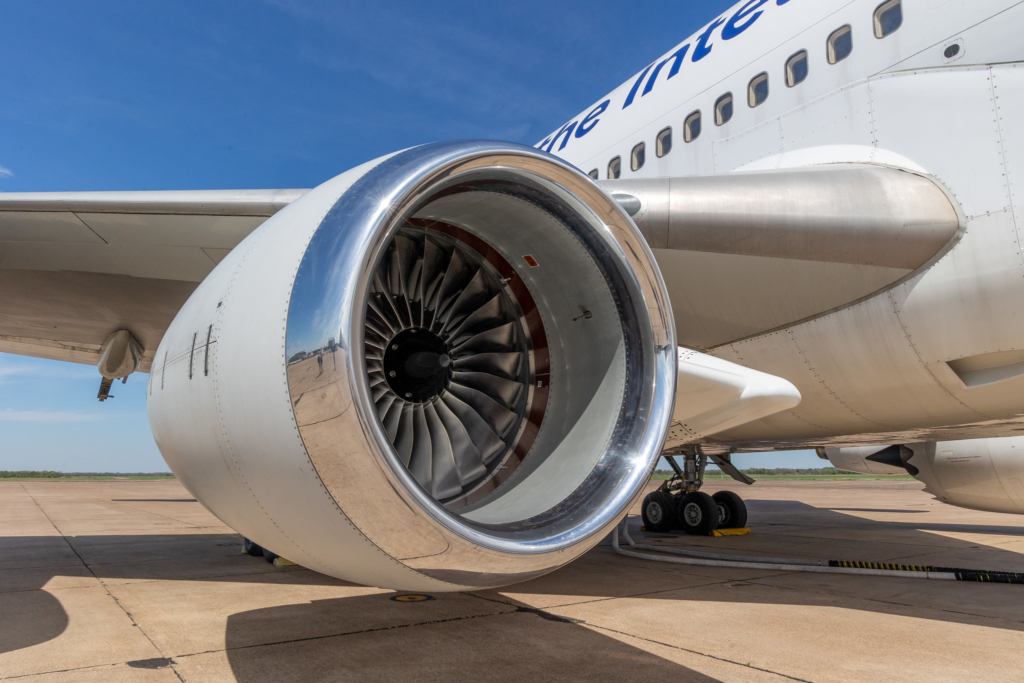
Both aircraft use Rolls-Royce Pearl engines, though configured differently for each airframe’s specific requirements.
The Falcon 10X employs two Rolls-Royce Pearl 10X engines, developed specifically for Dassault’s flagship. These engines generate approximately 18,000 pounds of thrust each, providing ample power for the Falcon 10X’s performance envelope while maintaining excellent fuel efficiency.
The Pearl 10X incorporates:
- Advanced fan blade design reducing noise and improving efficiency
- Optimized combustor lowering emissions
- Digital engine control maximizing performance across all conditions
The Gulfstream G700 uses Rolls-Royce Pearl 700 engines producing approximately 18,250 pounds of thrust each. The slightly higher thrust enables the G700’s superior speed performance while maintaining competitive fuel consumption.
Pearl 700 features include:
- Low-pressure turbine design derived from Rolls-Royce’s Trent commercial engine family
- Advanced materials reducing weight and improving durability
- Optimized for high-speed cruise where the G700 spends most of its operational life
Both engine variants deliver similar efficiency and reliability. Real-world operational differences depend more on how operators fly the aircraft than on fundamental engine capability variances.
Maintenance costs remain comparable, with Rolls-Royce offering comprehensive support programs for both engine types through global service networks. Both manufacturers maintain extensive parts inventories and maintenance facilities worldwide.
Which Jet Is More Expensive?
Pricing places both aircraft firmly in the ultra-luxury category where buyers prioritize capability over cost considerations.
The Gulfstream G700 lists at approximately $78 million for base aircraft before customization. However, VIP completion easily adds $5-15 million depending on materials, technology integration, and design complexity. Total acquisition typically ranges $85-95 million for fully configured aircraft.
Annual operating costs for the G700 run approximately $3.5-4.5 million including fuel, crew, maintenance, insurance, and hangar. These figures assume 400-500 flight hours annually, typical for private ownership. Buyers should also consider tax implications and regulatory requirements affecting ownership structures.
The Falcon 10X pricing remains somewhat fluid as Dassault finalizes production and certification timelines. Estimates suggest base pricing around $75 million, with similar completion costs pushing total acquisition to $82-92 million range.
Operational costs may favor the Falcon 10X slightly due to lower fuel consumption at typical cruise speeds and potentially lower maintenance requirements thanks to Dassault’s focus on operational efficiency. However, differences likely amount to hundreds of thousands annually rather than millions.
For buyers in this market segment, these cost differences rarely drive purchasing decisions. Buyers instead focus on which aircraft better serves their specific missions, cabin preferences, and brand loyalties developed over years of business aviation experience.
Resale values historically favor Gulfstream aircraft, which maintain stronger residual values in the pre-owned market. Dassault aircraft also hold value well, though Gulfstream’s larger installed base and brand prestige typically command premium pricing in secondary markets. Buyers not ready for ownership should consider charter alternatives before committing to acquisition.
Specifications Comparison
| Specification | Falcon 10X | Gulfstream G700 |
|---|---|---|
| Maximum Range | 7,500 nautical miles | 7,500 nautical miles |
| Max Cruise Speed | Mach 0.85 | Mach 0.925 |
| Cabin Width | 9.1 feet | 8.2 feet |
| Cabin Height | 6.7 feet | 6.3 feet |
| Cabin Length | 53.1 feet | 56.7 feet |
| Cabin Area | ~2,830 sq ft | ~2,806 sq ft |
| Engines | Rolls-Royce Pearl 10X (2x) | Rolls-Royce Pearl 700 (2x) |
| Max Altitude | 51,000 feet | 51,000 feet |
| Cabin Altitude (at 41,000 ft) | ~3,900 feet | 2,840 feet |
| Base Price | ~$75M | ~$78M |
Falcon 10X vs G700 — Category Winners
| Category | Winner | Why |
|---|---|---|
| Cabin Width | Falcon 10X | Widest business jet cabin at 9.1 feet |
| Speed | G700 | Mach 0.925 maximum vs Mach 0.85 |
| Cabin Altitude | G700 | Industry-leading 2,840 ft at cruise |
| Noise Level | Falcon 10X | Quietest cabin in business aviation |
| Cockpit Innovation | Falcon 10X | Fighter jet-derived FalconEye technology |
| Proven Track Record | G700 | Gulfstream’s decades of business jet leadership |
| Runway Performance | Falcon 10X | Shorter balanced field length by ~760 feet |
| Resale Value | G700 | Gulfstream historically maintains stronger residuals |
Which Jet Billionaires May Prefer
Buyer preferences split along operational priorities rather than objective aircraft superiority. Both jets serve the ultra-luxury market exceptionally, appealing to different buyer profiles.
Falcon 10X appeals to buyers who:
- Prioritize cabin width and spaciousness
- Value the quietest possible flying environment
- Appreciate cutting-edge cockpit technology
- Prefer European design aesthetics
- Operate from airports with shorter runways
- Want the newest, most innovative aircraft
The Falcon 10X represents Dassault’s challenge to Gulfstream’s dominance, offering technological innovation and cabin dimensions that redefine business jet expectations. Buyers attracted to being first with the latest technology gravitate toward the 10X.
Gulfstream G700 appeals to buyers who:
- Value maximum speed for time-sensitive missions
- Prioritize lowest possible cabin altitude
- Prefer proven platforms with established track records
- Appreciate Gulfstream’s global support network
- Want the prestige of owning what many consider the industry standard
- Value strong resale values and brand recognition
The G700 builds on Gulfstream’s reputation as the business jet manufacturer of choice for Fortune 500 companies and heads of state. The brand carries prestige that transcends specifications, appealing to buyers who view aircraft ownership partly as status symbol alongside transportation tool.
Many corporate flight departments default to Gulfstream based on decades of positive operational experience, extensive pilot training infrastructure, and global parts availability. Switching manufacturers requires justification beyond minor specification advantages. Major fractional ownership providers like Flexjet have already committed to G700 fleet expansion, signaling industry confidence.
This comparison resembles choosing between Boeing and Airbus in commercial aviation — both manufacturers produce exceptional aircraft, with buyers selecting based on specific needs, existing relationships, and operational philosophies rather than clear superiority.
The Future Of Ultra-Long-Range Business Jets
The Falcon 10X and G700 represent current technology peaks, but both manufacturers continue advancing their platforms through ongoing refinement and future model development.
Sustainable aviation fuel compatibility becomes increasingly important as corporate buyers face environmental pressures. Both aircraft operate on SAF blends today, with manufacturers working toward 100% SAF operation as fuel availability improves.
Advanced connectivity transforms business jets into flying offices enabling productivity impossible in commercial business class. High-bandwidth satellite communications, video conferencing, and secure data links allow executives to maintain full operational control while airborne. For those new to private aviation, these capabilities represent transformative improvements over commercial travel.
Wellness features grow in importance as buyers recognize that arriving rested and alert provides competitive advantages justifying ultra-luxury aircraft acquisition. Cabin altitude, humidity control, circadian lighting, and noise reduction all contribute to passenger wellbeing during ultra-long flights.
The market for aircraft like the Falcon 10X and G700 continues expanding despite economic uncertainties. Ultra-high-net-worth populations grow globally, particularly in Asia and the Middle East, creating new buyers seeking the capabilities these flagships deliver.
Neither manufacturer plans models exceeding the 10X or G700 in capability soon, focusing instead on refining current platforms and filling gaps at lower price points. These aircraft represent the practical limits of current business jet technology short of transitioning to VIP airliners like the BBJ 777X.
The Verdict: Different Jets For Different Missions
No universal winner emerges from the Falcon 10X vs Gulfstream G700 comparison because these aircraft target the same market with different operational philosophies.
Choose the Falcon 10X if cabin width, cutting-edge technology, and the quietest flying environment matter most. The extra foot of cabin width creates noticeably more spacious interiors, while Dassault’s fighter jet heritage delivers cockpit innovation unmatched in business aviation.
Choose the Gulfstream G700 if speed, proven reliability, and industry-leading cabin altitude drive your decision. The G700’s Mach 0.925 capability and 2,840-foot cabin altitude represent measurable advantages for time-sensitive missions and passenger comfort.
Both aircraft cost similarly, operate comparably, and deliver exceptional luxury. The choice depends on which specific advantages align with your operational priorities, aesthetic preferences, and whether you value innovation over proven track records.
For most buyers, the decision ultimately comes down to brand loyalty developed through years of business aviation experience. Satisfied Gulfstream owners typically choose another Gulfstream; Dassault operators appreciate the French manufacturer’s attention to detail and may upgrade to the 10X.
The aviation industry benefits from this intense competition. Both manufacturers push boundaries, forcing each other to innovate and improve. Buyers win regardless of which aircraft they select, enjoying access to the finest business jets ever created.
Frequently Asked Questions
What Is The Range Difference Between Falcon 10X And Gulfstream G700?
Both the Falcon 10X and Gulfstream G700 achieve identical maximum range of 7,500 nautical miles at typical cruise speeds. The G700 maintains slightly better range at higher Mach numbers, achieving 6,400 nautical miles at Mach 0.90 compared to the Falcon 10X’s cruise ceiling of Mach 0.85. For practical purposes, both aircraft cover virtually any business aviation city pair nonstop, including routes like New York to Dubai (6,850 nm), Los Angeles to Tokyo (5,500 nm), and London to Singapore (6,750 nm). Neither aircraft reliably operates New York to Hong Kong (7,990 nm) nonstop against prevailing winds, representing the current practical limit for business jet range regardless of manufacturer.
Which Private Jet Has A Bigger Cabin, Falcon 10X Or G700?
The Falcon 10X claims the widest business jet cabin at 9.1 feet compared to the G700’s 8.2 feet width, providing noticeably more shoulder room and aisle space. However, the G700 measures longer at 56.7 feet versus the Falcon 10X’s 53.1 feet length. Total cabin area reaches approximately 2,830 square feet for the Falcon 10X and 2,806 square feet for the G700, making them essentially equivalent in total space. The key difference is proportions: the Falcon 10X offers more width enabling side-by-side seating and wider aisles, while the G700 provides more length enabling additional distinct living zones in typical five-area configurations.
How Much Does A Falcon 10X Cost?
The Dassault Falcon 10X base price starts around $75 million for green aircraft before interior completion. VIP customization typically adds $7-17 million depending on materials selection, technology integration, and design complexity. Total acquisition costs for fully configured Falcon 10X aircraft range from $82-92 million. Annual operating expenses including fuel, crew salaries, maintenance, insurance, and hangar run approximately $3.5-4.0 million assuming 400-500 flight hours yearly. These figures place the Falcon 10X firmly in the ultra-luxury business jet category alongside competitors like the Gulfstream G700 and other ultra-long-range models. Actual costs vary based on individual specifications and operational patterns.
How Much Does A Gulfstream G700 Cost?
The Gulfstream G700 lists at approximately $78 million base price before customization. Interior completion adds $8-17 million depending on owner specifications, materials quality, and technology systems integrated into the cabin. Total acquisition typically ranges $85-95 million for fully configured aircraft ready for operation. Annual operating costs reach $3.5-4.5 million including all fixed and variable expenses for typical 400-500 hour yearly utilization. The G700 represents Gulfstream’s flagship model and commands premium pricing reflecting decades of business jet leadership and proven operational excellence. Despite high acquisition and operating costs, G700 ownership remains attractive for ultra-high-net-worth individuals and corporations requiring maximum capability regardless of financial considerations.