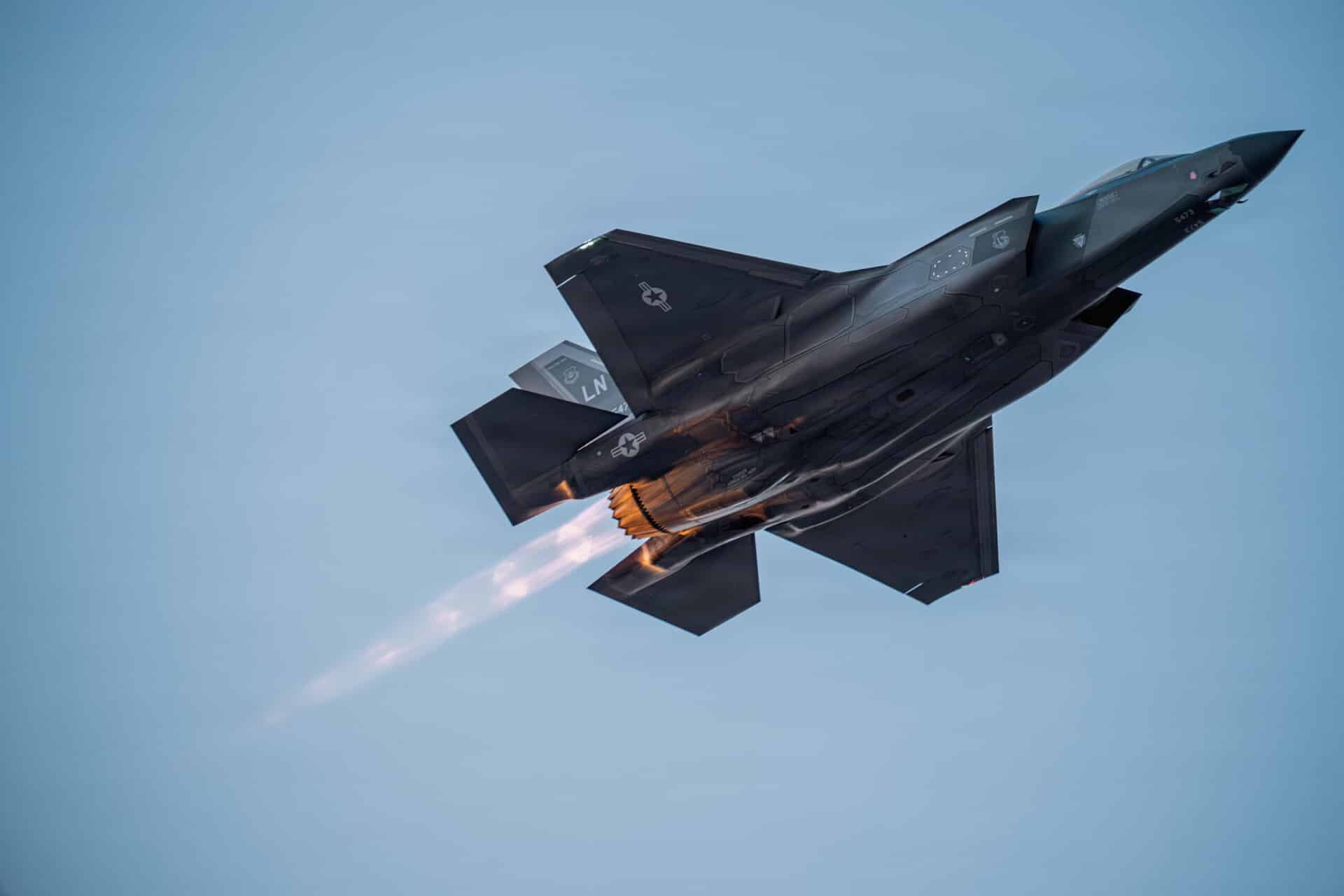

Most people think pilot = airline cockpit. They’re missing 73% of the story.
More than 440,000 certificated pilots worldwide work outside commercial aviation. They fly through hurricane eyewalls collecting weather data. They maneuver 10 feet above crops at 140 mph. They land on frozen lakes where roads don’t exist.
These aren’t backup careers. They’re specialized roles that demand skills airline pilots rarely develop.
Some pay less than airlines. Others match senior captain salaries. All of them offer something you won’t find in a Boeing 737: genuine flying challenges that test pilot skill, not procedure compliance.
Here’s what unusual aviation careers actually look like—the aircraft, the risks, the money, and the path to get there.
The Numbers Don’t Lie: Most Pilots Aren’t Flying Airliners
Airlines employ roughly 160,000 pilots globally. Everyone else? They’re doing something different.
The breakdown looks like this:
- Agricultural aviation: 3,200+ pilots in North America alone
- Bush flying: 3,000+ pilots in Alaska, thousands more globally
- Aerial firefighting: 1,500+ seasonal pilots
- Corporate/charter: 80,000+ pilots worldwide
- Flight instruction: 100,000+ active instructors
- Government operations: Thousands across agencies
Yet flight schools barely mention these paths. They focus on airline career progression: instrument rating, multi-engine time, regional carrier, major airline. Standard pilot salary discussions rarely cover specialized aviation compensation.
That’s one path. Not the only one.
Crop Dusting: The Job That Looks Insane From The Ground
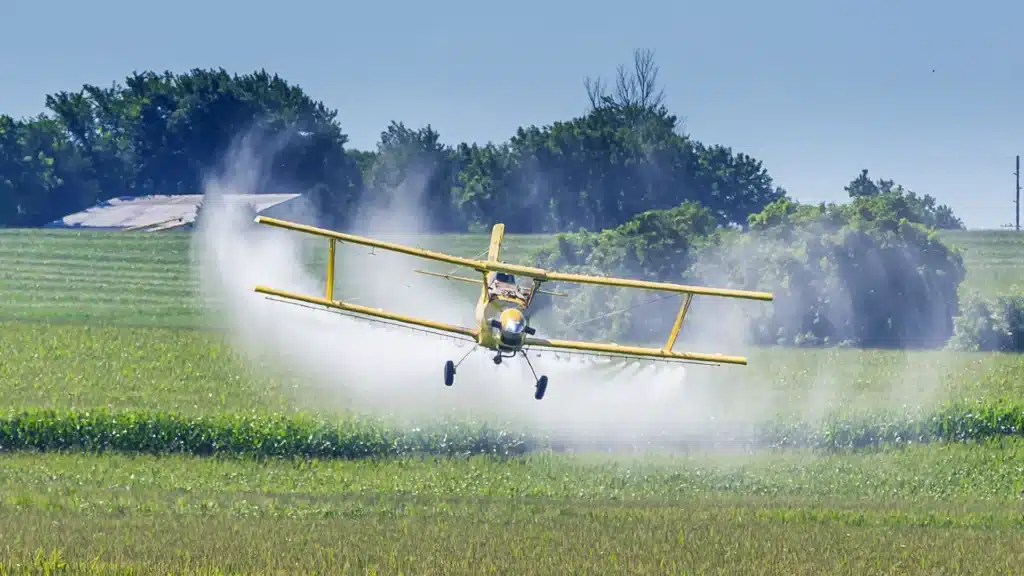
Agricultural pilots fly 5-15 feet above crops. At 140 mph. Threading between power lines and trees.
It’s not reckless. It’s precision flying that requires skills most airline pilots don’t have.
What The Job Actually Involves
You’re operating an Air Tractor AT-802 or similar ag aircraft. It carries 800 gallons of liquid chemicals or 3,000 pounds of dry material.
The flying happens at altitudes where instruments become useless:
- Takeoff heavy, climb to pattern altitude
- Descend for application runs at 5-15 feet AGL
- Execute precise turns at field boundaries
- Avoid obstacles appearing with zero warning time
- Repeat 40-60 times per day during peak season
Work starts before sunrise when winds are calm. Days run 12-14 hours during agricultural seasons. Pilots must understand weather patterns intimately for safe operations.
According to National Transportation Safety Board data, accident rates run 4-6 times higher than general aviation. Wire strikes and engine failures at application altitude offer minimal survival margins.
The Money And The Path
First-season pilots earn $30,000-45,000 for March-November work. Experienced operators command $60,000-90,000.
Getting hired requires:
- Commercial certificate with 250-500 hours
- Tailwheel endorsement (most ag aircraft use conventional gear)
- Starting as loader-driver to learn chemical handling
- Demonstrating reliability before touching controls
It’s seasonal, risky, and physically demanding. But pilots who do it say airline flying would bore them to tears.
Firefighting Pilots: Dropping Water On Burning Forests

When wildfires rage, aerial firefighting pilots fly into conditions that would ground commercial aviation.
They operate everything from single-engine amphibians to massive C-130 Hercules tankers.
Two Types Of Firefighting Aircraft
Single Engine Air Tankers (SEATs):
- Air Tractor Fire Boss amphibians
- Land on lakes/rivers to scoop 800 gallons in 12 seconds
- Climb back to drop altitude (100-200 feet)
- Release over active fire lines
Large Air Tankers:
- Converted C-130 Hercules or similar military aircraft
- Carry 4,000+ gallons of fire retardant
- Coordinate with ground crews and air attack coordinators
- Execute precision drops through smoke and turbulence
The US Forest Service contracts these operations. Pilots fly May-October in North America, then some reposition to Southern Hemisphere fire seasons.
What Makes It Dangerous
Smoke obscures terrain. Thermal turbulence from fires creates severe conditions. Visibility drops to near-zero during retardant drops.
It’s similar to offshore aviation where environmental challenges dominate every decision.
Compensation
SEAT pilots: $35,000-50,000 per season
Large tanker pilots: $70,000-120,000 per season
Year-round (both hemispheres): $80,000-150,000
Compare that to air ambulance salaries which offer year-round employment at similar rates.
Hurricane Hunters: The Government Job That Sounds Fake

The National Oceanic and Atmospheric Administration employs pilots who fly directly into Category 5 hurricanes. On purpose. For science.
It’s not a stunt. It’s critical weather data collection.
The Mission Profile
NOAA operates Lockheed WP-3D Orion aircraft—militarized four-engine turboprops designed for storm penetration.
Missions involve:
- Flying crisscross patterns through storm eyewalls
- Operating at 1,500-10,000 feet altitude
- Penetrating winds exceeding 150 mph
- Deploying dropsondes measuring temperature, pressure, wind speed
- Enduring altitude changes of 1,000 feet in seconds
- 8-10 hour mission durations with multiple eyewall passes
According to NOAA research, this data improves forecast accuracy by 10-15%. That translates directly to saved lives during evacuations.
Requirements And Pay
NOAA wants 3,000+ total hours and multi-engine turboprop experience. Former military P-3 or C-130 pilots fit perfectly.
It’s federal government employment:
- Entry-level pilots: $85,000
- Senior captains: $140,000+
- Benefits and retirement included
- Season runs June-November (Atlantic)
You won’t get rich. But you’ll fly missions airline pilots can’t imagine.
Bush Flying: Serving Communities Where Roads Don’t Exist
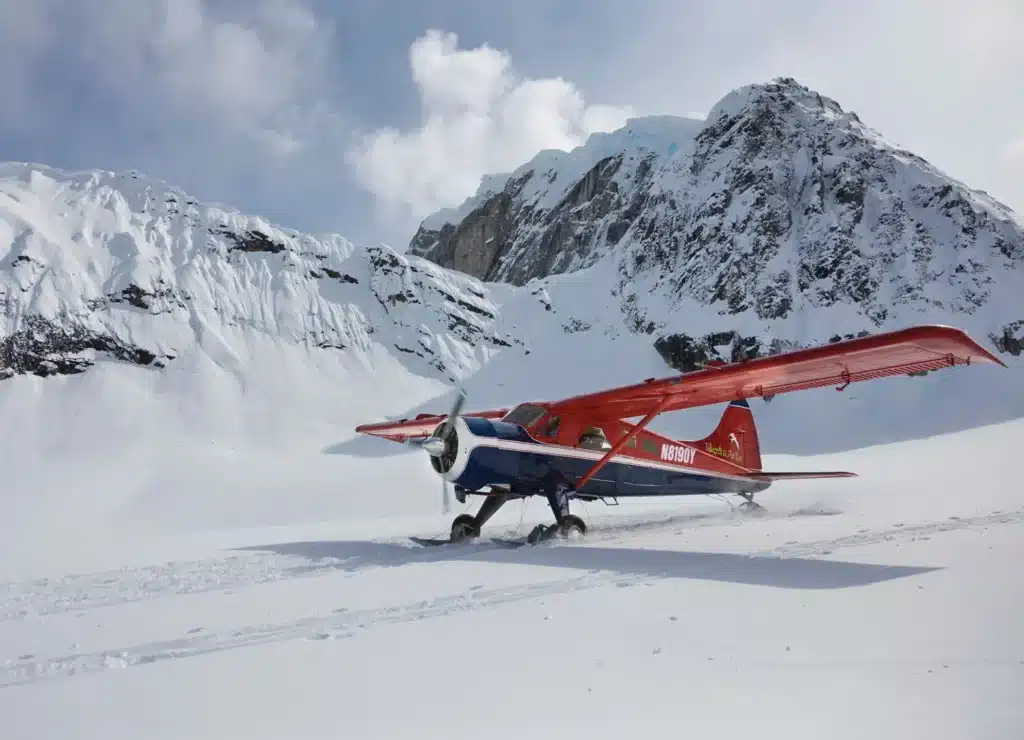
Alaska employs 3,000+ bush pilots. They’re the only connection between remote communities and the outside world.
No roads. No alternatives. Just aircraft landing on gravel bars, frozen lakes, and tundra.
What Bush Pilots Actually Do
You’re flying Cessna 185s, 206s, or de Havilland Beavers configured with wheels, floats, or skis depending on season.
Daily operations include:
- Evaluating unmarked landing surfaces before committing
- Navigating by visual landmarks when GPS fails
- Making weather decisions without dispatcher support
- Assessing aircraft condition without maintenance crews
- Carrying passengers, freight, medical supplies, mail
Weather systems change rapidly in mountainous regions. Conditions at departure may differ completely from arrival weather.
Operations follow ICAO standards adapted for environments where conventional infrastructure doesn’t exist.
The Career Path
Companies want tailwheel endorsements and mountain flying experience. Most pilots start by relocating to remote bases—Alaska, Northern Canada, Australian outback.
First-year pay: $30,000-45,000
Experienced pilots with their own aircraft: $70,000-100,000
Accident rates exceed general aviation averages. Weather, mechanical issues, and challenging surfaces contribute.
But pilots cite lifestyle, community service, and genuine flying challenge as rewards worth the tradeoffs. Many invest in quality pilot equipment and join the Aircraft Owners and Pilots Association for community connection.
Other Unusual Aviation Careers Worth Knowing
Beyond the major specializations, aviation offers niche roles most people never hear about.
Skywriting Pilots

Five aircraft fly line-abreast formations, releasing smoke to spell messages visible for miles. It requires exceptional formation discipline.
Global employment: 10-20 pilots
Pay: $200-400 per flight hour
Annual hours: 100-200 (seasonal events)
Aerial Survey And Mapping
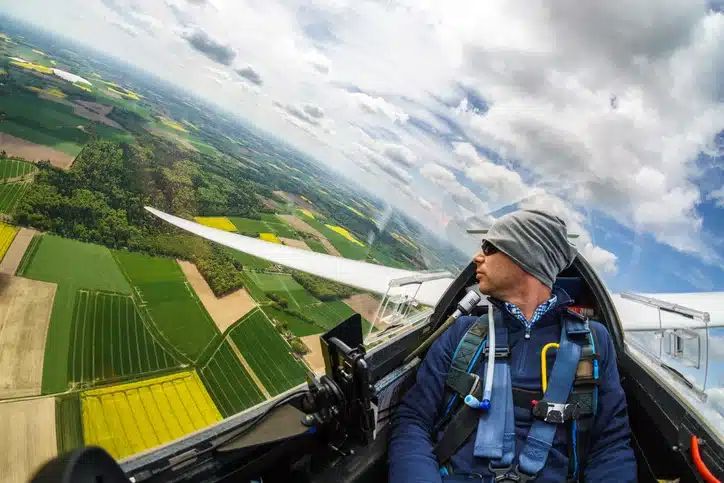
You’re flying systematic patterns collecting LiDAR data for infrastructure mapping. It demands flying perfectly straight lines at exact altitudes and speeds.
Requirements:
- Maintain speed within 5 knots
- Hold altitude within 20 feet
- Fly 4-6 hour missions repeatedly
Pay ranges from $45,000-75,000, with senior captains reaching $80,000-100,000.
Pipeline And Powerline Patrol
Utility companies need pilots flying 200-500 feet above ground inspecting infrastructure. You’re looking for leaks, damage, vegetation encroachment.
Annual flying: 600-800 hours in Cessna 172s or 182s
Salary: $45,000-65,000
Corporate Test Pilots

Textron Aviation, Gulfstream, and Pilatus employ test pilots conducting first flights on new aircraft.
Requirements include aerospace engineering degrees and 2,000+ hours across multiple types.
Compensation: $90,000-150,000
What These Jobs Reveal About Aviation Diversity
Every specialized aviation role emerged because conventional operations couldn’t meet specific needs.
Agricultural aviation developed when crop treatment demanded efficiency ground equipment couldn’t provide. Firefighting aviation arose when wildfire scales exceeded what ground crews could handle alone.
The skill sets differ dramatically from airline operations:
- Airlines emphasize: Standardized procedures, crew resource management, systems knowledge
- Bush flying values: Improvisation, mechanical aptitude, environmental awareness
- Agricultural aviation demands: Precision, spatial judgment, split-second risk assessment
- Hurricane hunting requires: Meteorological understanding, tolerance for extreme conditions
Economic structures look nothing like airline careers. Most unusual aviation operates through small companies, seasonal contracts, or owner-operator models.
Pilots manage their own insurance, maintenance schedules, and business development. That appeals to people seeking control over careers while accepting income variability.
Is An Unusual Aviation Career Right For You?
These roles offer advantages airlines can’t match. Schedule flexibility often exceeds airline operations. Flying provides variety every day.
Bush pilots build relationships with communities. Agricultural pilots see direct results in healthy crops. Scientific pilots contribute to research advancing human knowledge.
But challenges exist:
- Income: Typically $40,000-80,000 versus airline captains at $150,000-300,000
- Security: Seasonal work, contract renewals, small company economics
- Benefits: Often self-funded health insurance and retirement
- Risk: Accident rates substantially higher than airline operations
Career longevity matters too. Agricultural flying’s physical demands make it difficult past age 50-55. Bush flying in harsh environments creates wear affecting long-term health.
Transitioning back to airlines becomes challenging as pilots age beyond typical hiring preferences. Understanding career transitions in aviation becomes critical for long-term planning.
Anyone choosing unusual aviation should plan for eventual transitions—different roles, management positions, or humanitarian aviation work leveraging unique experience.
Frequently Asked Questions
What are unusual pilot jobs?
Unusual pilot jobs include agricultural aviation, aerial firefighting, hurricane hunting, bush flying, aerial surveying, skywriting, pipeline patrol, and corporate test flying.
These careers account for roughly 73% of certificated pilots working outside airline operations. Each requires specific aircraft ratings and operational skills beyond standard commercial certification.
Can pilots work outside airlines?
Yes. About 440,000 pilots work in non-airline roles compared to 160,000 in airline positions globally.
Options include air ambulance operations, corporate flight departments, flight instruction, agricultural aviation, cargo ops, government agencies, and specialized services.
Which pilot jobs are the most dangerous?
Agricultural aviation shows the highest accident rate—4-6 times more than general aviation according to NTSB data.
Low-altitude operations, obstacle-rich environments, and high-speed maneuvering create substantial risk. Aerial firefighting ranks second. Bush flying shows elevated rates from challenging surfaces and rapidly changing weather.
How do you become a crop duster pilot?
Start with a commercial certificate and 250+ hours, though companies prefer 500-1,000 hours. Get a tailwheel endorsement.
Apply to agricultural companies for loader-driver positions. Learn chemical handling and field operations. Demonstrate reliability. Receive agricultural flight training once you’ve proven competence.
First-season pay: $30,000-45,000 for seasonal work.
What do firefighting pilots do?
They operate aircraft dropping water or retardant on wildfires. SEAT pilots fly amphibians that scoop water from lakes. Large tanker pilots operate C-130s carrying 4,000+ gallons.
Missions involve low-level flying through smoke and turbulence, coordinating with ground crews, and executing precision drops.
Season runs May-October in North America. Some pilots follow fire seasons to Southern Hemisphere for year-round work.
How much do non-airline pilots make?
Entry positions: $30,000-45,000 (agricultural, bush flying, seasonal work)
Mid-career: $45,000-75,000 (survey, patrol, corporate)
Experienced: $70,000-120,000 (firefighting, senior ag pilots)
Government/test pilots: $85,000-150,000
Compare this to major airline captains earning $150,000-300,000. Though some specialized roles approach airline pay with different lifestyle benefits.
Check corporate aviation salaries for another comparison point.
Final Thoughts
Aviation careers extend far beyond airline cockpits. Crop dusters thread obstacles at 140 mph. Hurricane hunters penetrate Category 5 storms. Bush pilots serve remote communities.
Each role demands unique skills, accepts elevated risks, and provides challenges commercial aviation can’t match.
The path differs from airline progression. You’ll need specialized training, aircraft qualifications, and risk acceptance that standard commercial programs don’t emphasize.
But for pilots valuing independence and variety over maximum compensation, these careers offer alternatives worth exploring. Learn more about diverse aviation paths through industry podcasts and specialized communities.
The question isn’t whether unusual aviation careers exist. It’s whether they match what you actually want from flying.