
Pilots had been warning aviation authorities about safety concerns at New York’s LaGuardia Airport for years before a recent crash brought the issues into sharp focus, according to industry reports and pilot communications reviewed by aviation safety analysts.
The warnings, which included complaints about air traffic control confusion, complex runway layouts, and what pilots described as controllers “pushing lines” during busy operations, now form part of a broader examination of operational safety at one of the nation’s most congested airports.
Multiple pilots operating at LaGuardia filed reports with aviation safety databases documenting close calls and communication breakdowns in the months and years preceding the recent incident. The complaints centered on what aviators described as systemic issues rather than isolated errors, according to reports from The Guardian and CBS News.
“Please do something,” one pilot reportedly communicated to authorities, highlighting frustration with recurring safety scenarios that crews navigated during routine operations at the airport.
LaGuardia Airport, which handles more than 30 million passengers annually across a relatively compact footprint, has long presented operational challenges due to its location in a densely populated area, proximity to multiple major airports, and runway configuration that requires precise coordination between air traffic controllers and flight crews.
The recent crash that killed multiple people has refocused attention on these longstanding concerns, according to international aviation media. Investigators are examining whether systemic operational issues contributed to the accident, though formal conclusions remain months away.
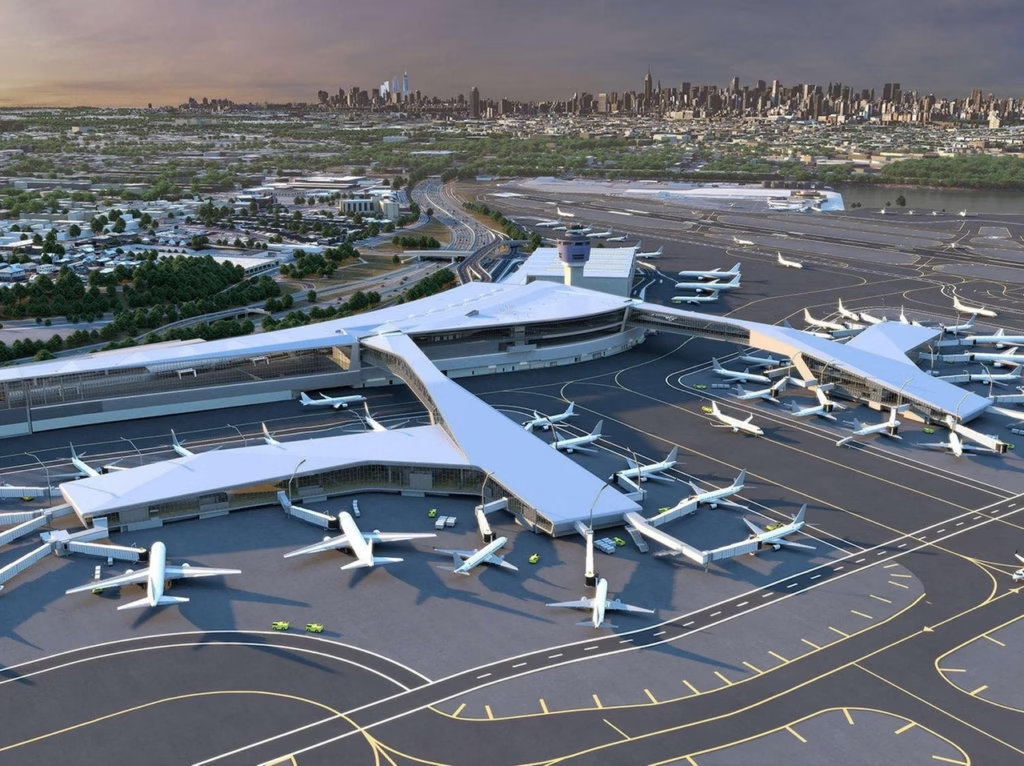
Air traffic controllers at LaGuardia manage some of the highest workloads in the United States aviation system. The airport’s four runways intersect in ways that require constant communication and precise timing to prevent conflicts between arriving and departing aircraft. Understanding the role of air traffic control in aviation safety becomes critical when examining operational pressures at major metropolitan airports.
Pilot reports submitted to the Aviation Safety Reporting System over the past several years document instances of what aviators term “line-up confusion” where aircraft received unclear or conflicting instructions about runway assignments. These reports, while anonymized to encourage honest reporting, reveal patterns of communication breakdowns during high-traffic periods.
In several documented cases, pilots reported receiving late runway changes, unclear taxi instructions, or ambiguous clearances that created uncertainty about their position relative to other aircraft. While crews typically resolve these situations without incident, the accumulated reports suggest vulnerabilities in the operational system.
The complexity stems partly from LaGuardia’s geography. The airport sits on a peninsula jutting into Flushing Bay and Bowery Bay, with limited space for expansion or runway reconfiguration. Aircraft operate in close proximity to each other throughout taxi, takeoff, and landing phases. While LaGuardia doesn’t rank among the world’s most dangerous airports by terrain or weather, its operational complexity creates unique safety challenges.
Weather conditions frequently complicate operations. LaGuardia experiences crosswinds, low visibility, and winter weather that reduce operational margins and increase demand on both pilots and controllers to maintain safe separation.
Aviation safety experts note that the issues at LaGuardia reflect broader challenges facing aging airport infrastructure designed for traffic volumes far below current demand. The facility was originally built in 1939 and, despite recent terminal modernization, retains operational characteristics from an earlier era of aviation.
“The fundamental issue is that you have 21st century traffic volumes operating in what remains fundamentally a mid-20th century operational environment,” said one aviation analyst familiar with Northeast airport operations, speaking on condition of anonymity to discuss ongoing safety reviews.
Controller workload presents another dimension of the safety equation. Air traffic controllers at major metropolitan airports like LaGuardia manage hundreds of movements per hour during peak periods, coordinating arrivals and departures while maintaining required separation between aircraft. These operational pressures require specialized safety skills and rigorous adherence to communication protocols.
The pressure to maintain throughput during busy periods can create situations where controllers issue rapid-fire instructions that pilots must process and execute while managing other cockpit tasks. Pilot reports suggest that during peak operations, the pace sometimes outstrips crew ability to fully confirm and acknowledge clearances before receiving additional instructions.

Several pilots interviewed by aviation media outlets in recent weeks described an operational culture where efficiency sometimes appeared to take precedence over the deliberate communication protocols designed to prevent misunderstandings, according to Simple Flying. Controllers, facing pressure to move traffic efficiently, occasionally compressed communication in ways that reduced clarity, according to these accounts.
The Federal Aviation Administration has acknowledged receiving pilot reports about LaGuardia operations and stated that all safety concerns are reviewed and investigated. The agency emphasized that it continuously monitors operations at all major airports and implements changes when safety issues are identified.
Following the recent crash, the FAA announced it would conduct a comprehensive operational review of LaGuardia procedures, focusing on controller-pilot communication protocols, runway assignment procedures, and workload management during peak traffic periods.
The National Transportation Safety Board, which investigates aviation accidents, has deployed a full investigation team to examine the recent incident. Preliminary findings suggest that investigators are examining communications between the crew and air traffic control in the minutes leading up to the crash.
Industry representatives from pilot unions and professional aviation organizations have called for systemic changes to address what they characterize as preventable safety risks. Specific recommendations include reviewing controller staffing levels, implementing enhanced communication protocols, and potentially limiting traffic during adverse weather conditions.
The Air Line Pilots Association, which represents thousands of commercial pilots, issued a statement emphasizing that pilots had repeatedly raised concerns through proper safety reporting channels. The organization called for swift action to address identified issues rather than waiting for formal investigation conclusions.
Aviation safety depends on listening when pilots raise concerns. The reports from LaGuardia weren't isolated incidents—they were warnings. Our members deserve operational environments where safety comes first, not just efficiency metrics. #AviationSafety #LaGuardia
— Air Line Pilots Association (@WeAreALPA) March 26, 2026
LaGuardia’s challenges reflect broader issues confronting US aviation infrastructure. Many major airports operate at or near capacity with limited ability to expand physical footprints. As air traffic demand has grown, airports have absorbed higher volumes without proportional increases in physical space or operational flexibility. Similar air traffic control challenges have emerged at major international airports worldwide.
The Port Authority of New York and New Jersey, which operates LaGuardia, has invested billions in terminal modernization but faces limitations in altering fundamental runway configuration due to the airport’s constrained geography. Recent terminal improvements focused on passenger experience rather than airfield operational changes.
Aviation safety experts emphasize that commercial aviation maintains an exceptional safety record overall, with accident rates continuing to decline even as traffic volumes increase. However, they note that maintaining this record requires constant vigilance and willingness to address identified risks before they contribute to accidents.
“The aviation safety system depends on identifying and mitigating risks before they result in accidents,” explained one safety consultant specializing in airport operations. “When pilots repeatedly flag the same concerns and those concerns aren’t adequately addressed, it represents a breakdown in the safety management process.”
The incident at LaGuardia has prompted renewed discussion about how aviation authorities balance operational efficiency with safety margins. While commercial aviation economics create pressure to maximize airport capacity, safety advocates argue that operational pressures should never compromise fundamental safety protocols.
Some aviation experts have proposed technological solutions to supplement human decision-making. Advanced ground surveillance systems can provide both controllers and pilots with enhanced situational awareness about aircraft positions. Enhanced weather monitoring specific to airport operations could also help reduce risk during challenging conditions.
The role of enhanced training programs emphasizing communication and decision-making under pressure has also entered the discussion. Advocates suggest that training specific to high-density airport environments could reduce miscommunication risks.
For LaGuardia specifically, the path forward remains under discussion. Immediate changes may include enhanced communication protocols, modified operational procedures during peak periods, and increased safety monitoring. Longer-term solutions could involve infrastructure modifications, though the airport’s physical constraints limit options.
Pilot groups have emphasized that frontline aviators remain committed to safety and will continue reporting concerns through established channels. They stress that the safety reporting system only works if authorities respond to identified patterns with meaningful changes.
The coming months will likely bring additional details from the crash investigation, potentially revealing specific factors that contributed to the accident. However, aviation safety experts emphasize that regardless of investigation findings, the broader concerns pilots raised about LaGuardia operations merit attention independent of any single incident.
As investigators continue examining the recent crash, the aviation industry faces questions about whether existing safety management systems adequately address operational risks at capacity-constrained airports. The answers could influence safety oversight at major airports nationwide.
The FAA has committed to transparency throughout its operational review of LaGuardia procedures, though agency officials caution that thorough safety assessments require time. The agency stated it would implement interim safety measures if reviews identify immediate risks requiring urgent attention.
For pilots operating at LaGuardia, the heightened scrutiny brings both concern and hope. Concern that recent events highlight risks they’ve navigated for years. Hope that sustained attention might finally produce the systemic changes they’ve advocated for through safety reporting channels.
The broader aviation community continues monitoring developments at LaGuardia as potential indicators of how US aviation authorities balance operational demands with safety imperatives. The outcome could influence safety management approaches at other capacity-constrained airports facing similar operational pressures.
As the investigation continues and operational reviews proceed, one element remains clear: the pilots who filed reports warning about safety concerns at LaGuardia did so fulfilling their professional obligation to identify risks before they contribute to accidents. Whether those warnings receive the institutional response they warrant will help determine how effectively the aviation safety system functions when frontline operators raise concerns.
The Federal Aviation Administration has indicated it will provide public updates on its LaGuardia operational review in coming months. Meanwhile, operations at the airport continue under existing procedures with enhanced monitoring from safety oversight authorities.