
Three hours into a cross-country flight in a piston single, your head throbs. The engine drone at 100+ decibels hasn’t stopped since takeoff.
You’ve missed two radio calls because you couldn’t distinguish tower transmissions from background noise. Your passenger stopped trying to talk an hour ago.
This isn’t just discomfort. It’s a safety issue.
Choosing the right aviation headset noise reduction technology directly impacts communication clarity, hearing protection, and cognitive performance during flight. The difference between passive and active systems affects everything from fatigue levels to your ability to hear critical radio calls in busy airspace.
Understanding how headsets actually work—and which features matter for your flying—helps you make decisions based on physics and operational needs rather than marketing claims.
Here’s what you need to know about aviation headset technology, noise reduction systems, and matching equipment to your cockpit environment.
Why Noise Matters In The Cockpit
Cockpit noise isn’t just annoying. It causes measurable physiological and cognitive effects that degrade pilot performance.
Here’s what you’re dealing with:
Noise Levels By Aircraft Type
- Piston singles: 95-105 dB inside the cockpit
- Piston twins: 100-110 dB (often louder than singles)
- Turboprops: 85-95 dB (lower frequency, more droning)
- Light jets: 75-85 dB (quieter but still significant)
- Helicopters: 100-115 dB (extreme rotor and gearbox noise)
For context: prolonged exposure above 85 dB causes permanent hearing damage. Most piston aircraft exceed this continuously.
How Noise Affects Flying
Communication interference: Radio transmissions arrive already compressed through VHF systems. Add 100 dB background noise, and you’re straining to distinguish words from static.
Cognitive load increase: Your brain works harder filtering signal from noise. This mental effort accumulates into fatigue, reducing decision-making quality during critical phases.
Hearing damage: A single 4-hour flight in an unprotected cockpit can cause temporary threshold shift. Repeated exposure leads to permanent noise-induced hearing loss affecting high frequencies first.
Fatigue acceleration: Noise exposure increases cortisol and stress hormone levels. Pilots report significantly more fatigue after flights in loud cockpits versus quieter environments.
Understanding environmental factors in aviation includes recognizing how cockpit acoustics affect performance throughout flight operations.
Passive vs Active Noise Reduction: How They Actually Work
Aviation headsets use two fundamentally different approaches to blocking sound. Understanding the physics helps you choose appropriately.
Passive Noise Reduction (PNR)
Passive systems work through physical sound blocking. No electronics, no batteries, just materials.
How it works:
- Thick foam or gel ear seals create acoustic barrier
- Ear cups enclose entire ear, physically blocking sound waves
- Materials absorb and reflect sound before reaching ear canal
- Headband clamping force maintains seal integrity
Performance characteristics:
- Typically achieves 17-23 dB noise reduction
- Works better at high frequencies (voices, turbine whine)
- Less effective at low frequencies (piston engine drone)
- No power required—works continuously
- Performance depends entirely on seal quality
Active Noise Reduction (ANR)
ANR systems use electronics to cancel sound through destructive interference. This requires understanding wave physics.
How it works:
- Microphones inside ear cups sample incoming noise
- Processing circuit analyzes noise frequencies
- System generates inverted sound wave (180 degrees out of phase)
- Inverted wave cancels original noise through interference
- Result: significant reduction in perceived noise
Performance characteristics:
- Achieves 15-25 dB additional reduction beyond passive
- Total reduction: 40-50 dB when combined with passive isolation
- Excels at low-frequency cancellation (engine drone)
- Less effective above 1,000 Hz (relies on passive for high frequencies)
- Requires battery power (typically 20-50 hours on AA batteries)
Side-By-Side Comparison
| Feature | Passive (PNR) | Active (ANR) |
|---|---|---|
| Noise Reduction | 17-23 dB | 40-50 dB total |
| Low Frequency | Less effective | Highly effective |
| Power Required | None | Yes (batteries) |
| Weight | 13-18 oz | 10-14 oz |
| Typical Price Range | $80-300 | $400-1,100 |
| Best For | Students, budget, backup | Professional, high-hour flying |
The hybrid approach: All ANR headsets include passive isolation as their foundation. Electronic cancellation supplements physical blocking, creating combined effectiveness neither achieves alone. Pilots interested in deeper technical discussions about aviation equipment often explore topics through industry podcasts that cover equipment selection and operational best practices.

Key Factors To Consider When Choosing A Headset
Matching headset features to your operational needs matters more than buying the most expensive option.
Here’s what actually affects your flying experience:
Noise Reduction Performance
Measure your environment first. Flying mostly piston singles or twins? ANR delivers dramatic fatigue reduction. Operating jets or quiet aircraft? Passive might suffice.
Key questions:
- What’s your typical cockpit noise level?
- How long are your average flights?
- Do you fly multiple aircraft types?
Comfort For Extended Operations
Weight matters over time. A 14-ounce headset feels fine initially. After 6 hours, it causes neck fatigue and pressure headaches.
Comfort factors:
- Headband padding: Distributes weight across head
- Ear seal material: Gel conforms better than foam but costs more
- Clamping force: Must seal without causing discomfort
- Adjustability: Proper fit prevents pressure points
Test headsets during multi-hour flights before committing. Comfort that feels fine in 30 minutes may fail after 3 hours.
Microphone Quality And Clarity
Air traffic controllers need to hear you clearly. Poor microphone performance creates safety risks in busy airspace. Understanding how ATC operations work emphasizes why clear communication matters for everyone’s safety.
Look for:
- Noise-canceling microphones: Filter background cockpit noise
- Boom positioning: Adjustable boom places mic correctly
- Windscreen quality: Foam reduces breathing sounds
- Amplification: Adequate gain without distortion
Poor microphone quality forces controllers to request repeats, increasing workload and creating gaps in communication flow.
Build Quality And Durability
Headsets endure harsh treatment. They’re thrown in flight bags, exposed to temperature extremes, flexed thousands of times.
Durability indicators:
- Cable construction: Kevlar-reinforced cables resist failure
- Headband material: Metal or carbon fiber outlasts plastic
- Ear cup design: Replaceable components extend lifespan
- Warranty coverage: Longer warranties suggest manufacturer confidence
Quality headsets routinely deliver 10+ years of service. Budget options typically require replacement within 2-3 years of regular use. Like other essential pilot equipment, investing in durability pays dividends over career-length use.
Connectivity Options
Modern headsets offer features beyond basic audio:
- Bluetooth: Phone calls and music (ensure it mutes for radio calls)
- Auxiliary inputs: GPS audio integration
- Dual plugs vs panel power: GA uses dual plugs; some aircraft offer panel power
- Adapter compatibility: Flying helicopters or military aircraft requires different connectors
Consider whether additional features justify cost increases for your specific operations. Understanding operational requirements helps identify which features provide genuine value versus unnecessary complexity.
How Different Aircraft Affect Headset Choice

Your aircraft type directly determines which noise reduction approach works best. Matching headset technology to cockpit environment optimizes both protection and value.
Piston Aircraft (Singles And Twins)
These create the harshest noise environments pilots regularly encounter.
Noise characteristics:
- 100-110 dB continuous operation
- Low-frequency engine drone (80-500 Hz)
- Vibration transmitted through airframe
- Propeller noise varies with RPM
Recommendation: ANR headsets excel here. The low-frequency cancellation specifically targets piston engine drone that passive systems struggle to block.
Flights exceeding 2 hours benefit dramatically from active cancellation. Fatigue reduction becomes measurable on trips over 3-4 hours.
Turboprop Aircraft
Turboprops present mixed noise profiles requiring balanced approaches.
Noise characteristics:
- 85-95 dB operational levels
- High-frequency turbine whine
- Propeller noise similar to pistons
- Generally quieter than piston equivalents
Recommendation: Either passive or ANR works effectively. Decision depends more on flight duration than aircraft type.
Short flights (under 2 hours): Quality passive headsets suffice
Long flights (over 3 hours): ANR reduces accumulated fatigue
Jet Aircraft
Jets offer the quietest cockpit environments in general aviation and commercial operations.
Noise characteristics:
- 75-85 dB in flight
- Minimal low-frequency content
- High-frequency air conditioning and airflow noise
- Quiet enough that hearing protection becomes optional (though not recommended)
Recommendation: Focus on communication clarity and comfort over maximum noise reduction.
Passive headsets work well in jets. ANR provides marginal additional benefit unless flying long international legs where every bit of fatigue reduction helps.
Helicopters
Rotorcraft create unique acoustic challenges no fixed-wing pilot experiences.
Noise characteristics:
- 100-115 dB from rotor and gearbox
- Extremely low frequency rotor thump
- High-frequency transmission whine
- Vibration makes seal maintenance difficult
Recommendation: ANR becomes nearly essential for helicopter operations.
The rotor frequency (typically 5-20 Hz fundamental) sits exactly where ANR excels. Passive systems barely touch these frequencies. Similar to how pilots manage offshore operations, helicopter pilots need specialized equipment matching their unique environment.
Wired vs Bluetooth Aviation Headsets
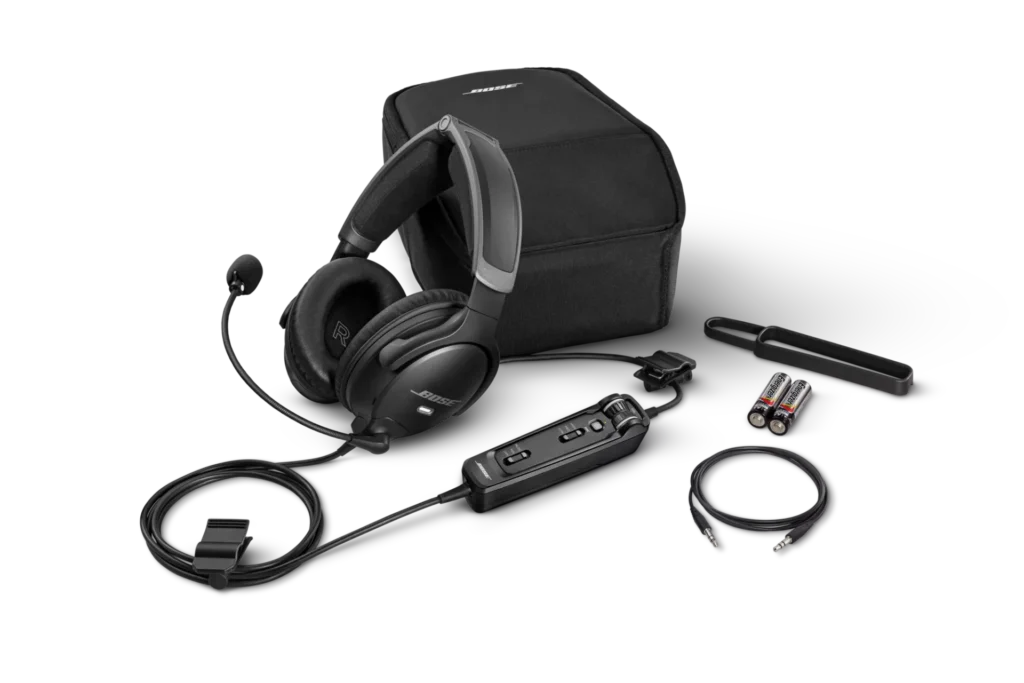
Bluetooth integration sounds convenient. But cockpit use introduces complications worth understanding before buying.
How Bluetooth Works In Aviation Headsets
Bluetooth connectivity allows pairing with phones, tablets, or music devices. The headset mixes Bluetooth audio with aircraft intercom and radio.
Key features to verify:
- Automatic muting: Bluetooth audio should mute instantly for radio calls
- Priority hierarchy: Radio > intercom > Bluetooth (never reversed)
- Reconnection behavior: Some headsets struggle reconnecting after power cycling
- Interference potential: Rare but possible radio interference
Practical Benefits
Bluetooth offers genuine utility in specific situations:
- Phone calls: ATC clearances by phone without removing headset
- Music during cruise: Reduces boredom on long solo flights
- GPS audio: Hearing navigation prompts without panel integration
- Passenger entertainment: Keeps passengers occupied on long flights
Potential Drawbacks
Battery management: Bluetooth drains batteries faster than audio-only operation. Expect 30-40% reduced battery life with active Bluetooth.
Distraction risk: Music or phone calls during critical phases create divided attention. Discipline required to use appropriately.
Complexity increase: More features mean more potential failure modes. Simple systems generally prove more reliable.
Cost premium: Bluetooth adds $50-150 to headset prices without improving core aviation functions.
Decision Framework
Choose Bluetooth if you regularly:
- Fly long cross-country solo flights
- Need phone connectivity for flight following or clearances
- Carry passengers wanting entertainment
Skip Bluetooth if you primarily:
- Fly training flights requiring full attention
- Operate in busy airspace with continuous radio communication
- Prefer equipment simplicity and reliability
How A Good Headset Reduces Pilot Fatigue
The connection between headset quality and fatigue extends beyond obvious noise exposure. Understanding these mechanisms helps justify investment in better equipment.
Physiological Fatigue Mechanisms
Noise exposure triggers stress responses. Continuous loud environments elevate cortisol and adrenaline. Your body stays in low-level alert mode, draining energy reserves.
Measurable effects include:
- Increased heart rate and blood pressure
- Elevated metabolic demands
- Reduced deep sleep quality post-flight
- Cumulative stress hormone buildup over multi-day trips
Effective noise reduction lowers these responses. Studies show pilots using ANR headsets demonstrate measurably lower stress markers after identical flights versus passive headset users.
Cognitive Load Reduction
Your brain constantly filters signal from noise during flight. This processing demands cognitive resources you need for flying.
Mental tasks affected:
- Radio communication: Distinguishing words from static
- Intercom clarity: Understanding crew or passenger speech
- Situational awareness: Monitoring engine sounds for anomalies
- Decision-making: Processing information while filtering noise
Better noise reduction frees cognitive capacity for actual flying tasks rather than audio processing. The effect becomes most noticeable during high-workload phases—approach, departure, weather navigation.
Hearing Protection Long-Term
Noise-induced hearing loss accumulates across your flying career. Each unprotected or poorly protected flight adds damage.
Timeline of exposure effects:
- Single flight: Temporary threshold shift (recovers in hours)
- 50-100 hours: Measurable high-frequency loss begins
- 500-1,000 hours: Permanent damage becomes evident in testing
- 2,000+ hours: Significant hearing loss affecting daily life
Quality headsets don’t just reduce fatigue. They preserve hearing function across decades of flying. The difference between adequate and excellent protection compounds dramatically over career-length exposure.
Pilots should consider long-term career health when evaluating equipment investments that directly affect physiological wellbeing.
Common Mistakes Pilots Make
Understanding frequent errors helps avoid them when selecting your own headset.
Choosing Based On Price Alone
The cheapest headset seems attractive initially. But total cost of ownership tells a different story.
Budget headset: $100 × 3 replacements over 10 years = $300
Quality headset: $900 × 1 unit over 10 years = $900
But add:
- Reduced fatigue improving safety margins
- Better communication clarity preventing errors
- Hearing protection preserving long-term health
The quality headset delivers substantially better value despite higher upfront cost.
Ignoring Comfort Testing
Trying a headset for 10 minutes doesn’t reveal comfort issues appearing after hours of use.
Testing should include:
- Wearing for 2+ hours if possible
- Testing with sunglasses or prescription glasses
- Evaluating different head sizes (varies significantly)
- Checking seal integrity with hair, hats, different positions
Some pilot shops or flying clubs allow extended demo periods. Use them.
Underestimating Noise Levels
“My plane isn’t that loud” underestimates actual cockpit noise exposure.
Most pilots lack calibrated perception of sound levels. What feels tolerable at 95 dB causes measurable hearing damage with extended exposure.
If you’re flying piston aircraft regularly, you need serious noise protection regardless of how loud it seems. Your ears adapt to chronic exposure, masking the damage accumulating.
Overlooking Seal Quality
Headset performance depends entirely on ear seal integrity. Even tiny gaps dramatically reduce effectiveness.
Seal killers include:
- Thick eyeglass temples
- Long hair under ear cups
- Baseball caps breaking seal
- Aged, compressed ear seals needing replacement
Regular seal inspection and replacement maintains performance. Most seals need replacing every 1-2 years with frequent use.
Neglecting Microphone Positioning
Microphone placement dramatically affects transmission clarity. Too far from mouth: weak signal. Too close: breathing noise.
Optimal position: 1-2 inches from corner of mouth, slightly offset from direct breathing path.
Adjust boom every flight. Small movements during cockpit entry or headset adjustment change microphone position enough to degrade performance.
Making Your Decision
Choosing aviation headset noise reduction technology comes down to matching features with your operational reality.
Ask yourself:
- What aircraft do I fly most often?
- How many hours per month do I typically fly?
- What’s my average flight duration?
- Do I fly professionally or recreationally?
- How important is hearing protection for my career longevity?
Student pilots flying 3-5 hours monthly in training aircraft can start with quality passive headsets. Upgrade to ANR once committed to aviation long-term.
Professional pilots or serious enthusiasts flying 10+ hours monthly should invest in ANR immediately. The fatigue reduction and hearing protection justify the cost within the first year. Those pursuing professional pilot careers should view quality headsets as essential equipment, not optional accessories.
The right headset improves safety, reduces fatigue, and protects your hearing across thousands of flight hours. It’s not just comfort equipment—it’s an essential component of cockpit safety systems deserving serious consideration.
Choose based on your flying, not marketing claims. Your ears will thank you for decades to come.