Why Airline Ticket Prices Feel So Confusing
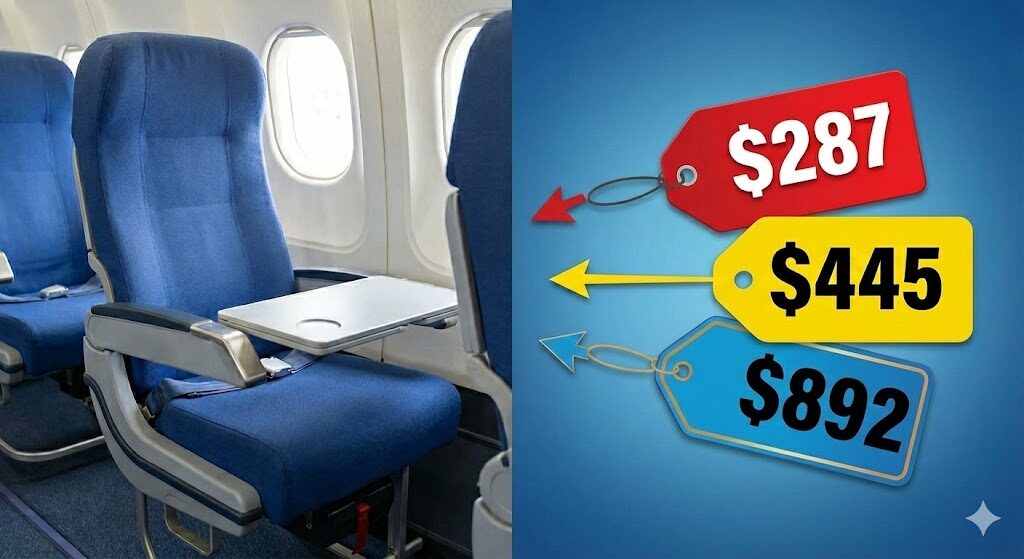
Same seat. Same flight. Three passengers paid $287, $445, and $892.
Airlines don’t price randomly. They price strategically using algorithms, historical data, and real-time demand signals. That $600 price difference reflects careful revenue optimization, not arbitrary markup.
Travelers assume distance determines price. Wrong. London to New York costs less than Phoenix to Boise on many dates. Route competition, passenger mix, and booking patterns matter more than miles flown.
This article explains how airlines actually price tickets. Revenue management systems. Fare buckets. Dynamic pricing. Why business routes cost triple leisure routes. Why checking the same flight three times doesn’t raise prices (usually).
Fuel costs and aircraft efficiency impact airline economics. But pricing? That’s driven by data science, not operating costs alone.
The Biggest Myth: Airlines Do NOT Price Tickets by Distance
Distance barely correlates with ticket price. Evidence: Los Angeles to San Francisco (347 miles) often costs $150-300. Los Angeles to Las Vegas (236 miles) costs $40-90 on budget carriers.
Why? LAX-SFO serves business travelers. Frequent departures. High demand. Limited competition on nonstops.
LAX-LAS serves leisure travelers. Multiple airlines. Price-sensitive passengers. Oversupplied market.
Airlines price by demand, competition, and passenger willingness to pay. Not by fuel burn per mile.
International examples:
New York to London (3,459 miles): $300-600 economy on competitive dates.
New York to Anchorage (3,370 miles): $500-900 economy for similar distance.
London route has 20+ daily flights across multiple carriers. Anchorage has 2-3. Competition drives London prices down despite similar operating costs.
Extreme case: Regional routes under 200 miles sometimes cost more than transcontinental flights. Low passenger volume, small aircraft, limited schedule flexibility. Airlines charge what the market tolerates.
What Is Airline Revenue Management? (Simple Explanation)

Revenue Management (RM) systems maximize total revenue per flight. Not profit per seat. Total flight revenue.
Every major airline runs RM software analyzing booking patterns, historical data, competitor pricing, and current demand. System recommends opening or closing fare classes and adjusting inventory.
Core principle: Sell right seat to right person at right price. Sounds simple. Requires massive computing power.
Airlines forecast demand for each flight 11-12 months out. Models update continuously as bookings accumulate. RM system protects seats for last-minute high-yield passengers while filling remaining capacity with advance-purchase travelers.
Example scenario:
Flight has 150 seats. RM forecasts 30 business travelers booking 1-7 days before departure willing to pay $800+. System protects 30 seats even if leisure travelers want to book them at $300 three months early.
If forecast wrong and business travelers don’t materialize, airline releases protected seats two weeks before departure. Prices drop. Leisure travelers book late.
RM operates airline-wide. Major carriers manage pricing across thousands of routes simultaneously, balancing network effects and competitive positioning.
Fare Buckets Explained (Why the Same Cabin Has Many Prices)
Economy class contains 7-12 different fare classes. Each has different price, restrictions, and seat allocation.
Airlines use letter codes: Y, B, M, H, Q, V, W. Letters don’t indicate quality. Just restrictions and refundability.
| Fare Class | Typical Price | Flexibility | Refundable |
|---|---|---|---|
| Y (Full Fare) | Highest | Change anytime | Yes |
| B (Business) | High | Same-day changes | Yes |
| M (Mid-tier) | Medium | Change with fee | Partial |
| H (Discount) | Lower | Change fee $150-200 | No |
| Q (Restricted) | Lowest | No changes | No |
How fare buckets work in practice:
Flight departs in 90 days. Q-class (cheapest) has 40 seats available at $250. When Q sells out, system opens H-class at $350. After H sells out, M-class opens at $475.
Price jumps aren’t arbitrary. They reflect inventory depletion in cheaper buckets.
Sometimes airlines reopen cheap buckets if demand underperforms forecast. Prices drop temporarily. Travelers see $600 ticket fall to $400 two days later. RM system adjusted forecast and released more low-price inventory.
Bucket strategy varies by route:
Business routes allocate more full-fare Y inventory. Leisure routes emphasize restricted Q/H buckets. Mix changes based on historical booking patterns.
Dynamic Pricing: Why Prices Change Every Day\

Airline pricing updates continuously. Not because airlines track your searches. Because demand signals update constantly.
What airlines monitor:
Booking pace: How fast seats sell vs forecast
Competitor pricing: What rivals charge on same route
Search volume: Aggregate demand signals (not individual searches)
Historical patterns: Comparable dates from previous years
Events: Conferences, holidays, concerts, conventions
Load factor trends: How full flights typically operate
Search tracking myth:
Airlines don’t raise prices because you searched twice. Too complex to track individual users. Cookies clear. Devices change. Not worth algorithmic effort.
Prices rise because seats in cheap buckets sell out. You see price increase because you’re checking frequently during active booking period.
Real dynamic pricing drivers:
Monday morning: Business route prices spike. Corporate travelers book Thursday/Friday for Monday meetings.
Wednesday afternoon: Prices stabilize. Business demand satisfied. System waits for leisure bookings.
Friday evening: Weekend leisure searches increase. If demand strong, prices edge up.
These patterns repeat weekly. RM systems anticipate and adjust pricing accordingly.
Factors That Affect Airline Ticket Prices
Multiple variables influence pricing beyond simple supply and demand.
Demand and Seasonality:
Peak season (summer, holidays) commands 30-100% premium. Off-peak (January-February, September-October) offers lowest prices. Spring break, Thanksgiving, Christmas drive temporary spikes.
Route Popularity:
High-traffic routes support more flights, more competition, lower prices. Thin routes (one or two daily flights) maintain high fares due to limited capacity and monopoly/duopoly dynamics.
Competition on Route:
Routes with 4+ carriers show 20-40% lower average fares than routes with 1-2 carriers. Southwest entering a route typically drops incumbent fares 15-25%. Legacy carriers rarely undercut low-cost entrants but adjust bucket allocation.
Aircraft Size:
Larger aircraft spread fixed costs across more seats. A320neo with 180 seats offers lower per-seat cost than regional jet with 70 seats. Airlines pass savings to customers on high-volume routes.
Fuel Prices:
Jet fuel represents 20-30% of airline operating costs. $10/barrel oil price increase adds $2-5 to ticket prices over 3-6 months as airlines adjust base fares. Fuel surcharges often hidden in ticket price now rather than itemized separately.
Airport Fees:
Landing fees, gate charges, facility fees vary dramatically. London Heathrow charges $50-100 per passenger in airport fees. Secondary airports charge $5-15. Cost difference appears in ticket price.
Time Before Departure:
Sweet spot: 6-10 weeks before domestic travel, 8-12 weeks before international. Prices typically lowest here. Earlier booking (4+ months) shows higher prices. Airlines haven’t opened cheap buckets yet.
Operating costs vary significantly based on aircraft type and fuel burn. The economics of air transport requires balancing multiple cost pressures simultaneously.
Why Business Routes Cost More Than Leisure Routes

Route passenger mix determines pricing strategy. Business-heavy routes command premium pricing. Leisure routes compete on price.
Business traveler characteristics:
Book 1-7 days before departure (60-70% of business bookings)
Require schedule flexibility and change capability
Travel Monday mornings and Friday evenings
Company pays, not personal budget
Willing to pay 3-5x leisure fares for convenience
Pricing implications:
Airlines protect high-yield inventory for last-minute bookings. Monday morning NYC-Chicago flight maintains $600-900 economy fares while Wednesday afternoon same route drops to $150-250.
Business routes operate profitably at 70% load factor. Leisure routes need 85%+ to hit targets.
Examples:
New York to Washington: Business route. Multiple hourly flights. High fares. Average $400-700 economy despite 225-mile distance.
New York to Las Vegas: Leisure route. Price-sensitive passengers. Average $150-300 economy for 2,200+ miles.
Business routes subsidize leisure routes in airline network economics. High-yield corporate travel enables low leisure fares on vacation routes.
How Aircraft Type Impacts Ticket Prices

Aircraft selection influences per-seat economics directly.
Seat Count Economics:
Boeing 737-800: 175 seats. Fixed costs (crew, landing fees, gate) divided by 175.
Boeing 777-300ER: 350+ seats. Same fixed costs divided by 350.
Widebody per-seat cost runs 20-30% lower than narrowbody on long-haul routes. Airlines pass savings through competitive pressure.
Fuel Efficiency:
New-generation aircraft burn 15-25% less fuel per seat-mile than predecessors. Airlines with modern fleets (A320neo, 737 MAX, 787, A350) operate lower cost structures.
Routes served by newer aircraft often show slightly lower fares due to reduced operating expenses. Fuel efficiency improvement flows partially to customers through competitive pricing.
Range and Route Planning:
Ultra-long-range aircraft (787, A350) eliminate connections. Nonstop NYC-Delhi became viable with 787-9. Nonstop commands 20-40% premium vs connection, but still undercuts previous connection pricing due to time savings value.
Aircraft choice enables route viability. Some city pairs only work economically with specific aircraft types. Aircraft leasing strategies impact airline fleet costs which flow through to pricing decisions.
Low-Cost Airlines vs Full-Service Airlines Pricing
Business model determines pricing structure. Low-cost carriers (LCC) unbundle. Full-service carriers include amenities.
| Factor | Low-Cost Carrier | Full-Service Airline |
|---|---|---|
| Base Fare | $79-150 | $150-300 |
| Checked Bag (1st) | $30-60 | Included |
| Seat Selection | $10-50 | Free (basic economy: $15-30) |
| In-Flight Service | Purchase only | Complimentary drinks/snacks |
| Change Fee | $50-100 + fare difference | No fee (most fares) + fare difference |
| Cancellation | Credit minus fee | Credit or refund (depends on fare) |
| Total Cost (w/ bag & seat) | $119-210 | $150-300 |
Unbundling strategy:
LCCs display low base fares. Attract price-sensitive searchers. Revenue comes from ancillaries. Average LCC passenger pays 25-35% above base fare after add-ons.
Passenger traveling light (personal item only) saves money on LCC. Passenger with checked bag, seat preference, and refreshments pays similar to full-service carrier.
Market segmentation:
LCCs target leisure travelers willing to sacrifice comfort for price. Full-service airlines target business travelers and premium leisure passengers valuing convenience.
Both models profitable in different market segments. Neither inherently superior.
Why Flight Prices Increase Closer to Departure

Last-minute bookings signal urgency. Airlines capture willingness to pay.
Demand characteristics:
Travelers booking 1-7 days out face circumstances requiring immediate travel. Emergency. Business need. Family situation. Price sensitivity drops.
Airlines know this. RM systems protect high-yield inventory specifically for late bookings.
Inventory dynamics:
Cheap fare buckets (Q, H) close 2-4 weeks before departure on most routes. Remaining seats priced in M, B, Y buckets at 50-200% markup.
Flight approaches departure with 20 empty seats? Prices might drop. Airlines prefer revenue over empty seats. But this occurs infrequently on popular routes.
Business demand peaks:
Thursday and Friday see business travelers booking Monday morning flights. Prices jump 30-80% for peak business departure times.
Weekend business routes (Friday evening, Sunday evening) maintain premium pricing due to consistent corporate demand.
Exception – undersold flights:
Some flights approach departure undersold. Airlines release restricted inventory at discounts 3-7 days out. This happens on:
Off-season leisure routes
Newly launched routes building demand
Routes with sudden competition increase
Flights after major events (convention ends, holiday passes)
But betting on last-minute deals risks higher prices. Most travelers pay premium for late booking.
Cheapest Day and Time to Book Flights (Reality Check)

No magic booking day exists. “Book Tuesday at 3pm” advice is myth.
What data actually shows:
Airlines update pricing continuously. Not on fixed schedule. Algorithm adjusts based on booking velocity and competitive environment.
Price changes occur throughout day and week. No pattern suggests Tuesday or Wednesday delivers systematically lower prices than Monday or Thursday.
Timing that matters:
Booking window (weeks before departure):
Domestic flights: 6-10 weeks advance typically cheapest
International flights: 8-12 weeks advance typically cheapest
Peak holiday travel: 3-6 months advance for best prices
Why this window works:
Too early (4+ months): Airlines haven’t opened discount buckets. Only full-fare inventory available.
Sweet spot (6-12 weeks): All fare buckets open. Competitive pressure keeps prices reasonable. Decent selection remains.
Too late (<4 weeks): Cheap buckets sold out. Only expensive inventory remains.
Search patterns to follow:
Track prices for specific route 8-12 weeks out. Note typical range. Book when price falls into lower 25% of range.
Flexible dates save 20-40%. Shifting departure/return by 1-2 days often unlocks cheaper fares.
Compare airports. Flying into secondary airport 50-100 miles from destination sometimes saves $100-300.
Why Two People Pay Different Prices for the Same Flight
Multiple factors explain fare differences among passengers in identical seats.
Booking Time:
Passenger A booked 12 weeks out during fare sale. Paid $250.
Passenger B booked 2 weeks out. Paid $450.
Same seat. Different booking windows. Different prices.
Fare Rules and Restrictions:
Passenger A accepted non-refundable, no-change ticket. Lowest price.
Passenger B selected fully flexible fare. Paid 2-3x for change capability.
Both fly economy. B paid business-class prices for flexibility.
Loyalty Status Benefits:
Elite members access unpublished discounts. Award upgrades place premium travelers in economy-priced seats.
Passenger A (elite): Used 15,000 miles + $100 for economy seat ($300 value)
Passenger B (non-elite): Paid $450 cash for same seat
Corporate Contracts:
Large corporations negotiate discounted fares. Travelers booking through company system access rates unavailable to public.
Corporate traveler: $380 (negotiated rate)
Individual traveler: $525 (published fare)
Same flight, same restrictions, different pricing agreements.
Bundling and Promotions:
Airlines run targeted promotions. Email subscribers get 15% off codes. Credit card holders get discount access. Bundle with hotel saves $50-100.
These differences frustrate passengers but reflect sophisticated segmentation strategies maximizing revenue across customer types.
Airline Pricing in 2026: What’s Changing
Technology advances enable more personalized pricing. Regulatory scrutiny increases. Sustainability costs emerge.
AI-Driven Pricing:
Machine learning models predict demand more accurately than traditional RM systems. Algorithms consider 100+ variables: weather forecasts, oil prices, competitor moves, social media sentiment, event calendars.
Price updates occur every 5-10 minutes on high-traffic routes vs hourly in previous systems. Faster adjustments capture demand shifts immediately.
Personalized Offers:
Airlines increasingly show different prices to different users based on browsing history, loyalty status, and purchase patterns. Not individual search tracking (still myth) but cohort-based personalization.
Frequent business travelers see different inventory access than occasional leisure travelers. System recognizes patterns and adjusts availability accordingly.
Bundled Fare Options:
More airlines adopt basic/standard/flexible economy tiers similar to business class segmentation. Each tier includes different amenity combinations at different price points.
Basic: Bare fare, no bag, no seat selection
Standard: 1 bag, standard seat selection, some flexibility
Flexible: 2 bags, preferred seats, full flexibility, priority boarding
Clear menu eliminates fare bucket confusion while maintaining price discrimination.
Sustainability Surcharges:
Sustainable Aviation Fuel costs 2-4x conventional fuel. Airlines adding SAF surcharges ($5-20 per ticket) or percentage-based sustainability fees.
European carriers lead adoption. US carriers following gradually. Cost passed to customers via ticket price or optional offset fee.
Dynamic Bundling:
Systems suggest personalized add-ons based on trip characteristics. Beach destination? Offer early boarding and extra bag. Business destination? Offer lounge access and flexibility.
Conversion rates improve when offers match trip profile. Passengers perceive value. Airlines capture ancillary revenue.
Frequently Asked Questions
Why do airline ticket prices change daily?
Airlines use Revenue Management systems that continuously monitor booking pace, competitor pricing, and demand forecasts. Prices adjust as seats in cheaper fare buckets sell out and system reallocates inventory. Changes occur throughout the day based on real-time booking data, not individual passenger searches.
Do airlines increase prices if you search multiple times?
No. This is a persistent myth. Airlines don’t track individual user searches to raise prices. Prices change because seats in cheaper fare buckets sell out as other passengers book. You see increases because you’re checking during active booking periods when inventory depletes.
Why are last-minute flights expensive?
Last-minute bookings signal urgency and reduced price sensitivity. Airlines reserve high-yield inventory for these passengers. By the time departure approaches, cheap restricted fares have sold out, leaving only flexible full-fare tickets at 2-5x higher prices.
How do airlines decide ticket prices?
Airlines use Revenue Management systems analyzing historical booking patterns, current demand, competitor pricing, route profitability, passenger mix, and seasonal trends. System recommends opening or closing specific fare buckets to maximize total flight revenue. Prices reflect forecast demand and booking pace vs capacity.
Is it cheaper to book flights at night?
No reliable evidence supports time-of-day pricing differences. Airlines update prices continuously based on booking velocity and demand signals, not clock time. The “book at 3am Tuesday” advice lacks data support. Focus on booking window (6-10 weeks for domestic, 8-12 weeks international) instead of time of day.
Why is business class so expensive?
Business class occupies 3-4x more aircraft space per passenger than economy. Amenities (lie-flat seats, premium food, lounge access) increase costs. Airlines price based on willingness to pay, not just cost. Corporate travelers and premium leisure passengers demonstrate price insensitivity, allowing airlines to capture value through high fares.
Do fuel prices affect airline ticket prices?
Yes. Jet fuel represents 20-30% of airline operating costs. $10/barrel oil increase adds $2-5 to average ticket over 3-6 months as airlines adjust base fares. Fuel surcharges now typically embedded in ticket price rather than itemized separately. Price impact lags oil changes by weeks or months.
Why is the same flight cheaper on different websites?
Different distribution channels show different fare bucket availability. Online Travel Agencies (OTA) negotiate bulk allocations and may access restricted fares unavailable on airline sites. Corporate booking tools show negotiated rates. Airline website shows published fares plus any member-exclusive discounts. Check multiple sources to find best available rate for your situation.
Can I get a refund if prices drop after I book?
Depends on fare rules and airline policy. Some airlines allow free rebooking if price drops significantly. Most require canceling and rebooking with original ticket value as credit. No automatic price matching. Southwest Airlines allows free rebooking for travel credit. Other carriers vary.
Why are international flights cheaper than domestic sometimes?
Route competition drives pricing more than distance. Popular international routes with multiple carriers show fierce competition. Some domestic routes operate as duopolies with limited price pressure. Additionally, international travelers book further in advance, allowing airlines to offer early-bird discounts.