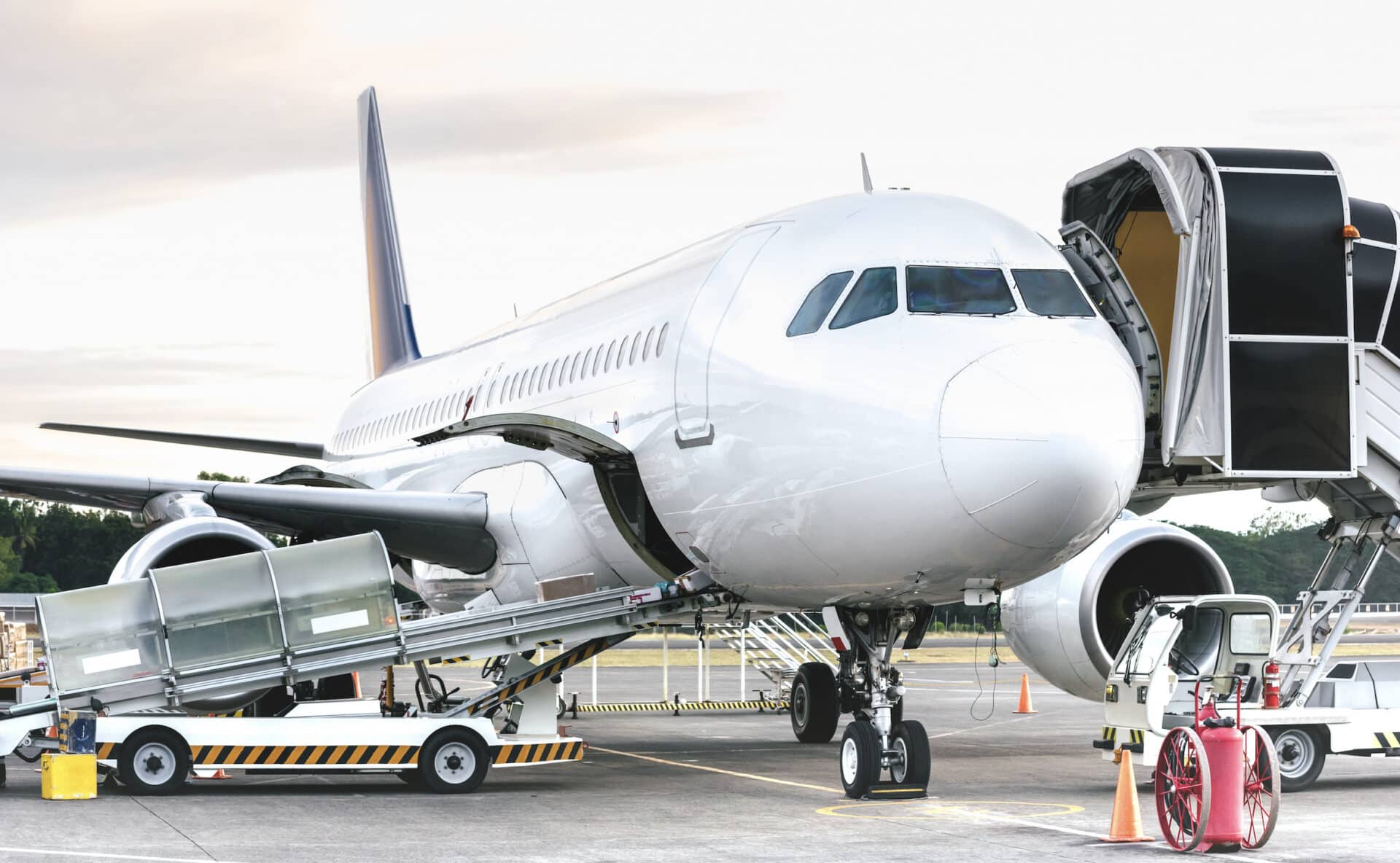

Why Aviation Fuel Matters More Than You Think
Aviation fuel represents 30-40% of airline operating costs. Pick the wrong fuel, and your engine quits at 35,000 feet.
Aircraft don’t run on regular gasoline. They burn specialized fuels engineered for extreme conditions: freezing temperatures at cruise altitude, instant ignition reliability, and zero tolerance for contamination. These fuels power everything from two-seat trainers to widebody jets crossing oceans.
Performance depends on fuel properties more than most pilots realize. Freezing point determines route planning. Flash point dict ates airport safety protocols. Energy density affects range calculations. Getting any of these wrong grounds aircraft or worse.
Modern aircraft like the Boeing 787 and Airbus A350 burn roughly 5,000-6,000 liters per hour on long-haul flights. Fuel selection directly impacts operational economics and environmental footprint.
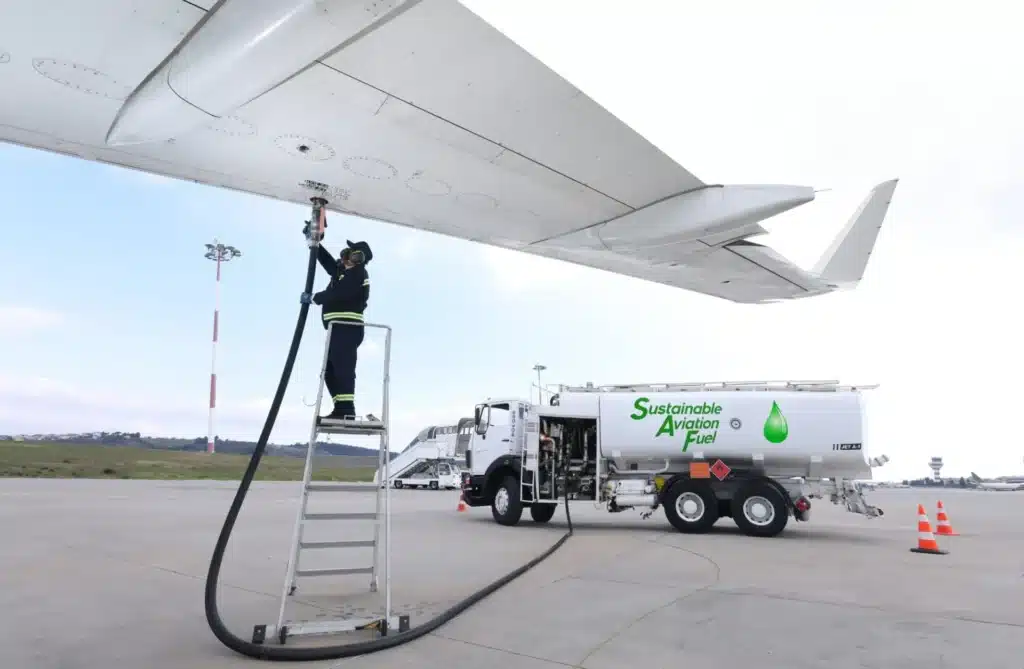
How Aviation Classifies Fuels
Aviation fuel falls into three broad categories based on engine design and ignition method.
Turbine Fuels (Jet A, Jet A-1, JP-8): Kerosene-based fuels for jet engines, turboprops, and helicopters. Burns through compression ignition in turbine combustion chambers. Operates at cruise altitudes where temperatures drop to -56°C.
Aviation Gasoline (Avgas): High-octane gasoline for piston engines in small aircraft and trainers. Requires spark ignition like automotive engines but with much higher octane ratings. Contains tetraethyl lead for detonation resistance.
Sustainable Aviation Fuel (SAF): Drop-in replacement fuels derived from renewable feedstocks. Chemically similar to conventional jet fuel but with significantly reduced lifecycle carbon emissions. Approved for blending up to 50% with conventional fuels.
The distinction matters operationally. Put jet fuel in a piston engine and it won’t ignite properly. Put avgas in a turbine and you get uncontrolled combustion and engine damage. Fuel systems at airports use color coding and separate infrastructure to prevent misfueling.
Jet Fuel Explained
Jet fuel is refined kerosene optimized for turbine combustion. Commercial aviation consumes approximately 95 billion gallons annually worldwide.
Jet fuel burns cleaner than gasoline, produces fewer engine deposits, and handles temperature extremes better than alternatives. Refineries fractionally distill crude oil to extract kerosene cuts, then remove impurities and add performance additives.
Key characteristics separate jet fuel from other petroleum products:
High flash point (38°C minimum): Jet fuel won’t ignite from static sparks during refueling. This safety margin prevents catastrophic airport fires.
Low freezing point (-40°C to -47°C): Fuel stays liquid at cruise altitude where outside air reaches -56°C. Aircraft can’t fly if fuel crystallizes in the tanks.
Consistent energy density: Jet fuel delivers approximately 43.15 MJ/kg regardless of source. Predictable energy content enables accurate flight planning and fuel calculations.
Modern Airbus A320neo aircraft with efficient engines still burn 2,400 kg of jet fuel per hour during cruise flight. Multiply that across 25,000+ commercial flights daily and fuel properties become non-negotiable specifications.
Jet A vs Jet A-1: The Critical Difference
Two jet fuel specifications dominate commercial aviation. The difference looks minor on paper but determines route planning worldwide.
| Property | Jet A | Jet A-1 |
|---|---|---|
| Freezing Point | -40°C (-40°F) | -47°C (-53°F) |
| Primary Usage | United States domestic | International standard |
| Flash Point | 38°C minimum | 38°C minimum |
| Availability | North America | Worldwide |
| Energy Content | ~43.15 MJ/kg | ~43.15 MJ/kg |
Why seven degrees matters: Long-haul flights cruise at altitudes where fuel tank temperatures approach -50°C. Jet A freezes before Jet A-1, making it unsuitable for routes over polar regions or extended cold-weather operations.
Airlines operating international routes stock exclusively Jet A-1. U.S. domestic carriers can use either specification, though many maintain Jet A-1 compatibility for operational flexibility.
Aircraft like the Boeing 787-8 flying transatlantic routes require Jet A-1 for North Atlantic crossings where sustained high-altitude flight could freeze Jet A fuel systems.
Aviation Gasoline (Avgas) Explained

Avgas powers piston-engine aircraft. Small planes, flight trainers, and warbirds burn approximately 200 million gallons of avgas annually in the United States alone.
Avgas is high-octane gasoline refined specifically for aircraft piston engines. The blue-tinted fuel delivers 100 octane performance, preventing engine knock during high-power operations like takeoff climbs.
Avgas 100LL Properties:
The “LL” designation means “low lead” compared to historical aviation gasoline formulations. Current avgas still contains 0.56 grams of tetraethyl lead per liter. Lead prevents premature detonation in high-compression aircraft engines operating at maximum power settings.
Avgas burns in reciprocating engines with spark ignition. Pistons compress the fuel-air mixture, spark plugs ignite it, and expanding gases drive the pistons down. This fundamentally differs from jet engine combustion.
Color coding prevents misfueling accidents. Avgas 100LL is dyed blue. Jet fuel is clear to straw-colored. Ground crews verify fuel type visually before pumping begins.
Lead Controversy:
Avgas remains the last transportation fuel containing lead. Environmental groups push for unleaded alternatives, but developing drop-in replacements that work in existing engines proves technically difficult. The FAA approved G100UL unleaded avgas in 2021, though widespread adoption faces infrastructure barriers and fleet compatibility questions.
Aviation Fuel for Helicopters
Most helicopters burn the same Jet A or Jet A-1 used by commercial airliners. Turboshaft engines power modern helicopters using identical fuel specifications.
Turboshaft engines operate on the same combustion principles as turbofans in airliners. Fuel atomizes in the combustion chamber, mixes with compressed air, and ignites continuously. The resulting hot gases spin turbine blades that drive the rotor system through a gearbox.
Using jet fuel creates operational advantages. Helicopter operators can refuel at any airport with jet fuel infrastructure. Military forces simplify logistics by standardizing on JP-8 (military equivalent of Jet A-1) for both fixed-wing aircraft and helicopters.
Older piston-engine helicopters burn avgas, but turbine helicopters dominate commercial operations. The Robinson R44 uses avgas. The Bell 206 burns jet fuel. Buyers choosing turbine helicopters gain access to cheaper, more widely available fuel.
Military Aviation Fuel Specifications
Military forces use specialized jet fuel formulations tailored for combat operations and naval aviation.
JP-8 (Jet Propellant-8):
U.S. military standard fuel essentially identical to Jet A-1 with additives. Corrosion inhibitors, icing inhibitors, and fuel system lubricants extend the additive package beyond civilian specifications.
JP-8 serves as single-fuel-forward policy fuel. The same fuel powers jets, helicopters, ground vehicles, and generators. Battlefield logistics simplify when one fuel type supplies entire operations.
JP-5:
Naval aviation fuel with higher flash point (60°C minimum vs 38°C for JP-8). Aircraft carriers store massive fuel quantities below deck. Higher flash point reduces fire risk if fuel tanks rupture during combat damage or accidents.
JP-5 costs more to produce than JP-8 due to additional refining required for the higher flash point specification. Navy accepts the cost premium for improved shipboard safety.
Military fuel specifications change less frequently than you would expect. JP-8 has served as standard since 1990. Changing fuel types requires re-certifying thousands of aircraft engines and modifying global supply chains.
Sustainable Aviation Fuel (SAF) Explained

SAF represents the aviation industry’s primary near-term solution for reducing carbon emissions. Production scaled from 415 million liters in 2020 to over 600 million liters by 2023, with projections reaching multiple billions annually by 2030 according to IATA (International Air Transport Association).
What Makes SAF Sustainable:
SAF comes from renewable feedstocks rather than crude oil. Used cooking oil, agricultural residues, algae, municipal solid waste, and captured carbon dioxide all serve as SAF source materials.
The chemistry matters less than the carbon accounting. Sustainable aviation fuel can reduce lifecycle CO2 emissions by 50-80% compared to conventional jet fuel, depending on feedstock and production pathway.
SAF is chemically nearly identical to petroleum-based jet fuel. Aircraft engines can’t tell the difference. This drop-in compatibility eliminates the need for new aircraft designs or engine modifications.
Common SAF Production Pathways:
HEFA (Hydroprocessed Esters and Fatty Acids): Converts waste oils and fats into jet fuel through hydroprocessing. Currently produces most commercial SAF. Neste produces over 100,000 tons annually through HEFA processes.
Fischer-Tropsch: Synthesizes hydrocarbons from syngas derived from biomass or municipal waste. Shell and other producers operate Fischer-Tropsch SAF facilities with plans for significant capacity expansion.
Alcohol-to-Jet: Converts ethanol or other alcohols into jet fuel. LanzaJet operates the first commercial alcohol-to-jet facility, converting ethanol into SAF through catalytic processes.
Current SAF Limitations:
Price remains the biggest barrier. SAF costs 2-4 times more than conventional jet fuel depending on production method and feedstock availability. Airlines pay premium prices to access limited SAF supplies.
Production capacity falls far short of demand. Aviation consumes 95 billion gallons of jet fuel annually. Current SAF production supplies less than 1% of global demand.
Blending limitations restrict usage. Current approvals permit maximum 50% SAF blends with conventional jet fuel. Pure SAF flights occur rarely, requiring special certification. Researchers work toward 100% SAF approval.
Feedstock availability constrains scaling. Used cooking oil supplies only support limited SAF production. Agricultural residues compete with other uses. New feedstocks like algae or direct air capture remain in early development stages.
Why Aviation Fuel Costs More Than Diesel
Jet fuel costs $0.70-0.90 per liter at major airports. Diesel costs $0.60-0.80 per liter at truck stops. The price difference reflects refining requirements and quality standards.
Refining Specifications:
Aviation fuel meets much tighter specifications than automotive diesel. Freezing point, flash point, sulfur content, particulate limits, water content, and dozens of other parameters require additional refining steps.
Every batch gets tested before release. Fuel samples undergo laboratory analysis verifying conformance to ASTM D1655 (jet fuel) or DEF STAN 91-91 (international standard). Failed batches get reprocessed or sold as heating oil.
Distribution and Storage Costs:
Airports maintain dedicated fuel farms with filtration systems, quality monitoring, and contamination prevention protocols. Fuel travels through underground pipelines or arrives by truck in specially certified tankers.
Into-plane refueling equipment costs millions of dollars. Hydrant systems, fuel trucks, and pumping infrastructure require regular inspection and maintenance. These costs get passed to airlines through fuel surcharges.
Taxes and Surcharges:
Aviation fuel taxes vary by country. Some jurisdictions exempt jet fuel from road fuel taxes. Others impose environmental levies or carbon taxes on aviation emissions.
Fuel surcharges reflect market volatility. Airlines adjust ticket prices based on crude oil prices, which fluctuate daily based on geopolitical events and supply-demand dynamics. Cargo operators face similar challenges, with fuel representing the largest variable cost in freight operations.
Critical Fuel Properties That Affect Flight Operations
Six fuel properties determine operational suitability. Each property serves specific safety or performance requirements.
Freezing Point: Temperature where first ice crystals form in fuel. Aircraft cannot fly if fuel freezes in tanks or fuel lines. Jet A-1’s -47°C freezing point enables polar routing and extended high-altitude cruise.
Flash Point: Minimum temperature where fuel vapors ignite when exposed to flame. Higher flash points reduce fire risk during refueling, storage, and accidents. Jet fuel’s 38°C flash point prevents ignition from ambient conditions.
Energy Density: Energy content per unit mass or volume. Jet fuel delivers approximately 43.15 MJ/kg. Higher energy density means aircraft can carry more fuel for the same weight, extending range.
Viscosity: Fuel flow resistance at different temperatures. Fuel must flow properly through pumps and injectors across all operating temperatures. Too thick and pumps fail. Too thin and seals leak.
Lubricity: Fuel’s ability to lubricate pumps and injectors. Modern low-sulfur fuels require lubricity additives to prevent fuel system wear. Insufficient lubricity causes premature pump failure.
Thermal Stability: Resistance to forming deposits when heated. Fuel circulates through hot engine components before burning. Poor thermal stability creates varnish and carbon deposits that clog fuel nozzles.
Aircraft manufacturers specify approved fuels for each engine type. Operators cannot substitute fuels without engineering analysis and potential certification testing.
What Happens With Wrong Fuel
Misfueling represents a serious aviation hazard. Color coding, placarding, and crew training prevent most incidents, but mistakes still occur.
Jet Fuel in Piston Engine:
Jet fuel won’t ignite properly in spark-ignition piston engines. The engine either won’t start or runs extremely rough with severe knocking. Power output drops dramatically. Continued operation risks engine damage from detonation.
Pilots notice misfueling immediately during run-up. Rough running and power loss prevent takeoff. The aircraft returns to the ramp for fuel system draining and proper refueling.
Avgas in Turbine Engine:
Avgas causes more dangerous problems in turbine engines. The fuel burns hotter and faster than jet fuel, potentially exceeding turbine temperature limits. Lead deposits form on turbine blades and combustion chambers.
Some turbine engines will run on avgas temporarily, but manufacturers prohibit the practice. Lead contamination requires engine removal for inspection and cleaning. Continued operation risks catastrophic turbine failure.
Prevention Systems:
Airports use different nozzle sizes for different fuel types. Jet fuel nozzles won’t fit avgas filler necks. Avgas nozzles won’t fit jet aircraft fuel receptacles. This mechanical incompatibility prevents many misfueling events.
Fuel trucks display placards showing fuel type. Pilots verify fuel type before accepting delivery. Visual inspection checks fuel color. These multiple verification steps catch misfueling before engines start.
Future of Aviation Fuel (2026-2040)
Aviation fuel technology faces pressure from three directions: environmental regulations, fuel security concerns, and operational economics. Multiple pathways compete for the future.
SAF Scaling:
Sustainable aviation fuel production must increase 50-fold to meet 2030 industry commitments. Refineries are converting or building new facilities specifically for SAF production.
Second-generation SAF from agricultural waste and forestry residues enters commercial production. Third-generation biofuels from algae remain in development but show promise for massive scaling without competing for food crops.
Power-to-liquid SAF using renewable electricity and captured CO2 could provide unlimited production capacity, but current costs exceed $3-4 per liter. Technology improvements and carbon pricing could make synthetic fuel competitive by 2035-2040.
Hydrogen Aviation:
Hydrogen fuel cells or direct combustion could eliminate carbon emissions entirely. Airbus announced ZEROe concept aircraft targeting 2035 entry into service with hydrogen propulsion.
Hydrogen faces fundamental challenges. Energy density by volume is far lower than jet fuel. Aircraft need massive fuel tanks. Range limitations restrict hydrogen to regional operations initially.
Infrastructure doesn’t exist. Airports lack hydrogen production, storage, and refueling systems. Building global hydrogen infrastructure requires hundreds of billions in investment.
Electric and Hybrid Aircraft:
Battery-electric aircraft work for short-range operations. Several companies develop electric trainers and regional aircraft with 200-500 km range.
Battery energy density limits larger aircraft. Current lithium-ion batteries store approximately 0.25 MJ/kg. Jet fuel delivers 43 MJ/kg. Physics prevents battery-powered widebody aircraft with foreseeable technology.
Hybrid-electric systems combining batteries and turbines could improve efficiency by 20-30% for regional aircraft. This approach uses existing fuel infrastructure while reducing emissions.
Regulatory Pressure:
European Union mandates increasing SAF blending percentages starting 2025. Other jurisdictions implement carbon pricing or emission trading systems that favor lower-carbon fuels.
Certification processes are adapting to approve 100% SAF operations. Testing programs verify long-term material compatibility and performance with pure sustainable fuel.
The most likely 2040 scenario combines multiple solutions. SAF powers widebody aircraft on long-haul routes. Hydrogen fuels regional aircraft. Electric aircraft handle short training and urban air mobility missions. Conventional jet fuel persists where alternatives prove impractical.
Frequently Asked Questions
What fuel do commercial airplanes use?
Commercial airliners burn Jet A-1 kerosene-based fuel. This fuel meets international specifications for freezing point (-47°C), flash point (38°C minimum), and energy content (approximately 43.15 MJ/kg). Airlines worldwide stock Jet A-1 for operational flexibility across all routes. U.S. domestic carriers sometimes use Jet A, which has a slightly higher freezing point of -40°C.
Is jet fuel the same as diesel?
Jet fuel and diesel are similar petroleum products but not identical. Both derive from kerosene fractions of crude oil. However, jet fuel meets much stricter specifications for freezing point, particulate content, and thermal stability. Jet fuel contains fewer additives than automotive diesel and burns cleaner in turbine engines. Diesel engines can run on jet fuel temporarily, but jet engines cannot use automotive diesel due to specification differences.
Why does aviation fuel not freeze easily?
Aviation fuel contains specific hydrocarbon blends selected for low freezing points. Jet A-1 freezes at -47°C, allowing operations at altitudes where ambient temperature reaches -56°C. Refiners control the molecular composition during distillation to achieve these freezing characteristics. Fuel additives further depress the freezing point and prevent ice crystal formation. Aircraft fuel systems include temperature monitoring to ensure fuel remains liquid throughout flight.
Can planes use biofuel?
Yes, aircraft operate on sustainable aviation fuel (SAF) derived from biological sources. SAF is chemically similar to petroleum-based jet fuel and works in existing aircraft without modifications. Airlines currently blend SAF up to 50% with conventional fuel. Over 440,000 commercial flights have used SAF since approval for commercial use. Production scaling represents the main challenge, not technical compatibility.
What fuel do small planes use?
Small piston-engine aircraft burn aviation gasoline (avgas), specifically Avgas 100LL. This high-octane fuel contains lead to prevent engine knock during high-power operations. Avgas is blue-colored for visual identification. Some small aircraft use turbine engines and burn Jet A or Jet A-1 instead. The choice depends on engine type, not aircraft size.
Is SAF widely used today?
SAF usage remains limited despite growing adoption. Current SAF production supplies less than 1% of global aviation fuel demand. Production capacity reached approximately 600 million liters annually by 2023, compared to total demand exceeding 350 billion liters. Price premiums and production constraints limit widespread use. However, major airlines including United, Delta, American, and European carriers have committed to increasing SAF purchases as production scales up.
Why is avgas still leaded?
Avgas contains lead because unleaded alternatives that work in existing piston aircraft engines remain under development. High-compression aircraft engines require lead’s anti-knock properties to prevent detonation during maximum power operations like takeoff. While unleaded avgas formulations exist (such as G100UL approved in 2021), transitioning the existing fleet faces infrastructure and compatibility challenges. Aviation represents the last transportation sector using leaded fuel.
Do helicopters use special fuel?
Most modern helicopters burn the same Jet A or Jet A-1 used by airliners. Turboshaft engines power these helicopters and operate on standard turbine fuel. Only older piston-engine helicopters require avgas. Using jet fuel provides operational advantages through wider fuel availability and simpler logistics. Military helicopters use JP-8, which is essentially Jet A-1 with military additives.
Aircraft Fuel Efficiency and Selection
Fuel choice impacts aircraft economics beyond just fuel cost. Airlines select aircraft partially based on fuel burn rates and operational efficiency.
Newer aircraft deliver 15-25% better fuel efficiency than models they replace. The Pratt & Whitney geared turbofan engine achieves significant fuel savings through improved thermodynamic efficiency.
Long-range aircraft design revolves around fuel capacity and burn rate. Aircraft manufacturers optimize wing design, engine selection, and aerodynamics specifically to reduce fuel consumption. Every kilogram of fuel saved multiplies across thousands of flights annually.
Fuel availability affects route planning and aircraft deployment. Airlines won’t deploy aircraft to airports lacking proper fuel infrastructure. Remote locations require tankering (carrying extra fuel from previous stops) when local fuel availability or quality creates concerns.
Fuel hedging strategies protect airlines from price volatility. Some carriers buy fuel futures contracts months in advance, locking in prices. Others accept market prices, gaining when fuel costs drop but facing higher costs during price spikes.
The trend toward fuel efficiency accelerates. New aircraft entering service in 2025-2030 will deliver additional 10-15% fuel savings through improved engines, advanced materials, and aerodynamic refinements. These improvements compound with SAF adoption to reduce both costs and emissions.