
Why Air Cargo Costs Vary by Route and Weight
Air cargo pricing operates differently than most shipping methods.
Airlines charge based on either actual weight or volumetric weight, whichever is greater. This means a lightweight but bulky package can cost the same as a dense, heavy one.
Route pricing depends on multiple factors beyond distance. Major trade lanes between manufacturing hubs and consumer markets typically offer more competitive rates due to high cargo volumes and frequent flights.
Regional demand fluctuations, fuel costs, and aircraft availability create significant price differences between routes. Widebody aircraft like the Boeing 787 and Airbus A350 handle both passenger and belly cargo operations, affecting capacity and pricing.
Understanding Chargeable Weight in Air Cargo
Airlines calculate chargeable weight using a standard formula that accounts for package dimensions.
The volumetric weight formula:
(Length × Width × Height in cm) ÷ 6000 = Volumetric Weight in kg
For example, a box measuring 100cm × 80cm × 60cm with an actual weight of 50kg would have a volumetric weight of 80kg. The airline charges for 80kg because it occupies more cargo space than its actual weight suggests.
This calculation prevents shippers from filling aircraft with lightweight but space-consuming goods at rates intended for dense cargo.
Air Cargo Rate Ranges by Major Trade Route (2026 Estimates)
Pricing varies significantly based on season, fuel costs, and market conditions. The ranges below represent typical rates but should not be considered guaranteed pricing.
| Route | Estimated Cost Range (USD/kg) | Typical Transit Time |
|---|---|---|
| Asia to North America | $3.80 – $7.50 | 2-5 days |
| Asia to Europe | $3.20 – $6.50 | 2-4 days |
| Europe to North America | $3.50 – $6.00 | 1-3 days |
| Middle East to Europe | $2.80 – $4.50 | 1-2 days |
| Africa to Europe | $5.50 – $9.00 | 3-6 days |
Important: These rates represent general market ranges and fluctuate based on fuel surcharges, seasonal demand, carrier availability, and specific shipment requirements. Always obtain current quotes from freight forwarders or carriers for accurate pricing.
Cost Components in Air Cargo Pricing
The per-kilogram rate represents only part of the total shipping cost. Understanding each component helps explain price variations.
Base Freight Rate: The core transportation charge varies by route, carrier, and cargo volume. High-volume shippers negotiate better rates.
Fuel Surcharge: Airlines adjust this regularly based on jet fuel prices. It typically adds 15-30% to the base rate and changes monthly or quarterly.
Security Surcharge: Post-2001 security requirements add screening and handling costs to all air cargo shipments.
Airport Handling Fees: Ground handling, terminal usage, and customs processing vary by airport. Major cargo hubs often charge less per unit than smaller airports.
Customs Clearance: Import duties, taxes, and broker fees depend on destination country regulations and cargo classification.
Additional charges may include dangerous goods handling, temperature-controlled transport, oversized cargo fees, and insurance.
Dedicated Freighters vs Passenger Belly Cargo
Cargo travels in two types of aircraft, each with different cost structures.
Passenger Aircraft Belly Cargo:
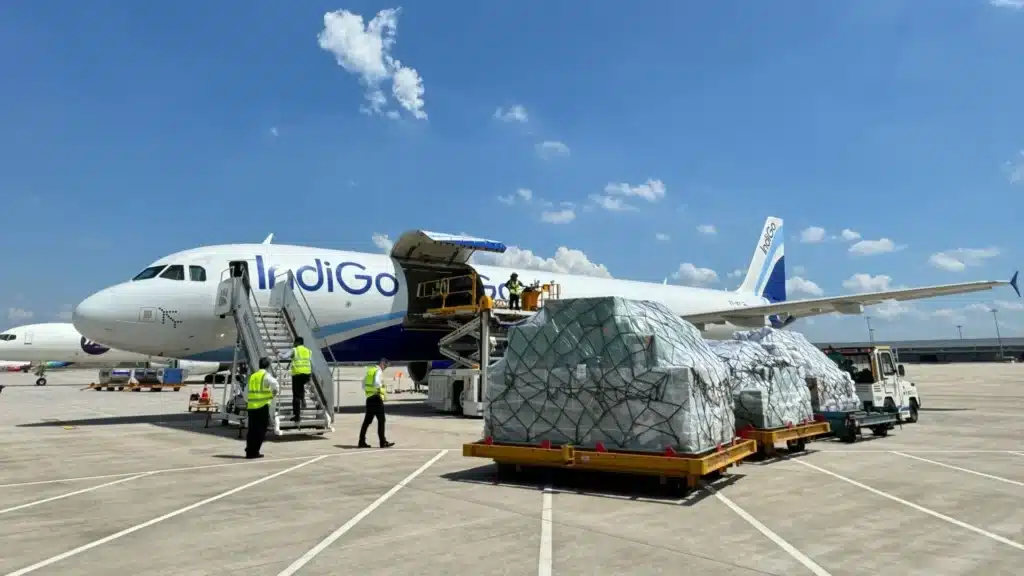
Commercial passenger flights carry cargo in lower deck compartments. This option costs less because airlines sell both passenger tickets and cargo space on the same flight.
Capacity limitations exist because passenger baggage takes priority. Routes with high passenger demand offer more frequent flights but less predictable cargo space.
Dedicated Cargo Aircraft:

Freighters like the Boeing 747-8F, 777F, and Airbus A330F carry only cargo. They operate on schedules independent of passenger demand.
These aircraft cost more per kilogram but offer greater reliability, higher weight capacity, and specialized handling for oversized or temperature-sensitive cargo.
Major cargo carriers operate mixed fleets, using belly cargo for standard shipments and dedicated freighters for heavy machinery, perishables, and time-sensitive goods.
Factors Affecting Air Cargo Rates
Multiple variables influence pricing beyond basic weight and distance calculations.
Fuel Price Volatility: Jet fuel represents 20-30% of operating costs. Price changes flow directly to surcharges within weeks.
Seasonal Demand: E-commerce peaks during holiday seasons (November-December in North America and Europe, Chinese New Year in Asia, Diwali in India) drive rates up 30-50%.
Route Congestion: Popular trade lanes between manufacturing centers and consumer markets see more competition, reducing rates. Less-served routes cost more.
Cargo Type: Dangerous goods, lithium batteries, pharmaceuticals, and perishables require special handling and certifications, adding 20-40% to base rates.
Aircraft Availability: Fleet constraints during peak periods or maintenance cycles limit capacity and increase prices.
Airport Infrastructure: Cargo facilities at major hubs process shipments efficiently, reducing handling costs. Smaller airports add time and expense.
Express vs Standard Air Freight Service Levels
Service speed directly impacts cost. Choosing the right service level balances urgency against budget.
| Service Type | Relative Cost | Transit Time | Best For |
|---|---|---|---|
| Express (DHL, FedEx, UPS) | High | 1-3 days | Urgent documents, time-critical parts |
| Standard Air Freight | Moderate | 3-7 days | Regular shipments, planned inventory |
| Deferred Air Service | Lower | 5-10 days | Non-urgent cargo, cost-sensitive shipments |
Express services include door-to-door delivery, customs brokerage, and tracking. Standard freight requires shippers to arrange pickup and delivery separately.
Air Cargo vs Sea Freight Cost Comparison
Mode selection depends on urgency, cargo value, and total logistics costs.
Air freight and sea freight serve different market segments with distinct cost profiles.
| Transport Mode | Cost Level | Speed | Optimal Use |
|---|---|---|---|
| Air Cargo | High ($3-9/kg) | 1-7 days | High-value goods, perishables, urgent shipments |
| Sea Freight | Low ($0.10-0.50/kg) | 20-45 days | Bulk cargo, heavy machinery, planned inventory |
Air cargo makes economic sense when product value exceeds $5-10 per kilogram, when inventory carrying costs are high, or when market timing matters.
Electronics, pharmaceuticals, fashion, and automotive parts commonly ship by air. Raw materials, consumer durables, and industrial equipment typically move by sea.
Strategies to Reduce Air Cargo Shipping Costs
Cost optimization requires understanding rate structures and planning shipments strategically.
Optimize Packaging: Reducing box dimensions lowers volumetric weight. Use custom packaging sized to products rather than standard boxes. Every centimeter matters in the 6000-divisor calculation.
Consolidate Shipments: Combining multiple orders into fewer, larger shipments reduces per-unit costs. Volume discounts apply at weight breaks (100kg, 300kg, 500kg, 1000kg).
Avoid Peak Seasons: Shipping before or after major holidays prevents premium pricing. Planning inventory arrivals for off-peak periods saves 20-40%.
Use Major Cargo Hubs: Routing through airports with high cargo volumes (Hong Kong, Singapore, Dubai, Frankfurt, Memphis) accesses more carriers and better rates than regional airports.
Negotiate Long-Term Contracts: Freight forwarders offer volume discounts for committed annual tonnage. Regular shippers should establish carrier relationships rather than booking spot rates.
Choose Flexible Transit Times: Accepting 5-7 day delivery instead of 2-3 days cuts costs 15-25%. Deferred services use available capacity on passenger flights.
Air Cargo Market Outlook for 2026
Industry trends point toward moderate rate stability with continued operational changes.
Fuel prices have stabilized after 2022-2023 volatility, reducing uncertainty in surcharge calculations. Airlines can budget more accurately, leading to more predictable contract rates.
Widebody freighter utilization continues growing as dedicated cargo operations expand. Carriers are adding Boeing 777F and Airbus A350F aircraft to fleets, increasing capacity on major trade routes.
E-commerce growth drives sustained demand for air cargo, particularly on Asia-North America and Asia-Europe lanes. Cross-border online retail requires faster delivery than traditional wholesale shipments.
Sustainability pressure mounts as governments implement carbon taxes and emissions tracking requirements. These environmental costs will gradually flow through to shippers, potentially adding 2-5% to rates by late 2026.
Technology integration improves documentation and customs clearance processes, reducing administrative delays and handling costs at major airports.
Frequently Asked Questions
How much does air cargo cost per kilogram internationally?
International air cargo typically costs $3-9 per kilogram depending on route, season, and service level. High-volume trade lanes between Asia and North America or Europe offer lower rates ($3-7/kg) while routes to Africa or South America cost more ($5-9/kg).
What is the cheapest air cargo route?
Routes between major cargo hubs with high volumes offer the lowest rates. Middle East to Europe routes often provide competitive pricing ($2.80-4.50/kg) due to carrier competition and regular freighter service. Intra-Asia routes also cost less than intercontinental shipments.
Why does air freight cost more than sea freight?
Aircraft fuel consumption per kilogram transported far exceeds ship fuel costs. A Boeing 777F burns approximately 8,000 liters per hour carrying 100,000kg, while container ships carry 200,000,000kg using similar hourly fuel. Aircraft also require more frequent maintenance and higher crew costs.
How is air cargo chargeable weight calculated?
Airlines calculate volumetric weight as (Length × Width × Height in cm) ÷ 6000. They charge based on whichever is greater: actual weight or volumetric weight. This prevents lightweight but bulky cargo from occupying disproportionate aircraft space.
Does air cargo become cheaper for heavier shipments?
Yes, volume discounts apply at weight breaks. Rates typically decrease at 100kg, 300kg, 500kg, and 1000kg thresholds. A 1000kg shipment might cost $4.50/kg while a 100kg shipment costs $6.50/kg on the same route. Consolidating shipments achieves better pricing.
What aircraft are commonly used for air cargo?
Dedicated freighters include Boeing 747-8F (maximum payload 140,000kg), Boeing 777F (103,000kg), Boeing 767F (52,000kg), and Airbus A330-200F (70,000kg). Passenger aircraft like the Boeing 787, Airbus A350, and Boeing 777 also carry belly cargo beneath passenger cabins.
Do fuel prices directly affect air cargo rates?
Yes, fuel surcharges adjust monthly or quarterly based on jet fuel index prices. These surcharges typically add 15-30% to base rates. When oil prices rise, airlines pass costs to shippers within 30-60 days through updated fuel surcharge tables.
Can I track my air cargo shipment in real-time?
Express carriers (DHL, FedEx, UPS) provide detailed tracking with status updates at each handling point. Standard air freight offers less granular tracking, typically showing departure, arrival, and customs clearance. Airlines and freight forwarders use air waybill (AWB) numbers for tracking.
Related Air Cargo Services
For time-critical shipments requiring guaranteed delivery, explore specialized air cargo services offering priority handling and expedited customs clearance. These services cost more but provide certainty for urgent industrial parts, medical supplies, or business-critical documents.
Companies operating regular international shipments should consider working with freight forwarders specializing in their trade lanes. These logistics partners negotiate volume rates with carriers and handle documentation, customs, and delivery coordination.